Van's Air Force

The definitive Van's Aircraft support community! Buying, building or flying an RV? Join our exclusive family of mentors and enthusiasts!

Lycoming factory authorized training class review

johnpaul44

Well Known Member
Review time

TL/DR: 10/10 just go!

I recently had the opportunity to attend the Lycoming factory authorized training class in Williamsport, PA and wanted to type up a quick review.

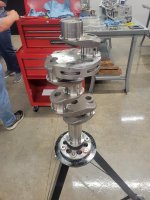
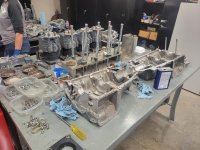
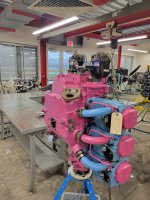
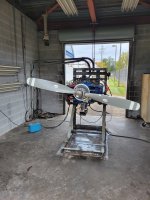
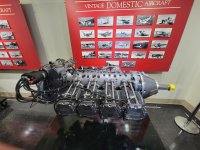
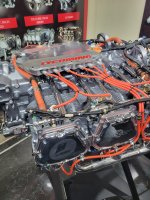
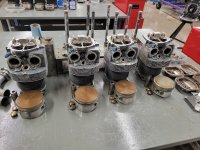
This class is a week long (monday to friday) 8am to 4pm or 5pm each day. The class is held at the local technical college in Williamsport, PA a few miles from Lycoming headquarters.The course gives an in-depth review of Lycoming power plants, history, theory of operations, etc. Each component is reviewed. Going into the workshop we tore down (in groups of 3 or 4) a Lycoming O-360 and then built it back up again over the course of the week. By the end of the week my confidence was hugely boosted and taking on an engine overhaul (with A+P supervision) does not seem like such a daunting task anymore.

The class was a mix of homebuilders, A+Ps, Commercial engine shop guys, and FAA/NTSB guys. Coming in as someone with none of these titles I was extremely happy to be able to absorb all the knowledge and tips/tricks from these other professionals. The learning doesn't stop when class ends either, this is a total immersion experience. We would wake up and talk about engines/airplanes, go to class and talk about it for 8 hours, hang around after class and talk more about it, then go out to dinner with the group and talk about it more. For me this was like being at Oshkosh and honestly felt like a vacation. I was happy to absorb all the knowledge that these professionals have to offer.

Thoughts about Williamsport:
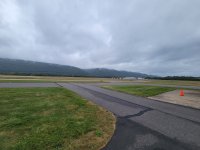
The town itself is a small town feel, the pace of life seemed slow and relaxed and the food offerings were decent. I would love to fly in here someday in my own aircraft and spend a few days.

Thoughts about the college itself:
They are training A+P’s here so the college itself is busy with activity. I had the opportunity to wander around the building for several days and really liked the atmosphere.

Lycoming Headquarters:
We did receive a tour of the factory while we were there, it was very interesting but my only gripe I was we were not able to get up close to anything (whether this is for safety reasons, or other I don't know). Overall I did enjoy the tour but wished we were able to see the machines closer or maybe speak with some of the workers just to hear their stories and experience.

The Instructor: Mike Damiani
You are getting years of knowledge from someone who has built many Lycoming engines, was a Lycoming factory tech rep for several years, and is a genuine nice guy all around. Mike took the time to answer so many questions I had. I cannot emphasize this enough. There are so many opportunities to learn here. One day after class Mike showed us how to time a single hole dual mag in the workshop. This was not part of the course officially but he was more than happy to show us.

To sum it all up, if you're looking for a sunup to sundown Lycoming engine/aircraft education for a week you will absolutely love this course and consider it a vacation in a way. I enjoyed the course so much I want to go back in a few years just to take it again.
 

Attachments

  • 20240923_151702.jpg
    20240923_151702.jpg
    2 MB · Views: 159
  • 20240923_151713.jpg
    20240923_151713.jpg
    3.8 MB · Views: 149
  • 20240923_160404.jpg
    20240923_160404.jpg
    2.1 MB · Views: 137
  • 20240924_125921.jpg
    20240924_125921.jpg
    1.9 MB · Views: 120
  • 20240924_130037.jpg
    20240924_130037.jpg
    3.9 MB · Views: 118
  • 20240925_140344.jpg
    20240925_140344.jpg
    3.7 MB · Views: 109
  • 20240925_141612.jpg
    20240925_141612.jpg
    2.2 MB · Views: 110
  • 20240926_130027.jpg
    20240926_130027.jpg
    4.4 MB · Views: 153
I attended just a couple weeks earlier and would share most of the enthusiasm. Not only was the course informative, but I had a great time.

My perspective from the factory tour may be a little less rosy. To sum up my observations and many of the explanations given, there is a lot of 'Pennsylvania Dutch' philosophy that seems to prevent expansion and innovation. It's no wonder that lead times on engines and parts are 2-4 years. There doesn't really seem any interest in solving that, and Lycoming will continue to rest comfortably on their laurels.
 
Thanks for the write up.

Only thing missing was how to get into the class and cost (sans room and board).
 
I attended just a couple weeks earlier and would share most of the enthusiasm. Not only was the course informative, but I had a great time.

My perspective from the factory tour may be a little less rosy. To sum up my observations and many of the explanations given, there is a lot of 'Pennsylvania Dutch' philosophy that seems to prevent expansion and innovation. It's no wonder that lead times on engines and parts are 2-4 years. There doesn't really seem any interest in solving that, and Lycoming will continue to rest comfortably on their laurels.
Seems like there are ways to make the engine building more efficient and deliver more engine but Lycoming has zero incentive to increase production
 
I also attended the Lycoming course a couple weeks ago and echo what Johnpaul44 said in his review. Had a good time and learned a lot. Instructor Mike is a wealth of information on Lycoming engines and an encyclopedia of the service bulletins, service letters and service instructions.

With respect to the factory tour. In this building dating back to 1845 I saw many modern CNC machines for making many of the precision engine parts. They have their own nitriding machines for hardening the cams and cranks etc. I also saw many labour intensive work areas for the various assembly activities. They only run a single day shift building engines but run 2-3 shifts in certain production areas, which we not informed as to which ones they were. They build 17-19 engines per day. The question was asked why only a single shift when there is such a backlog of orders. The answer given was there are 3 main reasons why.

1. Labour shortage due to many experienced workers retiring with the COVID outbreak and they are unable to find replacement workers. They currently have just over 500 employees.
2. Outsourcing issues. They do not have a foundry and are at the mercy of their suppliers for cases, piston, crank and cam slugs. They also outsource things like rocker arms, springs, hardware etc etc. When they receive shipments from their suppliers they do QA checks and if any parts do not meet spec the shipment is returned and they have to wait for the next one. Their suppliers are having the same labour and supply issues that Lycoming has. It is a vicious circle.
3. Orders. Major aircraft companies have changed their business model as it pertains to orders. Cirrus, Piper, Cessna, Beech all used to order 3 months of engines at a time. Now they are ordering a years worth at a time, even though they don't have airframes to put them in yet. This has severely impacted their business and you can see where individual orders sit.

I am not being critical or supportive of Lycoming and how they deal with the current situation, just presenting the information we were given on our tour.

All in all, in spite of the crap weather we had all week, I found it worth while and am happy I went. FWIW.
 
I also attended the Lycoming course a couple weeks ago and echo what Johnpaul44 said in his review. Had a good time and learned a lot. Instructor Mike is a wealth of information on Lycoming engines and an encyclopedia of the service bulletins, service letters and service instructions.

With respect to the factory tour. In this building dating back to 1845 I saw many modern CNC machines for making many of the precision engine parts.

There were two sets of machinery that they seemed to highlight. The nitriding system was pretty cool, and at least as they explained things they had done some innovating on a proprietary process. I should not overlook than when I'm casting judgement.

The other one was the piston machining line. The one they got second hand from Cosworth. In this scenario, it's Cosworth that is likely to be using modern machines, not Lycoming.

All of this in the same location where they starting building sewing machines in the mid 1800s. Going on 2000 years of manufacturing with almost no expansion.

They have their own nitriding machines for hardening the cams and cranks etc. I also saw many labour intensive work areas for the various assembly activities. They only run a single day shift building engines but run 2-3 shifts in certain production areas, which we not informed as to which ones they were. They build 17-19 engines per day. The question was asked why only a single shift when there is such a backlog of orders. The answer given was there are 3 main reasons why.

1. Labour shortage due to many experienced workers retiring with the COVID outbreak and they are unable to find replacement workers. They currently have just over 500 employees.
2. Outsourcing issues. They do not have a foundry and are at the mercy of their suppliers for cases, piston, crank and cam slugs. They also outsource things like rocker arms, springs, hardware etc etc. When they receive shipments from their suppliers they do QA checks and if any parts do not meet spec the shipment is returned and they have to wait for the next one. Their suppliers are having the same labour and supply issues that Lycoming has. It is a vicious circle.
3. Orders. Major aircraft companies have changed their business model as it pertains to orders. Cirrus, Piper, Cessna, Beech all used to order 3 months of engines at a time. Now they are ordering a years worth at a time, even though they don't have airframes to put them in yet. This has severely impacted their business and you can see where individual orders sit.

200 year long process of abdicating the manufacturing role to third parties, and refusing to expand to keep up with customer demand. It's good to know I wasn't the only one that noticed.

Their market share is protected by regulatory capture and corporate consolidation. If/when a new entrant manages to claw through the political barriers to entry the Lycoming brand will have some real work to do.

All in all, in spite of the crap weather we had all week, I found it worth while and am happy I went. FWIW.

Same here. None of my comments are meant to reflect on the Lycoming product or the experience in the class.

I have spent 5 weeks this year doing aviation technical training of one kind or another, mostly just for the fun of it. I don't even own a Lycoming and not sure I ever will, but it's still fun to learn. All of these classes have been a great time, with the common theme being the people that teach and attend. Like the OP mentioned, you fall into a pattern of talking airplanes all day. It's like going away to airplane camp and I can't get enough. I would encourage others to seek these kinds of courses out and just sign up for something several months out. Figure out the travel logistics along the way.

I'm looking at Continental and Robinson courses for next year.
 
Their market share is protected by regulatory capture and corporate consolidation. If/when a new entrant manages to claw through the political barriers to entry the Lycoming brand will have some real work to do.
I think a lot of the aviation products are like this. They have little incentive to make capital investment after they obtained their FAA certs and then proceed to charge 4x or more than the actual profitable cost to produce. This is the same reason Cessna and Piper continues to stamp out 50 years old design while the rest of the world continues to innovate. I can't wait for MOSAIC rules to get released and to force these dinosaurs to react. They are fighting tooth and nail to keep the old rules.
 
I think a lot of the aviation products are like this. They have little incentive to make capital investment after they obtained their FAA certs and then proceed to charge 4x or more than the actual profitable cost to produce. This is the same reason Cessna and Piper continues to stamp out 50 years old design while the rest of the world continues to innovate. I can't wait for MOSAIC rules to get released and to force these dinosaurs to react. They are fighting tooth and nail to keep the old rules.

As I understand things, at least Cessna and Piper have moved on to newer, bigger, and multiple manufacturing locations. For example, Lock Haven is only home to a museum, not an airplane factory.

Mosaic does factor in to my "justification" for going to taking various courses, but I would be going no matter what. Big change will be measured in decades but I think it will be fun to find ways to be involved.
 
So part of the problem is that we are stuck in a real catch 22 situation. The volume is low and so there isn't a lot of incentive to expand production, but you can't get the volume up without first driving the cost down. No one is really willing to risk the kind of money that would be required to break the logjam. We aren't talking millions we are talking billions of dollars. No one with that kind of money is going to spend it on an industry that is currently selling under 1000 units a year. A few years ago Microsoft tried selling their own smartphone brand. They sold a couple of million a year and it was still considered a flop.

From my opinion as an aerospace engineer there are a few main issues that need to have alternate solutions found for:
1. Currently the most expensive parts of an engine are the crankcase, crankshaft cylinders and possibly a gearbox for some of the newer ones. Crankcases and cylinders are currently castings and crankshafts and cam shafts pretty much have to be forgings. Casting and forging processes are incredibly expensive to setup and maintain unless you can spread the volume over a very large order (like hundreds of thousands or millions not a few thousand). There is some potential for metal 3d printing and modern CNC to improve this but right now all of the production of such machines is being consumed by the large companies willing to pay millions of dollars for them and the smaller companies can't break into the market yet. This will probably change eventually but it will take a while.

2. Testing and certification. We are going to have to figure out how to use engine designs that can use a lot of the work done for other industries. Modern engines went to smaller cylinders with higher compressions and higher rpms to solve the combustion issues however these require a gearbox to work with a prop. Unfortunately gearbox design is kind of a black art and requires a lot of testing to get right. This is why the Rotax engines which work well are so expensive and some of the alternate gearbox-based engines that are cheaper have had so many problems. By the time you get through the testing spreading the cost over a few hundred engines a year means they end up really expensive. I had some hopes for the ulPower engines as they avoid this but the prices for those are almost up to the lycoming prices now and there isn't as much support for the FWF.

Overall I think there are some new technologies in manufacturing that might solve a lot of the issues but when it really comes right down to it the issue is volume. To make this work we are going to need someone with enough money to make a design that can be sold at a low enough price to drive up the sales volume and get more people interested in flying.

Exam
 
Another aviation course that is beyond expectation is the LSRM training offered by Carol and Brian Carpenter, of Rainbow Aviation. While it is Light Sport Repairman and Maintenance, it is about “all aviation, all the time”: For 2 plus weeks. In addition to the superb quality training, including class, and hands on labs — an FAA certificate is earned. While the focus is light sport, the knowledge and wisdom gained from the class transcends to all aviation, especially experimental. Weight & balance, how propellers actually work and implications for design/selection, propeller moment of inertia, rigging control systems, hardware identification and selection for a given purpose, measuring to sub-micrometer level, mfg service limits, fuel systems, ignition systems, Rotax with some Lycoming and Continental, aerodynamics, flutter, use of service manuals, safety, safety, safety, etc. etc. The facility is at a beautiful country setting in Missouri, with state of the art classroom equipment including extensive use of digital technologies for lecture portion. The labs are hands on, with multiple sets of tools, equipment, machines, and supplies so that each team member (4 per team) on a given lab can progress at their own pace, without impacting the other team members. There are a variety of accommodations near by, including camping, R/V (4 minute walking distance), hotel, B&B, etc. Two plus weeks of imersion in aviation, what could possibly be better?
 
Review time

TL/DR: 10/10 just go!

I recently had the opportunity to attend the Lycoming factory authorized training class in Williamsport, PA and wanted to type up a quick review.

This class is a week long (monday to friday) 8am to 4pm or 5pm each day. The class is held at the local technical college in Williamsport, PA a few miles from Lycoming headquarters.The course gives an in-depth review of Lycoming power plants, history, theory of operations, etc. Each component is reviewed. Going into the workshop we tore down (in groups of 3 or 4) a Lycoming O-360 and then built it back up again over the course of the week. By the end of the week my confidence was hugely boosted and taking on an engine overhaul (with A+P supervision) does not seem like such a daunting task anymore.

The class was a mix of homebuilders, A+Ps, Commercial engine shop guys, and FAA/NTSB guys. Coming in as someone with none of these titles I was extremely happy to be able to absorb all the knowledge and tips/tricks from these other professionals. The learning doesn't stop when class ends either, this is a total immersion experience. We would wake up and talk about engines/airplanes, go to class and talk about it for 8 hours, hang around after class and talk more about it, then go out to dinner with the group and talk about it more. For me this was like being at Oshkosh and honestly felt like a vacation. I was happy to absorb all the knowledge that these professionals have to offer.

Thoughts about Williamsport:
The town itself is a small town feel, the pace of life seemed slow and relaxed and the food offerings were decent. I would love to fly in here someday in my own aircraft and spend a few days.

Thoughts about the college itself:
They are training A+P’s here so the college itself is busy with activity. I had the opportunity to wander around the building for several days and really liked the atmosphere.

Lycoming Headquarters:
We did receive a tour of the factory while we were there, it was very interesting but my only gripe I was we were not able to get up close to anything (whether this is for safety reasons, or other I don't know). Overall I did enjoy the tour but wished we were able to see the machines closer or maybe speak with some of the workers just to hear their stories and experience.

The Instructor: Mike Damiani
You are getting years of knowledge from someone who has built many Lycoming engines, was a Lycoming factory tech rep for several years, and is a genuine nice guy all around. Mike took the time to answer so many questions I had. I cannot emphasize this enough. There are so many opportunities to learn here. One day after class Mike showed us how to time a single hole dual mag in the workshop. This was not part of the course officially but he was more than happy to show us.

To sum it all up, if you're looking for a sunup to sundown Lycoming engine/aircraft education for a week you will absolutely love this course and consider it a vacation in a way. I enjoyed the course so much I want to go back in a few years just to take it again.
I too attended the course and found it very worthwhile. The only time during Mike’s instruction I was somewhat perplexed was the question about borescoping. That was a Continental thing and not called for with Lycoming was the pat answer. Strange that more data during a condition inspection isn’t called for.
 
Back
Top