Van's Air Force

The definitive Van's Aircraft support community! Buying, building or flying an RV? Join our exclusive family of mentors and enthusiasts!

FlyEFII Questions

kirkbauer

Well Known Member
I keep going back and forth on whether to use FlyEFII in my -10 build. I have read through all of the discussions here on VAF and, like many things in aviation, there is not a clear right answer. I'm not trying to start a new debate here, but am trying to collect information from others who use FlyEFII to help with my decision. Can anybody help me answer any of these questions?

1) I understand that the full System32 kit controls both the fuel injection and ignition, but is not a full FADEC, in that you still need to use a prop control. Correct?
2) What does the "Fuel Trim" knob on the panel do? I don't really understand when you'd adjust that, nor what it does.
3) In my current -10, with a hot engine and/or on hot days (no cowl flaps), I need to keep my speed up during climbing and I need to keep the fuel rich to control cylinder heat temps on climbout. It doesn't see that this system is aware of the cylinder temps. Does it keep the engine cooler at the same power level than the traditional mags? Will it make the heat issue better or worse?
4) I see that there is a magnet that needs to be installed in the flywheel and it seems that they do that for you. Do you have to send them the flywheel and they send it back?
5) I'm trying to understand the maintenance differences between this and p-mags. What is the inspection schedule and what does maintenance look like?
6) I'm not an engine guy, but I hope to learn a lot during this process (with or without FlyEFII). Is tuning the engine easier with FlyEFII?
7) I see that FlyEFII supports auto gas -- is this a setting, or does it auto-detect? Can you mix 100LL and auto gas in the same tank?
8) If you buy an engine through Barrett, does that change anything? Can they tune an EFII engine?
9) Is Van's still letting you delete things from the firewall-forward kit? Or am I going to be stuck with a bunch of unneeded parts if I go this route?
10) From a maintenance perspective, what needs to be inspected/maintained at each annual?
 
Last edited:
I can only answer some questions, having only the ignition part.

4: Yes, the do the magnet install for you. The flywheel needs to have the large-size pulley (9 3/4" OD). I had to get a new one, and all systems requiring a flywheel mounted magnet that I'm aware of have this same requirement. SDS sells a new flywheel that works and is a good price if you do need a new one - just don't get the SDS magnets installed in it.

5. There's no required inspections for the ignition system, or any retiming requirement like P-Mags. When I have the cowling off I ensure the wiring and injector cables still look good and are connected.

10. Ignition only for me - I check the wiring, that the ECUs are still securely mounted and wired in, coil packs and high tension wires all still mounted properly and look good. I've only been running the system for a few months so haven't had anything pop up as an issue.
 
I keep going back and forth on whether to use FlyEFII in my -10 build. I have read through all of the discussions here on VAF and, like many things in aviation, there is not a clear right answer. I'm not trying to start a new debate here, but am trying to collect information from others who use FlyEFII to help with my decision. Can anybody help me answer any of these questions?

1) I understand that the full System32 kit controls both the fuel injection and ignition, but is not a full FADEC, in that you still need to use a prop control. Correct?
2) What does the "Fuel Trim" knob on the panel do? I don't really understand when you'd adjust that, nor what it does.
3) In my current -10, with a hot engine and/or on hot days (no cowl flaps), I need to keep my speed up during climbing and I need to keep the fuel rich to control cylinder heat temps on climbout. It doesn't see that this system is aware of the cylinder temps. Does it keep the engine cooler at the same power level than the traditional mags? Will it make the heat issue better or worse?
4) I see that there is a magnet that needs to be installed in the flywheel and it seems that they do that for you. Do you have to send them the flywheel and they send it back?
5) I'm trying to understand the maintenance differences between this and p-mags. What is the inspection schedule and what does maintenance look like?
6) I'm not an engine guy, but I hope to learn a lot during this process (with or without FlyEFII). Is tuning the engine easier with FlyEFII?
7) I see that FlyEFII supports auto gas -- is this a setting, or does it auto-detect? Can you mix 100LL and auto gas in the same tank?
8) If you buy an engine through Barrett, does that change anything? Can they tune an EFII engine?
9) Is Van's still letting you delete things from the firewall-forward kit? Or am I going to be stuck with a bunch of unneeded parts if I go this route?
10) From a maintenance perspective, what needs to be inspected/maintained at each annual?
1. correct, you need a prop control.

2. The fuel trim knob allows you to adjust the fuel map globally from +50% to -50%. Some use this to run LOP without changing the entire fuel map.

3. The fuel, MAP, RPM, and ignition maps can be altered and customized for your specific installation. I have had zero issues with heat.

4. EFII will install the magnets.

5. Not much to say about maintenance. There is an occasional ECU firmware update and then you basically check condition of wiring during inspections.

6. Tuning the engine is done on the fly, for the most part. You can make the adjustments while airborne and see the results. Each injector is addressable which makes slight imbalances easy to deal with.

7. The programmability will allow using other fuels. You would need to fly it to see what needed to be changed. Again, all parameters in the maps are changeable.

8. Barrett built my engine and installed the EFII system hardware. You will need to mount and wire the ECUs and controller.

9. Can’t answer this question but you won’t need the mags or engine driven fuel pump. You also won’t need the stock fuel injection system.

10. General wiring and injector condition and ECU firmware updates, if there are any.

I have had the EFII system 32 in my -10 for almost 4 years and it has performed flawlessly. Highly recommended.
 
Be prepared to become an expert on your system because it’s unlikely you’ll find anyone to help you or will work on it.
I have never had any issues getting questions answered.

While Electronic fuel injection and ignition are the future; it’s safe to say it isn’t for everyone.

Thankfully, everyone gets to make their own decisions.
 
Be prepared to become an expert on your system because it’s unlikely you’ll find anyone to help you or will work on it.
Although an engineer (Chem E) knew I never would be "an expert". Now have 4 years and flawless 600 hrs. on my EFII system 32. I decided on EFII over SDS only because the install manual seemed easier to understand. Ross at SDS also provides good support. (I have purchased from him several CNC machined accessories and very nice) Robert at EFII provides very good customer support. Good luck, hundreds of very competent builders flying (Like Bob) very willing to help you as needed.
 
I can tell you from personal experience that Robert is a very easy person to work with and can answer any questions you may have. His attitude toward customer service is stellar. I heartily recommend EFII to anyone considering it. YMMV. My first engine start was flawless - no timing issues of any kind to worry about.
 
I keep going back and forth on whether to use FlyEFII in my -10 build. I have read through all of the discussions here on VAF and, like many things in aviation, there is not a clear right answer. I'm not trying to start a new debate here, but am trying to collect information from others who use FlyEFII to help with my decision. Can anybody help me answer any of these questions?

1) I understand that the full System32 kit controls both the fuel injection and ignition, but is not a full FADEC, in that you still need to use a prop control. Correct?
2) What does the "Fuel Trim" knob on the panel do? I don't really understand when you'd adjust that, nor what it does.
3) In my current -10, with a hot engine and/or on hot days (no cowl flaps), I need to keep my speed up during climbing and I need to keep the fuel rich to control cylinder heat temps on climbout. It doesn't see that this system is aware of the cylinder temps. Does it keep the engine cooler at the same power level than the traditional mags? Will it make the heat issue better or worse?
4) I see that there is a magnet that needs to be installed in the flywheel and it seems that they do that for you. Do you have to send them the flywheel and they send it back?
5) I'm trying to understand the maintenance differences between this and p-mags. What is the inspection schedule and what does maintenance look like?
6) I'm not an engine guy, but I hope to learn a lot during this process (with or without FlyEFII). Is tuning the engine easier with FlyEFII?
7) I see that FlyEFII supports auto gas -- is this a setting, or does it auto-detect? Can you mix 100LL and auto gas in the same tank?
8) If you buy an engine through Barrett, does that change anything? Can they tune an EFII engine?
9) Is Van's still letting you delete things from the firewall-forward kit? Or am I going to be stuck with a bunch of unneeded parts if I go this route?
10) From a maintenance perspective, what needs to be inspected/maintained at each annual?
2. Fundamentally, same function as the traditional red mixture knob. Programming sets a base mixture, and the trim knob varies it. The practical difference is the the trim knob can add fuel as well as subtract it, while the traditional setup is full rich at one extent and full lean at the other.

3. Fuel injection type doesn't matter. Deliver fuel at the same rate to the same engine with the same baffles, cowl, etc, and you'll get the same CHTs.

5. Keep the filters clean. Keep the electrical support system in good shape. Nothing like p-mags.

6. Interesting question. Easier than traditional Bendix-type constant flow? No.

A constant flow system is simply bolted on as delivered. The base fuel flow tuning was done on a bench back at the manufacturer's facility. The installer (a) sets idle speed with a screw, (b) sets idle mixture with a thumb wheel, and (c) if desired, swaps restrictor sizes so all nozzles flow the same when leaned for cruise.

An EFI from any source will generally arrive with a base map already programmed, but it's a starting place, a way to get the engine running. You'll make changes as well as selecting various settings to store in the ECU. Many more details are available to the operator, which can be both blessing and curse. The programmed end result can be very good, if the operator knows what he is doing. Don't discount the operator aspect. Although an EFI vendor may claim the system makes fuel management fully automatic and perfect all the time, it's only true for the programmed condition. A skilled operator will select good settings...but a skilled operator likewise had no trouble operating a constant flow.

7. Auto gas provides less detonation margin, so in general you'll need settings with less ignition advance and perhaps a bit richer. A lot depends on cylinder head type, compresison ratio, and CHT.

8. Barrett can install any fuel control, but expect base settings. You'll still have program adjustments to make after installation.

Consider this bit of irony. EFI's are often claimed to be a set and forget solution, but EFI operators generally tinker with settings all the time. Note Bob's "make adjustments on the fly" comment. The ability to tweak is an irrestible dose of catnip. Meanwhile, the Bendix guys go a decade and never touch anything but the red kob in the cockpit.
 
2. Fundamentally, same function as the traditional red mixture knob. Programming sets a base mixture, and the trim knob varies it. The practical difference is the the trim knob can add fuel as well as subtract it, while the traditional setup is full rich at one extent and full lean at the other.

3. Fuel injection type doesn't matter. Deliver fuel at the same rate to the same engine with the same baffles, cowl, etc, and you'll get the same CHTs.

5. Keep the filters clean. Keep the electrical support system in good shape. Nothing like p-mags.

6. Interesting question. Easier than traditional Bendix-type constant flow? No.

A constant flow system is simply bolted on as delivered. The base fuel flow tuning was done on a bench back at the manufacturer's facility. The installer (a) sets idle speed with a screw, (b) sets idle mixture with a thumb wheel, and (c) if desired, swaps restrictor sizes so all nozzles flow the same when leaned for cruise.

An EFI from any source will generally arrive with a base map already programmed, but it's a starting place, a way to get the engine running. You'll make changes as well as selecting various settings to store in the ECU. Many more details are available to the operator, which can be both blessing and curse. The programmed end result can be very good, if the operator knows what he is doing. Don't discount the operator aspect. Although an EFI vendor may claim the system makes fuel management fully automatic and perfect all the time, it's only true for the programmed condition. A skilled operator will select good settings...but a skilled operator likewise had no trouble operating a constant flow.

7. Auto gas provides less detonation margin, so in general you'll need settings with less ignition advance and perhaps a bit richer. A lot depends on cylinder head type, compresison ratio, and CHT.

8. Barrett can install any fuel control, but expect base settings. You'll still have program adjustments to make after installation.

Consider this bit of irony. EFI's are often claimed to be a set and forget solution, but EFI operators generally tinker with settings all the time. Note Bob's "make adjustments on the fly" comment. The ability to tweak is an irrestible dose of catnip. Meanwhile, the Bendix guys go a decade and never touch anything but the red kob in the cockpit.
I set my EFII up in the first few weeks of Phase one; haven't really touched it since. You are correct in the point about people wanting to tinker...that is a choice though.

For those who do want to tinker, EFII gives you a way to make changes and see results in real time.
 
This is a helpful thread. Thank you. I was just on the phone with EFII Systems today. I'm going that route on my 10, had a lot of questions, I assume it was Rob I was talking to, was super helpful, and even answered a question that was really specific to the ANDAIR valves and what I wanted to do with their duplex one.
 
Hello, I am at the phase of cowl fitting and baffles. As part of this process, I need to find a location for all the Firewall Forward quipment including the FlyEFII components. Can people help my by providing where they are mounting things on thier RV-10 and what they would do differently. PM me if you wish to send documents. Thanks for the help

Mike Elstien
RV-10
Port Orange FL
 
Hello, I am at the phase of cowl fitting and baffles. As part of this process, I need to find a location for all the Firewall Forward quipment including the FlyEFII components. Can people help my by providing where they are mounting things on thier RV-10 and what they would do differently. PM me if you wish to send documents. Thanks for the help

Mike Elstien
RV-10
Port Orange FL
I put the coil packs just aft of the top engine mount tube behind the aft baffle.

The firewall pass through I mounted copilot side, top corner.

The ECUs are mounted behind the instrument panel, stacked, on a shelf.

The fuel pumps are mounted in the tunnel, opposite of a tunnel access panel by airward.com.

Pre filters are under the front seats, and I swapped them to Holley racing filters as they are serviceable instead of needing to be replaced. Make sure you add a shutoff valve to each supply or you will need to drain the tank to service/change the prefilters.

I would NOT install the post filter in the tunnel. Install one fwf, use a serviceable Holley racing filter or equivalent.

I’m sure there is more but that should help get you started.
 
Hello again everyone. I was mounting my throttle body to my engine intake and noticed a few things.
1- The intake area of the throttle body is smaller than the intake area on the engine. The bolt pattern fits yet I wonder if this caused any intake restrictions.

2 - The throttle body has a self closing feature (spring closes the intake, when no force is applied. This can be catastrophic if the throttle cable every comles loose or breaks. Has anyone tried to remove or reverse the spring. I could always add an opposing spring attached to the throttle cable bracket to oppose this self closing feature. Wondering if someone had nocied this and corrected it?

Thanks
 
Last edited:
2 - The throttle body has a self closing feature (spring closes the intake, when no force is applied. This can be catastrophic if the throttle cable every comles loose or breaks.

Thanks
i disagree. A catastrophe would be trying to land at WOT. I would much prefer that my engine goes to idle in the case of a broken cable. How do you decide when to kill the engine while decending at 180 knots. I guess as i think about it, it works out about the same.
 
i disagree. A catastrophe would be trying to land at WOT. I would much prefer that my engine goes to idle in the case of a broken cable. How do you decide when to kill the engine while decending at 180 knots. I guess as i think about it, it works out about the same.
My theory is if the cable breaks and engine goes to idle, I am descending and landing "soon" - Immediate emergency. If it goes to full throttle, I can continue to find a suitable landing spot and then kill the pump, or ignition or both and land dead stick knowing I have a chance of starting the engine again.
 
I have this system in my plane and my experiences have left me wondering if I made the right choice. If I had to do it again I would have chose SDS instead, as I feel that system has a more robust fuel delivery system with less single point failures. I know there are many people that have had great experiences with this set up, but these are my experiences.

Problems I have encountered:
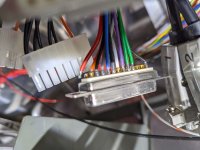
1. Wire harnesses are cold soldered from the factory (at least mine is) and I am having to redo all the wiring to crimp connections as many have failed (see picture)
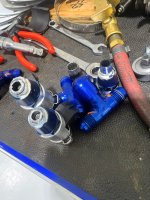
2. My Fuel Injectors sheared off in flight causing an engine out (Due to a combination of crappy aluminum used by the manufacturer and vibration) This has now been rectified by the manufacturer with updated stainless steel fittings. However, no SB has been issued for this issue on the older models. How I did not catch fire or destroy my plane is a miracle. (See Picture)
3. My throttle sensor went bad within 30 hours
4. The T fittings that came with the injectors were sub grade material ( I replaced at my own cost)
5. The literature on how to use the system is limited at best (However its getting better, mostly do to user created content)

Things I like:
1. Basically once the system is set-up you don't have to worry about mixture settings too much
2. Engine runs on AV gas or MO gas, or the new AV gas
3. Robert is always willing to have a conversation and help over the phone
4. Easy starts - Cold and Hot
5. If you put on a double alternator its a relatively simple installation and integration to the system.
6. Fine tuning of individual injectors to maximize engine performance

Things I dislike:
1. If your alternator goes out you better have a back-up or land soon
2. Fuel pressure regulator (single diaphragm)
3. Fuel rail is heavy on the injectors which can lead to failure even with the new stainless steel fittings
4. Unless you wire a specialty power on/off switch, your power/starter wire from the bus manager is always hot even with key turned off that is the way its designed.

Hope this gives you some guidance. Maybe I got a lemon as others have had great experiences and no issues at either rate this is my experiences with it.
 

Attachments

  • IMG_20200401_141728.jpg
    IMG_20200401_141728.jpg
    1.4 MB · Views: 39
  • Injectors.jpg
    Injectors.jpg
    1.6 MB · Views: 40
My theory is if the cable breaks and engine goes to idle, I am descending and landing "soon" - Immediate emergency. If it goes to full throttle, I can continue to find a suitable landing spot and then kill the pump, or ignition or both and land dead stick knowing I have a chance of starting the engine again.

Valid thinking in my opinion.

That said, Plan B; can you simply remove the spring? A few zillion carbs and servos have none.
 
Hello again everyone. I was mounting my throttle body to my engine intake and noticed a few things.
1- The intake area of the throttle body is smaller than the intake area on the engine. The bolt pattern fits yet I wonder if this caused any intake restrictions.

2 - The throttle body has a self closing feature (spring closes the intake, when no force is applied. This can be catastrophic if the throttle cable every comles loose or breaks. Has anyone tried to remove or reverse the spring. I could always add an opposing spring attached to the throttle cable bracket to oppose this self closing feature. Wondering if someone had nocied this and corrected it?

Thanks
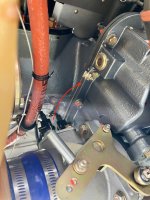
I installed a slightly stronger spring to open the throttle if the cable broke or becomes disconnected.
I'm the opinion that if that happens, I prefer WOT until I'm ready to land, then kill the engine as I see it fit.
You can see on this photo that the spring (from the aviation aisle of the big orange hardware store) broke after 140 hours.
Easy to check and replace.
BTW, no issues after 150 hours, easy to setup, no fiddling around except when at cruise and under 65% HP where I go LOP using the fuel trim knob.
-10% to -14% usually does it for ~50 LOP.
Smooth running and always easy to start.
Definitely suggest strongly to use the Bus Manager and have a good backup battery and/or alternator.IMG_0137.jpg

Good luck
 
Hello bt3vex, I echo your thoughts. I have several aftermarket items in my airplane and FlyEFII is the one I am still debating if it was the right choice.

Going forward, I will need to:
  • Check my injector housings for Stainless. I think the hoses between them should allow for more flexible, possibly with a loop.
  • I ordered my harness without firewall connectors. I am going to great lengths to make my firewall all steel and having a large nylon connector on the firewall did not meet that requirement. I may re-wire it completely using 22759/16 wire and machine barrel contact were possible
  • I am not using the Bus Manager, instead I am doing the following
    • I am wiring each injector to a separate breaker and then direct to injector.
    • I am wiring each coil pack to a separate coil pack and then direct to the coil pack
    • Each pump is wired to individual locking 20amp toggles and separate breakers, same for the ECUs
    • My thoughts were
      • I wanted immediate physical indication of a fault and immediate easy identification where
      • I did not want one fault or one loose power connection to take down all injectors, or all coils...
      • I am removing the fuseable links in the harness
    • All the breakers on the Engine bus are fed from 2 places from the front of the plane where the 2 BnC alternators are
    • I have 2 EarthX batteries ,PC1200, with 2 separate Master Contactors for isolation
      • Each battery via a separate master contactor (Master 1 and Master 2) are feeding the plane via 2AWG wire
      • Each battery has a fuse protected ,at the battery, #8 wire run to 20 Amp locking toggles and then to the Engine buss.
        • I can power the engine only via these either one of these #8 Emergency Engine Buss connections
        • Tests will be performed but I expect these batteries to power the system for some time- 30 minutes each minimum.
      • In summary, there are 4 power feeds to the engine buss. each one is prevented from back-feeding the rest of the airplane via a DIODE as specified by Bob Nuckles.


I would really like:
  • The ability to run both pumps at the same time and remove the automated fail-over. Fix any issues preventing this which I believe is cavitation at the pump manifold ( Roberts stated this)
  • Smaller , lighter coil packs arranged that do not have both top and bottom coils on the same pack. Currently Cyl 5 and 6 top and bottom plugs are on coil pack 3
  • Improved manuals
 
Valid thinking in my opinion.

That said, Plan B; can you simply remove the spring? A few zillion carbs and servos have none.
I was hoping someone had already done that and could help me avoid the investigation time.
 
My theory is if the cable breaks and engine goes to idle, I am descending and landing "soon" - Immediate emergency. If it goes to full throttle, I can continue to find a suitable landing spot and then kill the pump, or ignition or both and land dead stick knowing I have a chance of starting the engine again.
As I think about it more, you are probably right.
 
I installed a slightly stronger spring to open the throttle if the cable broke or becomes disconnected.
I'm the opinion that if that happens, I prefer WOT until I'm ready to land, then kill the engine as I see it fit.
You can see on this photo that the spring (from the aviation aisle of the big orange hardware store) broke after 140 hours.
Easy to check and replace.
BTW, no issues after 150 hours, easy to setup, no fiddling around except when at cruise and under 65% HP where I go LOP using the fuel trim knob.
-10% to -14% usually does it for ~50 LOP.
Smooth running and always easy to start.
Definitely suggest strongly to use the Bus Manager and have a good backup battery and/or alternator.View attachment 110347

Good luck
Thank You for the feedback and pictures.
 
Hello bt3vex, I echo your thoughts. I have several aftermarket items in my airplane and FlyEFII is the one I am still debating if it was the right choice.

Going forward, I will need to:
  • Check my injector housings for Stainless. I think the hoses between them should allow for more flexible, possibly with a loop.
  • I ordered my harness without firewall connectors. I am going to great lengths to make my firewall all steel and having a large nylon connector on the firewall did not meet that requirement. I may re-wire it completely using 22759/16 wire and machine barrel contact were possible
  • I am not using the Bus Manager, instead I am doing the following
    • I am wiring each injector to a separate breaker and then direct to injector.
    • I am wiring each coil pack to a separate coil pack and then direct to the coil pack
    • Each pump is wired to individual locking 20amp toggles and separate breakers, same for the ECUs
    • My thoughts were
      • I wanted immediate physical indication of a fault and immediate easy identification where
      • I did not want one fault or one loose power connection to take down all injectors, or all coils...
      • I am removing the fuseable links in the harness
    • All the breakers on the Engine bus are fed from 2 places from the front of the plane where the 2 BnC alternators are
    • I have 2 EarthX batteries ,PC1200, with 2 separate Master Contactors for isolation
      • Each battery via a separate master contactor (Master 1 and Master 2) are feeding the plane via 2AWG wire
      • Each battery has a fuse protected ,at the battery, #8 wire run to 20 Amp locking toggles and then to the Engine buss.
        • I can power the engine only via these either one of these #8 Emergency Engine Buss connections
        • Tests will be performed but I expect these batteries to power the system for some time- 30 minutes each minimum.
      • In summary, there are 4 power feeds to the engine buss. each one is prevented from back-feeding the rest of the airplane via a DIODE as specified by Bob Nuckles.


I would really like:
  • The ability to run both pumps at the same time and remove the automated fail-over. Fix any issues preventing this which I believe is cavitation at the pump manifold ( Roberts stated this)
  • Smaller , lighter coil packs arranged that do not have both top and bottom coils on the same pack. Currently Cyl 5 and 6 top and bottom plugs are on coil pack 3
  • Improved manuals
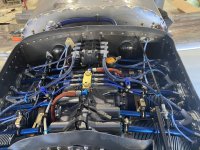
You can get most of what you want with SDS dual ECU dual bus. 2-6 cylinder coil packs vs the 3-4 cylinder coil packs from FlyEFII. A failure of that single coil (5&6) on FlyEFII will fail both cylinders with no backup. As to better manuals, the latest iteration from SDS is certainly better, but could be better yet.

I have dual battery, dual bus (hot battery and main) and no diodes with each SDS component individually switched and CB protected (modified Z-14).

I know many folks are happy with their FlyEFII system. I think the SDS is better designed, can have better redundancy (with proper electrical system design and installation) and the CNC’d components are of higher quality.
 

Attachments

  • IMG_7439.jpeg
    IMG_7439.jpeg
    2.8 MB · Views: 28
Hello bt3vex, I echo your thoughts. I have several aftermarket items in my airplane and FlyEFII is the one I am still debating if it was the right choice.

Going forward, I will need to:
  • Check my injector housings for Stainless. I think the hoses between them should allow for more flexible, possibly with a loop.
  • I ordered my harness without firewall connectors. I am going to great lengths to make my firewall all steel and having a large nylon connector on the firewall did not meet that requirement. I may re-wire it completely using 22759/16 wire and machine barrel contact were possible
  • I am not using the Bus Manager, instead I am doing the following
    • I am wiring each injector to a separate breaker and then direct to injector.
    • I am wiring each coil pack to a separate coil pack and then direct to the coil pack
    • Each pump is wired to individual locking 20amp toggles and separate breakers, same for the ECUs
    • My thoughts were
      • I wanted immediate physical indication of a fault and immediate easy identification where
      • I did not want one fault or one loose power connection to take down all injectors, or all coils...
      • I am removing the fuseable links in the harness
    • All the breakers on the Engine bus are fed from 2 places from the front of the plane where the 2 BnC alternators are
    • I have 2 EarthX batteries ,PC1200, with 2 separate Master Contactors for isolation
      • Each battery via a separate master contactor (Master 1 and Master 2) are feeding the plane via 2AWG wire
      • Each battery has a fuse protected ,at the battery, #8 wire run to 20 Amp locking toggles and then to the Engine buss.
        • I can power the engine only via these either one of these #8 Emergency Engine Buss connections
        • Tests will be performed but I expect these batteries to power the system for some time- 30 minutes each minimum.
      • In summary, there are 4 power feeds to the engine buss. each one is prevented from back-feeding the rest of the airplane via a DIODE as specified by Bob Nuckles.


I would really like:
  • The ability to run both pumps at the same time and remove the automated fail-over. Fix any issues preventing this which I believe is cavitation at the pump manifold ( Roberts stated this)
  • Smaller , lighter coil packs arranged that do not have both top and bottom coils on the same pack. Currently Cyl 5 and 6 top and bottom plugs are on coil pack 3
  • Improved manuals

Couple of questions.

1. What size breaker are you using on each of the injectors?

2. Why are you using 20 amp breakers on each fuel pump? The stock 155lph pumps draw about 6.5 amps max and the higher 255lph version draws about 8 amps. The data charts for the pumps are available online as they are walbro pumps. If you can’t find them let me know, I have them printed.

As an FYI, everything running together on the engine bus will draw about 12 - 13 amps continuously. An earthx etx1200 will run that load for considerably longer than 30 minutes.
 
Hello again everyone. I was mounting my throttle body to my engine intake and noticed a few things.
1- The intake area of the throttle body is smaller than the intake area on the engine. The bolt pattern fits yet I wonder if this caused any intake restrictions.

2 - The throttle body has a self closing feature (spring closes the intake, when no force is applied. This can be catastrophic if the throttle cable every comles loose or breaks. Has anyone tried to remove or reverse the spring. I could always add an opposing spring attached to the throttle cable bracket to oppose this self closing feature. Wondering if someone had nocied this and corrected it?

Thanks

The old rotary engines during WW1 had blip switches mounted to the control stick. They ran full throttle and used the blip switch to control engine speed by momentarily killing the ignition. .
 
BTW, no issues after 150 hours, easy to setup, no fiddling around except when at cruise and under 65% HP where I go LOP using the fuel trim knob.
-10% to -14% usually does it for ~50 LOP.
Smooth running and always easy to start.
Definitely suggest strongly to use the Bus Manager and have a good backup battery and/or alternator.
Being able to pick if one wants to start with both batteries 1 or 2 a plus. Also, the automatic pump pressure switchover for low pressure a nice feature. (Make sure you check the switch-over on the ground by pulling pump 1 and watch it switch.) At idle my FP is around 28 psi with a switchover around 23 psi. Keeps one from needing to run both pumps during critical phases of flight. Over 700 problem free hours on my 14A and now almost 100 hrs. on my 10.

Good discussion on throttle cable breaking and what one wants idle or WOT. I chose WOT as those with EFII or SDS can enrichen their engine to the point of excess rich and it loses power. EFII can go to +50%, not sure about SDS. Both good systems. I have tested this (over an airport with very long runways) at 8,500 ft and although the engine isn't happy you can still come close to regulating the throttle. I also wanted to test the true glide ratio power off and turned both pumps off and one can still produce some power with both pumps off which was a little surprising. I guess the check valves in the Walbro GSL pumps will open with minimum suction from the injection system. I didn't want to play test pilot to long and did not turn the coil packs off which would have stopped the engine for sure.

For LOP I go from 0 to -(32-34)% and AFR goes from ~ 14.0 to ~ 17.2. For my 540 this equates out to ~11.2-11.4 GPM and the 390 8.6-8.8 GPH.
 
Last edited:
You can get most of what you want with SDS dual ECU dual bus. 2-6 cylinder coil packs vs the 3-4 cylinder coil packs from FlyEFII. A failure of that single coil (5&6) on FlyEFII will fail both cylinders with no backup. As to better manuals, the latest iteration from SDS is certainly better, but could be better yet.

I have dual battery, dual bus (hot battery and main) and no diodes with each SDS component individually switched and CB protected (modified Z-14).

I know many folks are happy with their FlyEFII system. I think the SDS is better designed, can have better redundancy (with proper electrical system design and installation) and the CNC’d components are of higher quality.

The 5&6 single coil is a misconception by many although looking at the coil packs from the outside you might assume this could be an issue. The coil packs have two separate coils in each pack. A failure of one coil or half of one coil does not take out the other coil. These are smart coils with separate internal drive circuits for each coil. If one coil were to fail, (5 or 6) this should be discovered during run-up. Of course, one coil could fail in flight, but it does not take out 2 cylinders. (BTW a 540 runs fairly smooth on 5 cylinders in flight unlike a 4-banger losing one is a vibration nightmare)

Again, I think both systems are an advancement to our hobby just like LiFePO4 batteries are which 10 years ago some were predicting terrible outcomes using these.
 
Couple of questions.

1. What size breaker are you using on each of the injectors?

2. Why are you using 20 amp breakers on each fuel pump? The stock 155lph pumps draw about 6.5 amps max and the higher 255lph version draws about 8 amps. The data charts for the pumps are available online as they are walbro pumps. If you can’t find them let me know, I have them printed.

As an FYI, everything running together on the engine bus will draw about 12 - 13 amps continuously. An earthx etx1200 will run that load for considerably longer than 30 minutes.
Thank you for these questions. I just checked my panel and my previous amps were incorrect
ECUs are 5 Amps
Pumps are 10 Amps- I did a load test using my fuel rail and pressure regulator set at 35 PSI.
Coils are15 Amps
Injectors are 10 Amps
All wire will be sized to match the amperage

I will look for the pump information.

Regarding the batteries, yes Robert mentioned full power current draw is 11-13 Amps. I think he mentioned 11. I was being conservative and assuming the battery may not be new and not at 100% capacity. They are also being used for radio and avionics as well. Good to know they will be good for longer. Duration will be tested after break-in.

IMG_5406.jpeg
 
Thank you for these questions. I just checked my panel and my previous amps were incorrect
ECUs are 5 Amps
Pumps are 10 Amps- I did a load test using my fuel rail and pressure regulator set at 35 PSI.
Coils are15 Amps
Injectors are 10 Amps
All wire will be sized to match the amperage

I will look for the pump information.

Regarding the batteries, yes Robert mentioned full power current draw is 11-13 Amps. I think he mentioned 11. I was being conservative and assuming the battery may not be new and not at 100% capacity. They are also being used for radio and avionics as well. Good to know they will be good for longer. Duration will be tested after break-in.
Walbro recommends a 20-amp rating according to their name plate date. That might be part of the confusion. Actual amp draw is closer to 4 amps and using their pump curves max 6 amps. I have a 15-amp CB for my pumps and wiring to support said load.

Screenshot 2026-02-18 205031.png
 
The 5&6 single coil is a misconception… The coil packs have two separate coils in each pack. A failure of one coil or half of one coil does not take out the other coil. These are smart coils with separate internal drive circuits for each coil…
But the two coils in the coilpack share power and ground connections.
 
The 5&6 single coil is a misconception by many although looking at the coil packs from the outside you might assume this could be an issue. The coil packs have two separate coils in each pack. A failure of one coil or half of one coil does not take out the other coil.
True, but typically the coil packs have one power supply line; cpu commands the ignition by going low or going open on either of the two discrete coils. Therefore a short or wiring failure can kill the whole coil. Not as likely as a coil failure, but still a real threat.
 
Back
Top