Van's Air Force

The definitive Van's Aircraft support community! Buying, building or flying an RV? Join our exclusive family of mentors and enthusiasts!

Baffling clean up

Jeff Bost

Member
Guys,

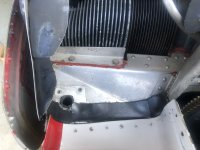
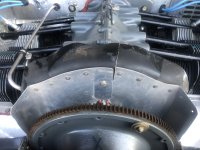
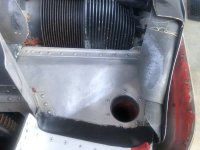
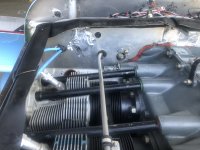
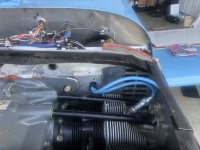
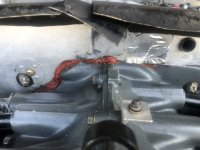
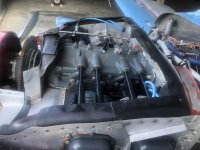
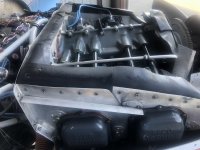
I’ve been experiencing high CHTs on 3 and 4 during cruise climb. Having to indicate 140 mph to have a chance at 400 F. I removed the top cowl this morning and snapped some pics of the baffling. Some old RTF around but I see the need for more. Big holes where the ignition harness comes through the rear. Any advice would be appreciated. I have a cockpit control for the oil cooler but it’s wired full open in the summer position. Some have suggest partially blocking the oil cooler if oil temp in acceptable. Thanks.

Jeff
 

Attachments

  • IMG_4655.jpeg
    IMG_4655.jpeg
    2.2 MB · Views: 824
  • IMG_4656.jpeg
    IMG_4656.jpeg
    1.9 MB · Views: 778
  • IMG_4657.jpeg
    IMG_4657.jpeg
    2 MB · Views: 753
  • IMG_4658.jpeg
    IMG_4658.jpeg
    2.1 MB · Views: 714
  • IMG_4659.jpeg
    IMG_4659.jpeg
    1.7 MB · Views: 692
  • IMG_4660.jpeg
    IMG_4660.jpeg
    2.2 MB · Views: 660
  • IMG_4661.jpeg
    IMG_4661.jpeg
    2 MB · Views: 661
  • IMG_4663.jpeg
    IMG_4663.jpeg
    1.8 MB · Views: 651
  • IMG_4662.jpeg
    IMG_4662.jpeg
    1.6 MB · Views: 644
  • IMG_4664.jpeg
    IMG_4664.jpeg
    1.6 MB · Views: 825
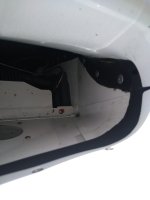
ACS sells spark plug flange fittings to pass through the plugs while not leaking any air. I also have a controlled oil cooler door in my 8 but it has no affect on cylinder temps open or closed. I also have sufficient cooling.
 
Those baffles look old.
is this a new problem?
what engine?
what temp at desired climb?

I think folks get too worked up worrying over climb temps on lycoming engines.
 
Those baffles look old.
is this a new problem?
what engine?
what temp at desired climb?

I think folks get too worked up worrying over climb temps on lycoming engines.

I purchased the airplane 2 months ago. O-360 with CS prop. If I climb at Vy till 1000ft, then accelerate to 130-140, I’ll reach 430 CHT easily on #3 and 4. Reducing prop to 2500 rpm is minor help. Will cruise below 400, but won’t climb that way in warm weather. Seems like a baffling issue to me. Thanks, Jeff
 
Do you have a picture of the inside of the top cowl?
Was going to ask the same thing. The way the vertical baffles behind the ring gear are cut real high makes me curious what the interface to the cowl inlet ramps looks like.
 
Check your ignition timing. An overly advanced timing will increase CHT significantly. Check for an induction leak especially on cylinders 3 and 4. A lean condition can drive up CHT’s. Replace intake tube gaskets if more than a few years old.

Your baffles really don’t look that bad. But it may be time to replace with new silicone seals. Make sure the seals are making contact all the way around. There appears to be some puckering.

Jerry
 
You could use some front cylinder covers. They are a small place that is riveted to that angle going across the front of each cylinder. It helps push the air over the cylinder and back to the back cylinders on the engine. It keeps the air from diving right down the fins in the front there. It will also bring the front cylinder temps up if they are running cooler than the back ones.
Check each cylinder with a flashlight, between your pushrod tubes. Shine a light up from the bottom side of the cylinder in the area between the intake and exhaust valves. That area should not have any flashing in there. During the sand casting process, excess metal can get in that area and block off the air passages. You want all the flashing removed in there and have open passages so the air can get in there and cool between the intake and exhaust valves.
Also look up under the cylinders and make sure your inter-cylinder baffles fit snug up against the cylinders and don't have big open spaces. Sometimes they get hung up on the cylinder base nuts and are not install correctly, leaving large open gaps.
The underside of the cylinder baffles should also be pulled tight to the cylinder fins. They are the ones that wrap around the cylinders. It's a bugger to get them nice and tight. That will let a lot of air blow by and not go through the fin area.
Lastly, What is that oil line going over the top of the engine? Looks like it's going to your front crankcase and controls your C/S prop. I would highly recommend you ditch that non-standard piping arrangement and go purchase and new oil line from Superior or Lycoming. Texas Air Power has them or aerosport power in Kamloops, BC. It's a very specific line with some clips and clamps that attach and secure the line under the cylinders. That line you have could crack and break and then it will be a very bad day for you when you have oil going everywhere. Somethings you can alter and change due to it being experimental, however, I would error on the side of caution and purchase the correct parts on a critical oil line like that. The pressure coming out of that is like 300 psi, not 80 psi from your engine drive oil pump. IF you need me to help you look up that part number, I can do that.
 
You could use some front cylinder covers. They are a small place that is riveted to that angle going across the front of each cylinder. It helps push the air over the cylinder and back to the back cylinders on the engine. It keeps the air from diving right down the fins in the front there. It will also bring the front cylinder temps up if they are running cooler than the back ones.
Check each cylinder with a flashlight, between your pushrod tubes. Shine a light up from the bottom side of the cylinder in the area between the intake and exhaust valves. That area should not have any flashing in there. During the sand casting process, excess metal can get in that area and block off the air passages. You want all the flashing removed in there and have open passages so the air can get in there and cool between the intake and exhaust valves.
Also look up under the cylinders and make sure your inter-cylinder baffles fit snug up against the cylinders and don't have big open spaces. Sometimes they get hung up on the cylinder base nuts and are not install correctly, leaving large open gaps.
The underside of the cylinder baffles should also be pulled tight to the cylinder fins. They are the ones that wrap around the cylinders. It's a bugger to get them nice and tight. That will let a lot of air blow by and not go through the fin area.
Lastly, What is that oil line going over the top of the engine? Looks like it's going to your front crankcase and controls your C/S prop. I would highly recommend you ditch that non-standard piping arrangement and go purchase and new oil line from Superior or Lycoming. Texas Air Power has them or aerosport power in Kamloops, BC. It's a very specific line with some clips and clamps that attach and secure the line under the cylinders. That line you have could crack and break and then it will be a very bad day for you when you have oil going everywhere. Somethings you can alter and change due to it being experimental, however, I would error on the side of caution and purchase the correct parts on a critical oil line like that. The pressure coming out of that is like 300 psi, not 80 psi from your engine drive oil pump. IF you need me to help you look up that part number, I can do that.

Good info…thanks. The engine was assembled by a reputable builder and I’m surprised he’d set the supply line for the governor incorrectly. I’ll look into it. Thanks again. Jeff
 
That governor line was the starting point for an engine fire and fatal crash in an RV.
The sheet metal portion of the baffles may be too far from the cowl.
Install new silicone rubber all the way around. The baffle rubber at the front of the engine is not doing much.
45 degree angles on the sides and aft baffles would help to keep the rubber properly oriented.
If you do it right the silicon material should not need cuts to go around shallow bends.
If you set the timing to 22 degrees you should get a measurable drop in CHT.
Check the inter cylinder baffles that they are tight against the fins and have the proper gap.
 
I purchased the airplane 2 months ago. O-360 with CS prop. If I climb at Vy till 1000ft, then accelerate to 130-140, I’ll reach 430 CHT easily on #3 and 4. Reducing prop to 2500 rpm is minor help. Will cruise below 400, but won’t climb that way in warm weather. Seems like a baffling issue to me. Thanks, Jeff

500 is redline.
435 is high performance ops
400 is economy cruise ops
per the O-360 manual.
 
Those baffles look fine IF they are sealing to the top cowl. Witness marks will show where the baffle material is making good contact and also where it isn’t, and leaking. That’s why folks want to see the top cowl inside pics.
Set your engine timing per the manufacture. Probably 25d btc Retarding the timing is just a cover up.
 
Last edited:
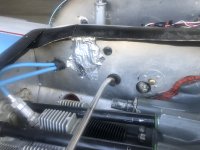
The only thing I might add is that it looks like you have a hole for a blast tube in the baffle wall behind #3 cylinder, but the blast tube is missing. If that's what that is, you have a big hole there that's doing nothing useful. And I'm curious as well to see what the fit of the flexible seals is at the D-shaped cowling openings. It's hard to visualize how that's working without the top cowling in place. If you have a borescope, you can look around at how everything seals against the top cowling. ANY gap that allows air to bypass the cooling fins is affecting your CHTs. One technique is to put a work light in the bottom half of the cowling and look for where you can see light. You'd be surprised how just a little bit of sealing up gaps will really help bring temps down to where you're more comfortable.
 
500 is redline.
435 is high performance ops
400 is economy cruise ops
per the O-360 manual.

Yes sir, I'm aware of those numbers. I'm used to flying big bore Continentals and temps over 400 are a no no. This engine has 1070 hrs and the previous owner replaced # 3 and 4 right before I bought it. I suspect the high temps might have contributed to their early exit. Thanks for your response. Jeff
 
Those baffles look fine IF they are sealing to the top cowl. Witness marks will show where the baffle material is making good contact and also where it isn’t, and leaking. That’s why folks want to see the top cowl inside pics.
Set your engine timing per the manufacture. Probably 25d btc Retarding the timing is just a cover up.
Yes sir .... I've been down the timing road with another engine without much success. I'll check top cowl soon, Jeff
 
The only thing I might add is that it looks like you have a hole for a blast tube in the baffle wall behind #3 cylinder, but the blast tube is missing. If that's what that is, you have a big hole there that's doing nothing useful. And I'm curious as well to see what the fit of the flexible seals is at the D-shaped cowling openings. It's hard to visualize how that's working without the top cowling in place. If you have a borescope, you can look around at how everything seals against the top cowling. ANY gap that allows air to bypass the cooling fins is affecting your CHTs. One technique is to put a work light in the bottom half of the cowling and look for where you can see light. You'd be surprised how just a little bit of sealing up gaps will really help bring temps down to where you're more comfortable.
Thanks. There is a blast tube on the other side that's aimed at the vacuum pump. Nothing but a hole on the right side. I almost duct taped it closed but decided that tape might not have enough heat resistance. Several holes where taped closed but had a higher quality tape in place. Jeff
 
I’m chasing high CHTs on climb out as well. 430+ on #3 and #4 and I can’t stand it. I took both top and bottom cowling off then put the top cowling back on. In a semi-dark hanger, then I took a flashlight from the now open bottom and ran it along the edge of the baffle seals looking through the inlets in the front. It was obvious where it was not sealing - almost everywhere. I have big long stretches and a bunch of big open areas near the front. This is a new to me RV6A with an 80 SMOH as well and I believe these are original baffles. They are clearly too short to seal up. This weekend is a full replacement of all the baffling.
 
I am pretty new to aviation and lack any work experience. But I really hate to look for anything exotic before the obvious.
new baffling.
live with the numbers that are acceptable.
 
I purchased the airplane 2 months ago. O-360 with CS prop. If I climb at Vy till 1000ft, then accelerate to 130-140, I’ll reach 430 CHT easily on #3 and 4. Reducing prop to 2500 rpm is minor help. Will cruise below 400, but won’t climb that way in warm weather. Seems like a baffling issue to me. Thanks, Jeff

At a glance, this one needs a lot of seal work.

500 is redline.
435 is high performance ops
400 is economy cruise ops
per the O-360 manual.

Joe, it's good to see a new pilot memorizing the numbers. Remember this one too...four new jugs is about $10K installed.
 
Last edited:
Jeff, what is the model number/data on your carb? Share please. Also, you are getting 2700 rpm on roll? If so, what is your engine info system saying about fuel flow while you climb, seeing your numbers you want down?
 
I’m chasing high CHTs on climb out as well. 430+ on #3 and #4 and I can’t stand it. I took both top and bottom cowling off then put the top cowling back on. In a semi-dark hanger, then I took a flashlight from the now open bottom and ran it along the edge of the baffle seals looking through the inlets in the front. It was obvious where it was not sealing - almost everywhere. I have big long stretches and a bunch of big open areas near the front. This is a new to me RV6A with an 80 SMOH as well and I believe these are original baffles. They are clearly too short to seal up. This weekend is a full replacement of all the baffling.
Thanks Paul. Take pics and let me know how you make out. Jeff
 
Jeff, what is the model number/data on your carb? Share please. Also, you are getting 2700 rpm on roll? If so, what is your engine info system saying about fuel flow while you climb, seeing your numbers you want down?

I was about to ask the same question. Many carbs have an economizer function which leans the mixture as soon as you throttle back a bit. Climbing at WOT is best for cooling with a carb like that.
 
Jeff, what is the model number/data on your carb? Share please. Also, you are getting 2700 rpm on roll? If so, what is your engine info system saying about fuel flow while you climb, seeing your numbers you want down?
Yes on all counts….just under2700 and FF is book or better with boost pump on during takeoff and climb. I think the carb jet is ok. Jeff
 
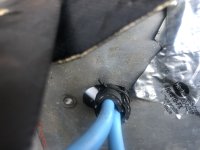
Jeff: before further flight I would closely inspect oil line over the top of the engine:
the baffle grommet is torn and shifted, and the line is discolored where it touches the edge of the hole.

As Jim & Aden noted, a high pressure oil leak at the engine can be catastrophic; I recommend inspection of the oil line is your priority.
 
Jeff: before further flight I would closely inspect oil line over the top of the engine:
the baffle grommet is torn and shifted, and the line is discolored where it touches the edge of the hole.

As Jim & Aden noted, a high pressure oil leak at the engine can be catastrophic; I recommend inspection of the oil line is your priority.
Thanks. I agree completely and I don’t intend to fly until I get this sorted. Jeff
 
I’m chasing high CHTs on climb out as well. 430+ on #3 and #4 and I can’t stand it. I took both top and bottom cowling off then put the top cowling back on. In a semi-dark hanger, then I took a flashlight from the now open bottom and ran it along the edge of the baffle seals looking through the inlets in the front. It was obvious where it was not sealing - almost everywhere. I have big long stretches and a bunch of big open areas near the front. This is a new to me RV6A with an 80 SMOH as well and I believe these are original baffles. They are clearly too short to seal up. This weekend is a full replacement of all the baffling.
It would be tough to diagnose this way as the top cowl position is largely dictated by the bottom cowl. Also, too short on baffle material will typically cause them to “blow out”. This would be obvious if they were. Keep in mind the plenum gets its pressure from ram air which forces the baffle material up against the cowl to seal. It should lay against the cowl naturally and form a prroper “curl” against the top cowl when relaxed.
Not saying it isn’t an issue on yours but witness marks on the top cowl are a reliable indicator of how well they are sealing.
 
It would be tough to diagnose this way as the top cowl position is largely dictated by the bottom cowl. Also, too short on baffle material will typically cause them to “blow out”. This would be obvious if they were. Keep in mind the plenum gets its pressure from ram air which forces the baffle material up against the cowl to seal. It should lay against the cowl naturally and form a prroper “curl” against the top cowl when relaxed.
Not saying it isn’t an issue on yours but witness marks on the top cowl are a reliable indicator of how well they are sealing.

Thank you sir. Jeff
 
I agree with Dan, there’s a lot of baffle seal work that needs to be accomplished, including the area behind the starter ring gear - the vertical sections need to seal tightly against the cowl inlets and upper cowl ramps. I also see multiple holes in the back baffle. It looks like all of the openings for wires and the governer line are either not sealed, or not sealed properly. As others have said, make sure you secure the gov oil line where it penetrates that back baffle. It not only needs to seal air leakage, but it needs a robust soft material buffer against the aluminum baffle opening.
Years ago while working on the baffles/seals on my Cessna 170, I read a maintenance instruction that said a one square inch opening in your baffling can account for up to a 20% reduction in cooling efficiency. It doesn’t matter where the leakage is, it is reducing the pressure differential, and that affects the whole engine air cooling system.
Clamp a couple lights in the back area of the engine, put the cowl on in a dark hangar, and see if there is any light anywhere while looking in through the front cowl inlets. If you so, it deserves a look to see if you can at least minimize it.
 
I agree with Dan, there’s a lot of baffle seal work that needs to be accomplished, including the area behind the starter ring gear - the vertical sections need to seal tightly against the cowl inlets and upper cowl ramps. I also see multiple holes in the back baffle. It looks like all of the openings for wires and the governer line are either not sealed, or not sealed properly. As others have said, make sure you secure the gov oil line where it penetrates that back baffle. It not only needs to seal air leakage, but it needs a robust soft material buffer against the aluminum baffle opening.
Years ago while working on the baffles/seals on my Cessna 170, I read a maintenance instruction that said a one square inch opening in your baffling can account for up to a 20% reduction in cooling efficiency. It doesn’t matter where the leakage is, it is reducing the pressure differential, and that affects the whole engine air cooling system.
Clamp a couple lights in the back area of the engine, put the cowl on in a dark hangar, and see if there is any light anywhere while looking in through the front cowl inlets. If you so, it deserves a look to see if you can at least minimize it.
Thanks Scott. Agree with all and will get it take care of soon. Jeff
 
  1. By my eye there is absolute no sealing between the inboard side of the cowl inlets and the vertical section of baffling near the ring gear
  2. It looks like a substantial leak area around the upper pilot's side engine mount and the back baffle
  3. Check for presence of the upper cowl inlet 'ramps', should be bonded onto the cowl top
  4. Can the cowl ramps bypass air? This is a common mistake where pressurized air can get into the inboard side of the ramp, and then exits outboard of the baffling. Unclear how this is done on this plane
  5. Do you have a 4 point CHT monitor? What do the temp spreads look like between #1 and #3, and #2 and #4. If the front cylinders are 20F hotter, start adding some aluminum tape to the front face of the front cylinders. Plans call for a deflector here, which helps move some of the air aft. Some need it, some don't, some swear at it, etc.
  6. Look down the back side of #3 at the base. Shine a light up from below. Very common to have a finger sized gap down in there.
  7. As someone above noted, look at the inter-cylinder baffles. Shine a light from the top, and look at the bottom. High Temp RTV all gaps.
 
I think folks get too worked up worrying over climb temps on lycoming engines.

We picked up a core engine. 700 hours in a flying club airplane. No engine monitor. All 4 cylinders were unserviceable due to cracks in the heads near the exhaust valves. Genuine Lycoming cylinders...

I can't say that this was from heat abuse or not. Maybe just fate. FWIW.

Edit:
I should add the engine was not pulled because of poor compression.
 
Last edited:
Looking at the pics closer, you can see differences in sheen on the tops of the baffle material. You should see a relatively even “wear” or rub line along the length of the material. Shiny spots mean they are not making contact.
Also, like others mentioned, the front seal appears to have sections left out, even open rivet holes. This is a tough place to seal also. Takes some ingenuity as the plans are less than informative on these old builds.
The transition in the back left can be difficult. Many of us added a secondary piece of metal so the back baffle is straight and doesn’t make that jog as the jog is hard to seal with material. It looks like the builder just stuck a piece of material over the jog, which isn’t doing anything.
You can, and will, do better….
 
The comment on retarding the timing is ill informed. 20 degrees is optional per Lycoming and is mandatory on some engines. I suggested it as a means of lowering the CHT while working on the real cause.
 
The comment on retarding the timing is ill informed. 20 degrees is optional per Lycoming and is mandatory on some engines. I suggested it as a means of lowering the CHT while working on the real cause.
Understood, but the OP is managing his CHT’s ok now, and is looking to get them better on climb out. He is reworking baffling to fix the problem. That’s the topic. But sure, reduce timing, reduce CHT’s a bit and reduce performance a bit. No “ill informed” comments there.
 
Looking at the pics closer, you can see differences in sheen on the tops of the baffle material. You should see a relatively even “wear” or rub line along the length of the material. Shiny spots mean they are not making contact.
Also, like others mentioned, the front seal appears to have sections left out, even open rivet holes. This is a tough place to seal also. Takes some ingenuity as the plans are less than informative on these old builds.
The transition in the back left can be difficult. Many of us added a secondary piece of metal so the back baffle is straight and doesn’t make that jog as the jog is hard to seal with material. It looks like the builder just stuck a piece of material over the jog, which isn’t doing anything.
You can, and will, do better….
I noticed the open rivet areas too. No baffling material at all. I’m thinking of having Base Leg Aviation redo all the baffling and rerouting my prop governor oil line. Jeff
 
I noticed the open rivet areas too. No baffling material at all. I’m thinking of having Base Leg Aviation redo all the baffling and rerouting my prop governor oil line. Jeff
Wise choice. It will done As it should be.
 
Guys,

I’ve been experiencing high CHTs on 3 and 4 during cruise climb. Having to indicate 140 mph to have a chance at 400 F. I removed the top cowl this morning and snapped some pics of the baffling. Some old RTF around but I see the need for more. Big holes where the ignition harness comes through the rear. Any advice would be appreciated. I have a cockpit control for the oil cooler but it’s wired full open in the summer position. Some have suggest partially blocking the oil cooler if oil temp in acceptable. Thanks.

Jeff
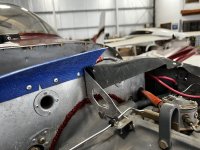
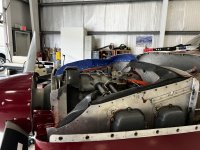
Your black baffle seals look identical to how mine were when I bought my plane. I could never keep CHT below 400 on climb here in FL. Replaced with the blue baffle material from Aircraft Spruce (the one reinforced with fiberglass) and used the baffle pop rivets from Spruce as well. Very easy job, and I kid you not it lowered my CHTs by 20F across the board. Now I’m surprised to see 403 on my hottest cylinder during climb out on a 96 degree afternoon.

I have had some higher CHTs while cruising up around 9,000’ OAT 56F. By high I mean wanting to creep past 380F (I’m told I should keep below 380 during cruise). Looking into timing for this. My plane has IO-320, FP prop, dual Pmags.
 

Attachments

  • IMG_7731.jpeg
    IMG_7731.jpeg
    3.2 MB · Views: 234
  • IMG_7725.jpeg
    IMG_7725.jpeg
    2.9 MB · Views: 235
Your black baffle seals look identical to how mine were when I bought my plane. I could never keep CHT below 400 on climb here in FL. Replaced with the blue baffle material from Aircraft Spruce (the one reinforced with fiberglass) and used the baffle pop rivets from Spruce as well. Very easy job, and I kid you not it lowered my CHTs by 20F across the board. Now I’m surprised to see 403 on my hottest cylinder during climb out on a 96 degree afternoon.

I have had some higher CHTs while cruising up around 9,000’ OAT 56F. By high I mean wanting to creep past 380F (I’m told I should keep below 380 during cruise). Looking into timing for this. My plane has IO-320, FP prop, dual Pmags.
Thanks. Nice work! I wish I had rivet experience and could do this myself. Looks like a fun project. Thank you for the photos. Jeff
 
Thanks. Nice work! I wish I had rivet experience and could do this myself. Looks like a fun project. Thank you for the photos. Jeff
Thank you. This was my first rivet project! You can do it! Have someone show you a few and I’m sure you’ll get the hang of it.
 
I was hitting 430+ on climb out at 25'" and 2500 RPM. Having to dial way back and lower to under 500 ft/min to keep from going up. This weekend pulled all the old baffle seals off around the cowling. Replaced with the orange which is about an 1" wider or more. I ran out so I couldn't seal around the front prop area. Took it up in the same weather and now 415 maximum and when dialing back just a little down to 405 and cruise 370 maximum. The baffle seals were definitely the reason for the high CHTs. I'm hoping to drop it another 5 degrees when my second roll of baffle seals arrives to deal with the seals around the prop area. The old material was extremely ridged and the new just presses up tight to the cowling and makes a great seal.
 
  • Like
Reactions: RNB
Thanks. Nice work! I wish I had rivet experience and could do this myself. Looks like a fun project. Thank you for the photos. Jeff
Baffling fabric is attached with pull (pop) rivets. Easy to do. No helper needed. I'm sure there's some videos around.

I'd be a bit cautious about having any typical shop work on RV baffles. Look at a typical Piper or Cessna on the flight line. Just look up the nose. Holes everywhere! How do they cool? Answer: giant inlets (maybe giant outlets too?). So the typical shop lesson learned is: no need to fill all the holes, it'll be just fine. NOT TRUE ON AN RV!
 
Can’t add much to the discussion except to double down on some key principles.

1. Anywhere air can get out and is not going through head fins or oil cooler is wrong. Perfection is desired here but rarely attained. You have a LOT of work to do to get to “acceptable”.

2. Baffle sealing to the cowl is significantly more difficult when you cut them into segments. Sometimes this is unavoidable but should be minimized to the maximum extent possible. I was able to stretch and form my side and rear baffles into shape on my Rocket with one continuous piece. These were silicone and were pretty compliant. yours have many overlaps and each one of those is a leak. It also appears that you have large segments that don’t even touch the cowl at all.

3. Not a showstopper, but a significant enhancement is the addition of the #3 and #2 “bypass ducts”. This addition makes a huge difference. Please do a forum search for plenty of hits on the subject.

4. And a “hard STOP” on that governor line. Pictures suggest that the grommet is destroyed and you have metal to metal contact there. That’s a 400 PSI line and a leak is a very bad day. Nothing wrong with fabricating one, but you have to understand the engineering behind it. Whomever installed that one either does not understand or ignored. Both are bad.
 
Can’t add much to the discussion except to double down on some key principles.

1. Anywhere air can get out and is not going through head fins or oil cooler is wrong. Perfection is desired here but rarely attained. You have a LOT of work to do to get to “acceptable”.

2. Baffle sealing to the cowl is significantly more difficult when you cut them into segments. Sometimes this is unavoidable but should be minimized to the maximum extent possible. I was able to stretch and form my side and rear baffles into shape on my Rocket with one continuous piece. These were silicone and were pretty compliant. yours have many overlaps and each one of those is a leak. It also appears that you have large segments that don’t even touch the cowl at all.

3. Not a showstopper, but a significant enhancement is the addition of the #3 and #2 “bypass ducts”. This addition makes a huge difference. Please do a forum search for plenty of hits on the subject.

4. And a “hard STOP” on that governor line. Pictures suggest that the grommet is destroyed and you have metal to metal contact there. That’s a 400 PSI line and a leak is a very bad day. Nothing wrong with fabricating one, but you have to understand the engineering behind it. Whomever installed that one either does not understand or ignored. Both are bad.
Thanks! Jeff
 
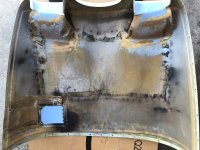
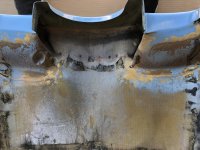
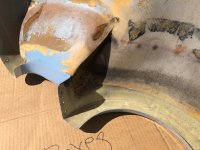
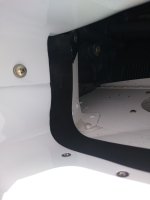
Here are a few pics of the inside of the top cowl. Lots of air leaks obviously. This cowl has those ramps at the front that are hollow and you can stick your hand through. Looks like a lot of potential for air to pass by and escape the baffling. Would it be advisable to spray a foam expanding sealant in there to block that air?

An RV buddy helped me install a new grommet around that prop governor oil line. There was no wear on the line and it will get me down the road until we reroute the line under the engine. His RV has a CS prop as well and he referenced a SB from Lycoming that will allow a flexible hose vs the steel line. Much easier to route and install. I’m going to order some pop rivets and some new silicone baffle seal material from Spruce and get to work on the seals. We RTVd some leaks today as well.

We did verify the intercylinder baffles were there, but one is badly out of position and showing a half inch gap! We are going to try and rework that tomorrow. It’s on the 2 and 4 side and #4 has been hottest for me. I bet this fix will really help my temps. Lots of air getting away there.
 

Attachments

  • IMG_4667.jpeg
    IMG_4667.jpeg
    1.8 MB · Views: 258
  • IMG_4668.jpeg
    IMG_4668.jpeg
    2 MB · Views: 256
  • IMG_4672.jpeg
    IMG_4672.jpeg
    3.1 MB · Views: 258
If not already obvious to you, those places midway along the sides that look like a river delta of black dust... is where big air leaks are blowing dust through the gaps in the baffling. As opposed to the black rub marks which is just the baffle fabric working on the cowling as the engine vibrates.

In the first photo, upper left --- it isn't clear whether the baffle fabric is trying to seal on the "ramp" face, or along the side. There isn't much wear marking there so I suspect another big leak. I've been extending those ramps over to the cowling side so I can seal against the face of the ramp (as we are looking at it in the pic). That extension can be done with fiberglass, pop riveted in aluminum sheet, etc. I wouldn't extend with baffle fabric as air pressure would just push it open.

second pic, you can see some really poor sealing in the area at front of the engine aft of the spinner. Everything that gets in there and blows forward has an immediate exit into the lower cowl around the front of the engine. Hard area to seal well, but certainly can be improved.
 
Back
Top