Van's Air Force

The definitive Van's Aircraft support community! Buying, building or flying an RV? Join our exclusive family of mentors and enthusiasts!

Jacking a RV-14 on Cleaveland Tools Stainless Tie Down Ring

Estevanb

Well Known Member
Sponsor
Hi everyone!

I need to jack up my RV-14A for the first time and I have installed these nice STAINLESS TIE DOWN RING (SKU: RVTR4), sold by Cleaveland Tools. Does anyone have any experience if those will hold the weight?

Looks like their round shape was designed to actually nest on the cups of the jacks but my concern is that with the weight they might fail.. There are no specs on the website for these..
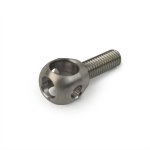
RVTR4_1024x1024@2x.jpg
 
Do you need both wheels off the ground? If not, jack at the wheel which has far less chance for mishaps. More than one person has jacked their plane at the tie down and end up with a punctured skin.
 
Do you need both wheels off the ground? If not, jack at the wheel which has far less chance for mishaps. More than one person has jacked their plane at the tie down and end up with a punctured skin.
I need to put the airplane on flight level attitude to do the ADAHRS calibration. So, yes, both wheels..
 
Jack up one side at a time, put wood blocks under the tire, let the wind down. Repeat for the other side.

Carl
That's why I like to be around smart people. Simple obvious solution, but I never thought about doing that Carl. :)
Thanks!

But still have the question about jack using this tie down. My jack is a wing jack and not a landing gear one...
 
That's why I like to be around smart people. Simple obvious solution, but I never thought about doing that Carl. :)
Thanks!

But still have the question about jack using this tie down. My jack is a wing jack and not a landing gear one...
Since you have wing jack stands, suggest you invest in a pair of these.

 
Since you have wing jack stands, suggest you invest in a pair of these.

I was trying to avoid a new purchase. but yes, I think I might have to.
 
Call the vendor?
I did. Vendor said that tension tests were done but he wasn't aware of compression tests. He is now asking the actual manufacture and he will give me the feedback.

I will share here what I learn.

Thanks guys
 
But still have the question about jack using this tie down. My jack is a wing jack and not a landing gear one.
I never jack up a wing using the tie down. I know people say "this is how it has aways been done" but I still just see risk of someone bumping into the wing and the jack going through the skin.

I use a padded block of wood centered on the wing spare. The block has a pipe floor flange on the bottom that the jack rides in. On the trail dragger I first jack up the tail using the same type of HF long ram, but with a welded tail wheel holder pinned on the end. The tail wheel needs to be up so the jack angle on the wing is close to 90 degrees.

Carl
 
Used these (link at bottom) on my Mooney for a few decades. I like them better than the other combo rings/jackpoints, though someone here will flame them as they chose differently.

No chance for reversing loads on the threads.
The forces aren't "levered" out away from the aircraft structure.
I did put a layer of teflon tape under them before I installed them. No hint of filiform after ~20 years and my paint wasn't great for most of that.

If there's clearance between the jack cup edge and the AC skin, I'll install them on this taildragger project if I live long enough to complete it.

Just an option. No reason to tell me I've made/suggesting a bad choice. As others have said, best to (incrementally) crib the gear

LASAR tie downs
 
I never jack up a wing using the tie down. I know people say "this is how it has aways been done" but I still just see risk of someone bumping into the wing and the jack going through the skin.

I use a padded block of wood centered on the wing spare. The block has a pipe floor flange on the bottom that the jack rides in. On the trail dragger I first jack up the tail using the same type of HF long ram, but with a welded tail wheel holder pinned on the end. The tail wheel needs to be up so the jack angle on the wing is close to 90 degrees.

Carl
Carl, would you mind sending a picture of your setup next time you jack it up? I think I can picture what you said and looks like a very safe way to do it. Thanks!
 
Hi everyone!

I need to jack up my RV-14A for the first time and I have installed these nice STAINLESS TIE DOWN RING (SKU: RVTR4), sold by Cleaveland Tools. Does anyone have any experience if those will hold the weight?

Looks like their round shape was designed to actually nest on the cups of the jacks but my concern is that with the weight they might fail.. There are no specs on the website for these..

View attachment 67819
These pretty foolproof. I really like mine. They would be also easy to make.

 
Here's what I do when I need to jack up the my RV-7A with all wheels off the floor. First I tie the tail tie down to an anchor in the hanger floor. The anchor is such that it can withstand more pull than the plan's tail could ever give. I then replace the wing tie downs with Allen head bolts of the same tread size. These are used by the wing jacks that have cups that cannot allow the replacement bolt to slip out of the cup on the jack. Jacking up each wing results in all three wheels to come off the hanger floor, making it easier to facilitate condition inspection and maintenance. Because the wing jacks have "cups" rather than dishes there is no way for the wings jacks to slip off the Allen head bolts.
 
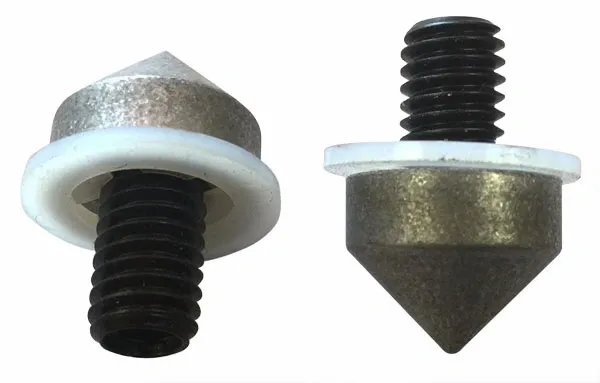
I use the anti-splat jack points. Less that $30 and they nest nicely in the dimple in the top of my jacks. I also have a TailLift jack for tailwheel aircraft (TailLift now out of business).


1-21.webp
 
I have never seen an aircraft designed to be jacked by the fuselage unless there are weldments or other fittings to do so.
I would never lift the fuselage with a padded anything with the wings on.
On the 6, you would be pressing on spar and rib flanges and perhaps the bottom of the longerons. I’m sure it can take it and if carefully done, avoid damage.
That said, lifting from the tie downs is not just how folks have done it forever, it’s how it was designed.
This isn’t an RV thing. It’s pretty standard across most aircraft.
Use proper jacks and jack points and you couldn’t knock it off the jacks if you tried.
 
I heard back from the manufacturer that using the tie down rings are plenty strong enough to be used as a jack point (even on an RV-10 with full fuel).

This is the reply I got from Cleaveland Tools yesterday.

They’ve checked with their manufacturer of the part and the tie down is all I need. Solid product! Kudos to Cleaveland Tools for the good products selection!
 
These pretty foolproof. I really like mine. They would be also easy to make.

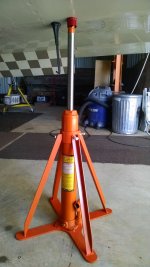
Will someone please provide make and part number (or description) for bottle Jack shown above? I’m having a hard time finding a Jack with a wide base (for stability) like this one. Thanks so much!
 
Will someone please provide make and part number (or description) for bottle Jack shown above? I’m having a hard time finding a Jack with a wide base (for stability) like this one. Thanks so much!
It's not a bottle jack and the system is for a 14A. Would help to describe your airframe and what you are trying to do.
 
Will someone please provide make and part number (or description) for bottle Jack shown above? I’m having a hard time finding a Jack with a wide base (for stability) like this one. Thanks so much!
I think it is a Harbor Freight and Tool hydraulic ram, sometimes used to make a log splitter. I used similar 40+ years ago making my first set of wing jacks. I took a short piece of 1" metal conduit, swelled it slightly, and slipped it over the top to make a safety well. It is still in use often.
 
I think he is referring to post 14. That jack is a floor jack. I use a long socket that just fits in the axle fitting and a floor jack on the RV14. Nothing fancy.
 
Back
Top