Van's Air Force

The definitive Van's Aircraft support community! Buying, building or flying an RV? Join our exclusive family of mentors and enthusiasts!

Published: SB-00102 - Control Stick Pushrod Inspection (inspect before further flight)

greghughespdx

Well Known Member
Van's has published Service Bulletin SB-00102 - Control Stick Pushrod Inspection.

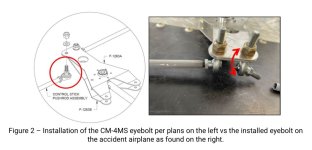
This service document directs owners/operators to inspect flying aircraft before further flight. Van’s Aircraft has recently become aware of an EAB RV-12 where it appears that the pilot’s side control stick became disconnected in flight due to improper assembly of the F-1264 Control Stick Pushrod Assembly. Out of an abundance of caution this service bulletin requires an inspection of the F-1264 Control Stick Pushrod Assembly, the correct installation of jam nuts, and proper orientation of rod end fittings.
 
Last edited:
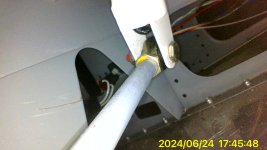
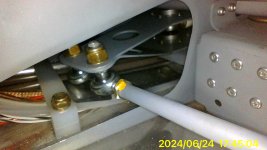
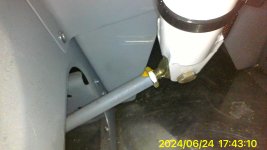
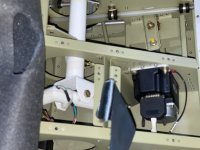
It’s a simple quick inspection if you have an articulated inspection camera. I went in through the stick boot, 5 minutes total.
 

Attachments

  • Image_2024-06-24 17_45_48_203.jpeg
    Image_2024-06-24 17_45_48_203.jpeg
    997.4 KB · Views: 475
  • Image_2024-06-24 17_45_04_494.jpeg
    Image_2024-06-24 17_45_04_494.jpeg
    1 MB · Views: 472
  • Image_2024-06-24 17_43_10_430.jpeg
    Image_2024-06-24 17_43_10_430.jpeg
    956.3 KB · Views: 460
Could it be a result of this unfortunate event?


My condition inspection was just completed June 12 and this was inspected just this month. I will do it per seagull's post #4 taking pictures and adding pics to the maintenance folder.

With this knowledge I will know that if my stick loses functional authority I will reach over to the passenger side stick. What are the odds that both connecting rods fall off at the same time? I just hope to have the clear thought in an emergency situation to remember this. I might even go out and practice flight using the other stick!
 
Last edited:
Could it be a result of this unfortunate event?


My condition inspection was just completed June 12 and this was inspected just this month. I will do it per seagull's post #4 taking pictures and adding pics to the maintenance folder.

With this knowledge I will know that if my stick loses functional authority I will reach over to the passenger side stick. What are the odds that both connecting rods fall off at the same time? I just hope to have the clear thought in an emergency situation to remember this. I might even go out and practice flight using the other stick!

This was my first thought when I saw this SB!
 
That was my first thought as well. However, the accident aircraft N412JN was an E-LSA (FAA reg says “Operating Light-Sport Kit-Built”), not an E-AB; Greg’s post above says EAB.

Greg, I don’t know if you would be able to confirm or deny whether this SB is due to that particular accident. But can you confirm that the report was specifically of an EAB, or is it just that it was a non-factory-built RV-12?
 
This doesn't strike me as a design flaw, material defect, fatigue, ambiguous instructions, or the like. How did we arrive at "...before further flight" imposed on even the factory units for a single instance of one amateur builder's failure to install a nut per instructions? Clearly I'm not seeing the whole picture. What am I missing?

Update: I see now, in the accident report, how the installation could be bungled.
 
Last edited:
That was my first thought as well. However, the accident aircraft N412JN was an E-LSA (FAA reg says “Operating Light-Sport Kit-Built”), not an E-AB; Greg’s post above says EAB.

Greg, I don’t know if you would be able to confirm or deny whether this SB is due to that particular accident. But can you confirm that the report was specifically of an EAB, or is it just that it was a non-factory-built RV-12?
It was certified as an ELSA by the looks of the FAA registration web site. So if this accident a/c was the cause of the S/B, the "EAB" is also in error.

The reddit on this accident is quite interesting to say the least.

I guess if the S/B saves a future life it is probably worth it. I also think the .25 is closer to 1.5 hours ..... Seats, carpet, a bizilion screws....
 
This doesn't strike me as a design flaw, material defect, fatigue, ambiguous instructions, or the like. How did we arrive at "...before further flight" imposed on even the factory units for a single instance of one amateur builder's failure to install a nut per instructions? Clearly I'm not seeing the whole picture. What am I missing?
It costs Van's nothing to issue that SB, and likely reduces their liability. Keep in mind that there is no requirement to comply with a service bulletin, even for SLSAs. But in court or at least public opinion, if another aircraft accident resulted from this, Van's can point at this SB.
 
I take photos each condition inspection (the most recent was completed June 14, 2024) of everything i inspect. Very nice to refer back to, if necessary.


61055B41-800F-4E2C-B1B1-320626C17A6E_1_105_c.jpeg60D6BB61-B4BA-4619-8544-328A27C525CF_1_105_c.jpeg
 
It costs Van's nothing to issue that SB, and likely reduces their liability. Keep in mind that there is no requirement to comply with a service bulletin, even for SLSAs. But in court or at least public opinion, if another aircraft accident resulted from this, Van's can point at this SB.
Actually I think this grounds SLSAs until complied with. ELSA and EABs yes optional.
 
Good idea, but these two photos don’t have a view of the parts detailed in the SB.
They don't. But other photos do. They are ones taken with the scope and are difficult to get your bearings without long viewing. These are easy to see what they are....and.....they do show that the stick is between the brackets. Doesn't the SB mention to check that?
 
..they do show that the stick is between the brackets. Doesn't the SB mention to check that?
No, it doesn’t.
The SB is focused on the proper assembly and installation of the short push/pull rod that connects between the bottom of each control stick and the bellcrank.
 
Wow! Unusual to have this detail in a prelim! Now we know they were related and that there is no design flaw with the RV12.

As far as the mistake made on assembly…..Wow! Just Wow!!!

Hard to imagine why but it appears that this pilot did not attempt to use the co-pilot stick to regain control. Maybe this is something we should all practice on side by side RV's?
 
Last edited:
The Japanese have a term called Poka-yoke which translates to "mistake-proof" or "foolproof”. I never considered that a rod end bearing could be installed a..backwards.
 
The original form of Murphy’s Law, as stated by aerospace engineer Edward A. Murphy, was: "If there are two or more ways to do something and one of those results in a catastrophe, then someone will do it that way."

Perhaps using different screw sizes would have helped…?
 
Just curious if any DARs out there would have caught this on the initial AW inspection? I know Vic S is on the lookout for improper jam nut installations, however this one does not appear to have any jam nuts. Hard to believe this got by any serious inspection of the control system.

John Salak
RV-12 N896HS
 
Just curious if any DARs out there would have caught this on the initial AW inspection? I know Vic S is on the lookout for improper jam nut installations, however this one does not appear to have any jam nuts. Hard to believe this got by any serious inspection of the control system.

John Salak
RV-12 N896HS
I feel sure that I would have. I hope I’m not wrong in saying that.

I have done the post build or post production inspection on 30 or so RV-12’s, and I know the airplane front to back pretty well.

When I do an inspection on any aircraft, I follow the entire control system path, inspecting from the security of the stick grip all the way through to the control surface that it is supposed to move. I look for properly installed hardware, secure installation of push / pull tube ends, etc.
 
I’m doing some more thinking about this incorrect installation of the control stick pushrod end bearing…

When installed correctly…there is very little clearance between the Rod Ends and the Wire Cover Plate located just below the Flap Mixer. In fact, if the wires are not laid smoothly and in-line the Wire Cover Plate bulges and the rod ends will rub on the cover. A Synergy-built RV-12 had poorly-routed wires under the Wire Cover Plate and needed to be re-dressed to provide clearance. This was found at first Annual Condition Inspection.

My point is… I don’t think the rod ends can be installed like the accident photo without severe interference with the Wire Cover Plate located directly beneath the Flap Mixer.

I didn't sleep well last night thinking about this...
 
Could it have been flown from the right stick assuming the rod that got loose didn't jam? A lot to think about for sure. I had to look at those pictures multiple times to figure out the stud was reversed. Definitely the excessive threads showing would have been a warning sign to me that perhaps something was wrong.
 
If this rod end bearing was backing out of the pushrod, wouldn't the effect of this have shown up in the control deflection? It would effectively make the push rod longer, which I think would affect the maximum travel of the controls. Maybe it was a little bit each flight, and was not perceptible.
 
If this rod end bearing was backing out of the pushrod, wouldn't the effect of this have shown up in the control deflection? It would effectively make the push rod longer, which I think would affect the maximum travel of the controls. Maybe it was a little bit each flight, and was not perceptible.
Or it just pulled out from inadequate thread engagement.
 
If this rod end bearing was backing out of the pushrod, wouldn't the effect of this have shown up in the control deflection? It would effectively make the push rod longer, which I think would affect the maximum travel of the controls. Maybe it was a little bit each flight, and was not perceptible.
Maybe..... maybe not.
The photo doesn't show the other end of the push/pull tube.
If he other end is also missing the jam nut like it is on the end that became disconnected, the tube could have rotated on both rod ends until it became disengaged with the inboard one, but during this time the overall length would not have changed.
 
It’s a simple quick inspection if you have an articulated inspection camera. I went in through the stick boot, 5 minutes total.
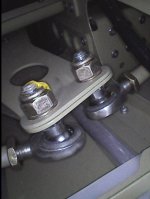
Is the bolt that is securing the UHMW block in the second photo long enough? I appears in the picture that there are inadequate threads above the nut.
 
Is the bolt that is securing the UHMW block in the second photo long enough? I appears in the picture that there are inadequate threads above the nut.
Good eye Paul. I do not see any thread above the nut.
 
Related to Brantel's post: I think one takeaway is the consideration of how to train for this kind of problem - what would an appropriate training syllabus/routine look like? Immediate recognition, use of other stick, use of rudder, use of "blue button" or similar on autopilot etc... Training is critical to rapid response as we all know - make the response part of muscle memory. I seem to recall an old training film that taught pilots how to use rudder only to keep wings level on entering IMC inadvertently - would that work if roll control is lost in an RV-12? May have been specific to Bonanza with the interconnect so perhaps not relevant here....
 
Last edited:
Wondering what the engineering justification is for using the CM-4MS rod end, here specifically but also generally, instead of a CM-4M +AN4 bolt (and AN970-4 fender washer). For my RV-9A flap to pushrod attach I replaced the specified CM-4MS rod end with a CM-4M+AN4 bolt. The minor benefit being I can capture the bearing with a fender washer and not have to worry about the bearing jumping out (YES Scott I know it's the most easily inspected control linkage in the whole plane). The major benefit being it is MUCH easier to drop the flap to work on the ailerons or whatever just by pulling the bolt.

Now here we have an accident, with fatal results, apparently owing to improper installation of a CM-4MS. I can't help but feel like if it were a CM-4M+AN4 that the builder would not have made the same mistake. In such case, backwards installation would have required that the bolt, instead of the rod-end bearing, be threaded into the pushrod. I can only hope that would feel like all sorts of wrong, even to a builder who's in over his head.
 
The minor benefit being I can capture the bearing with a fender washer and not have to worry about the bearing jumping out

Ii would say it's a major benefit. I am very concerned about rod-end bearing failures where the rod-end housing pops off leaving the bolted on bearing behind. I've seen that exact scenario many times on engine controls. That's why we started using large surface area washers to protect in case of complete bearing failure. To me, the upside down CM-4MS is definitely the weak link in the system since you cannot install a large area washer on it. I believe the rest of the aileron system is protected by large area washers and or the rod-ends are captured in fittings.
I think I will change my rod-ends to CM-4M, install large washer and use a castellated nut with a cotter pin .
Any reason why I shouldn't do this?
 
Last edited:
Question for the knowledgeable. Coming from a retired nurse.

When tending to an ill patient, there are often many forms of lines that get connected from the environment to the patient. Intravenous fluids in, peritoneal dialysis stuff going in and out, enteral tube feedings in (J tube, NG tube, or G tube all to the stomach or beyond), along with various drainage tubings. When I was a newer nurse, it was said to be that a nurse somewhere, somehow, had connected tube feedings to an IV line, I assume harm was caused. Thereafter, likely nationwide, all of the tube feeding connections were changed so that they could no longer be easily connected to an IV line. Healthcare folks likely undertook a root cause analysis and part of the solution likely involved looking at the airline Swiss chess approach (https://en.wikipedia.org/wiki/Swiss...cheese model of,security and defense in depth.) There did remain one type of tubing that used similar equipment and interchangeable tubing (IV and epidural) but they colored one of them yellow.

So, why not make one of these seemingly confusing and interchangeable parts a different size (so it won't fit in the wrong hole) or a different color?
 
So, why not make one of these seemingly confusing and interchangeable parts a different size (so it won't fit in the wrong hole) or a different color?
You can't fix every part in the known manufacturing world. F15 fighter has crashed because the mechanics incorrectly installed parts that looked similar. Multi-million dollar avionics box were fried because the power supply connectors are similar to the data connectors. Airplane crashed when one fuel tank is emptied while the other wing is full of fuel. We can't have a fool-proof contraption for everything in life. Of the part in question, the differences are there if the builder was careful, but sometimes, the inspections were missed. This is the risk we must accept when we built our own airplane.
 
You can't fix every part in the known manufacturing world. F15 fighter has crashed because the mechanics incorrectly installed parts that looked similar. Multi-million dollar avionics box were fried because the power supply connectors are similar to the data connectors. Airplane crashed when one fuel tank is emptied while the other wing is full of fuel. We can't have a fool-proof contraption for everything in life. Of the part in question, the differences are there if the builder was careful, but sometimes, the inspections were missed. This is the risk we must accept when we built our own airplane.
And tragically, the error in question here was most likely not insurmountable given the presumed availability of contralateral control stick, autopilot. Designing an aircraft with parts/ systems that eliminate all risk of builder error - if such a thing is possible - would likely be too expensive, too heavy, and may add other unforeseen risks of error introduced by the design changes themselves.
 
Ii would say it's a major benefit. I am very concerned about rod-end bearing failures where the rod-end housing pops off leaving the bolted on bearing behind. I've seen that exact scenario many times on engine controls. That's why we started using large surface area washers to protect in case of complete bearing failure. To me, the upside down CM-4MS is definitely the weak link in the system since you cannot install a large area washer on it. I believe the rest of the aileron system is protected by large area washers and or the rod-ends are captured in fittings.
I think I will change my rod-ends to CM-4M, install large washer and use a castellated nut with a cotter pin .
Any reason why I shouldn't do this?
I think it would be better to redesign the Flaperon Mixer Bellcrank to use rod end bearing that go in between the two leaves of the bellcrank, as per the pushrods at the aft end of the mixer, rather than the above. (Because this arrangement would support the bearing from both sides)
I guess there is a reason that the designer selected this particular bearing, however!
 
So, why not make one of these seemingly confusing and interchangeable parts a different size (so it won't fit in the wrong hole) or a different color?
The Japanese have a term called Poka-yoke which translates to "mistake-proof" or "foolproof”. I never considered that a rod end bearing could be installed a..backwards.
There is design vs. assembly fool-proofing trade-off here.

Having a single size makes it much easier to design all of the linkages.

What you would really want is a rod end with a bore larger than the threaded end, so you could have an AN4 threaded push-rod (tensile strength 6 k#) and a AN5 bolt in shear (shear strength 5.9 k#) rather than an AN4 bolt (shear strength 3.8 k#).

Looking at various suppliers, it looks like a larger bore is a very unusual configuration.

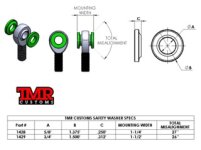
Even installed correctly, there is a good argument for using a retaining washer, given the catastrophic failure mode.
 
Even installed correctly, there is a good argument for using a retaining washer, given the catastrophic failure mode.
This makes sense to me; another line of backup that isn't weight prohibitive or difficult to do. For those not as mechanically inclined (like me) this visualizes how this safety retaining washer is utilized.

safety washer rod end bearing.jpeg

If one rod end bearing fails the other would remain intact. It is possible to reach over and fly with the other stick, which is not as difficult as it seems (I tried in in flight this morning), but one would have to understand almost immediately the source of the problem, however. As someone else mentioned autopilot could be used while troubleshooting but that too would require keeping your cool upon loss of control authority.
 
Last edited:
Some of us aren’t engineers but have been around, maintained and built , aircraft for a long time following a set of hard and fast rules. When something doesn’t fit those rules, or doesn’t seem right, it catches your attention. This is the first time I have seen the RV12 design and it caught my attention. Call it arm chair engineering, or whatever you want but, I do not beleive any other RV has control continuity that could be jeopardized by a ball joint falling apart.
I also have racked my brain but can’t think of any ball joints that could be installed backwards by mistake.
Lastly, bolts should be installed such that a lost nut would not allow the bolt to fall out by gravity alone.
These rules can not always be followed, and trust then is put on the engineers who designed it. How far does that trust extend?…. a long way with Vans. We trust them.
I hope this thread stays alive as a thread that drifted in similar manner got axed. If we start deleting posts when anyone questions Vans, we lose an opportunity, and so does Vans.
For those that get offended by these kinds of questions and observations, you picked the wrong hobby.
Question everything! The worst you can be is wrong.
 
Some of us aren’t engineers but have been around, maintained and built , aircraft for a long time following a set of hard and fast rules. When something doesn’t fit those rules, or doesn’t seem right, it catches your attention. This is the first time I have seen the RV12 design and it caught my attention. Call it arm chair engineering, or whatever you want but, I do not beleive any other RV has control continuity that could be jeopardized by a ball joint falling apart.
I also have racked my brain but can’t think of any ball joints that could be installed backwards by mistake.
Lastly, bolts should be installed such that a lost nut would not allow the bolt to fall out by gravity alone.
These rules can not always be followed, and trust then is put on the engineers who designed it. How far does that trust extend?…. a long way with Vans. We trust them.
I hope this thread stays alive as a thread that drifted in similar manner got axed. If we start deleting posts when anyone questions Vans, we lose an opportunity, and so does Vans.
For those that get offended by these kinds of questions and observations, you picked the wrong hobby.
Question everything! The worst you can be is wrong.

+1. Well said! I'm going to remove the ball joints and install standard rod-ends with a large washer.
 
+1. Well said! I'm going to remove the ball joints and install standard rod-ends with a large washer.
Please consult Vans. I have to believe there is a reason they did what they did. My guess is standard ball joints will not articulate in both planes to the degree it needs to. Just a guess, but this is a critical part of the control system and I would not encourage anyone to make any changes without discussion with Vans.
Please!
 
I don’t remember any specifics but I think the ball joint in question was used because of the specific amount of allowable articulation angle needed.
Be careful doing any armchair engineering change without fully evaluating the mechanism.
Think about it for a minute……
There is no logical reason for using that rod end if standard style would have worked….

I don’t think the other thread was axed because of questions about the design. It was likely other comments that were pushing the boundaries of the rules regarding accident speculation (even though this is a very atypical case where the NTSB pretty much published their cause finding in the preliminary report).
 
I don’t think the other thread was axed because of questions about the design. It was likely other comments that were pushing the boundaries of the rules regarding accident speculation (even though this is a very atypical case where the NTSB pretty much published their cause finding in the preliminary report).

Then why not delete the offending post and include why it was deleted? There MIGHT have been a post that could help someone avoid this fate in the future, now gone.
 
Then why not delete the offending post and include why it was deleted? There MIGHT have been a post that could help someone avoid this fate in the future, now gone.
Doug has set pretty firm rules on this forum regarding speculation and generally when they go down that path the threads go away. I've often thought that an enterprising person might develop a separate Van's safety-related discussion forum, such as Crash Talk on Beechtalk forum where speculation abounds. But there is most assuredly some rancor generated in that format - which I think is what Doug may wish to completely avoid - understandably. Doug's house, Doug's rules. I can live with that.
 
Last edited:
Please consult Vans. I have to believe there is a reason they did what they did. My guess is standard ball joints will not articulate in both planes to the degree it needs to. Just a guess, but this is a critical part of the control system and I would not encourage anyone to make any changes without discussion with Vans.
Please!
Message received loud and clear. I'm going to stand down on making any changes for now. The ball joint rod-ends have bothered me ever since I first saw them. The accident just made me think about them again. I have zero trust in rod-ends (especially ones that are seeing constant movement) and I believe they should always have a large surface washer or be captured on both sides in case of failure. If only the ball joint rod-end can be used due to articulation, I am going to investigate ways to incorporate some kind of safety feature. Maybe drill and tap the ball end and install large washer and screw with Loctite as an example taking care to space as needed for articulation.
Is anyone else concerned about this?
Has anyone replaced a ball joint due to extreme play between the ball and housing?

Thank you
 
How many of these have failed in the failure mode being discussed here? The RV12 has been around since 2006 and RV’s have used the same bearing on flaps for a lot longer than that. How many have failed to the point of falling off of the ball?
 
Back
Top