
Did you need to take along an adapter of any kind?I went to a local welding supply store and they filled it for $22. no hassle, no questions. It's not an illegal gas for industry.

Van's Air Force
You are using an out of date browser. It may not display this or other websites correctly.
You should upgrade or use an alternative browser.
You should upgrade or use an alternative browser.
Portable Oxygen Bottle Refill
- Thread starter Tankerpilot75
- Start date

Most any gas/welding supply shop. If you want aviation approved, most places handle and fill it the same but give you the certificate. It used to cost me about $10 more for the certificate. In my certified planes, I even took my bottles to them for my 5-year check. I now live in TN and use Holston Gas, they have numerous branch stores.I’m sure I’m not the only RV’er to be frustrated by this but I’m having a heck of a time trying to get my portable oxygen bottle refilled at a reasonable price. It’s a small Mountain High AL-415 cylinder 14.7 cubic feet of oxygen at 2000 psi.
In the past a friend of mine generously filled it but his oxygen tanks are now low enough that the pressure output is insufficient to bring my tank to the full psi level. Using a medical oxygen refill station requires a prescription I’m told. Local welding oxygen suppliers won’t touch refilling an oxygen bottle used for breathing. FBO’s near me don’t have oxygen refill capability. The nearest place I’ve found is an airport maintenance shop about a 45 minute drive away and they want at least $50 to refill the small bottle. The drive plus recurring $50 refill cost every time I want to top my bottle off just seems like too much trouble.
Now I don’t use oxygen very often in my RV but I like to keep the bottle full for the unexpected trip. Due to age and an elevated diaphragm on one side, I tend to monitor my oxygen levels anytime I fly above 8000 feet and usually start supplementing my breathing with cannula oxygen around 8,500 feet.
Does anyone have a suggestion for a small oxygen bottle refill system that’s relatively inexpensive to purchase?

Gents, PLEASE be careful with the do it yourself O2 fills. Oxygen is very combustible in the right environment and under pressure.
first, even a brand new bottle of O2 is only shipped at 2200psi. The big ones will fill your little bottle about 4 times and Then you are filling at a lower and lower pressure each time. Oxygen is getting pretty expensive as well. The hardware (read adapters and hoses) are not all built the same either. Those eBay specials can kill you if they break under pressure. Find a scuba store and make some friends. Also- make sure you are getting straight O2 and not a mix $8 fill is way too cheap. An O2 fill with good aviators oxygen should cost you $15 or more. I wouldn’t be surprised at $25. I would charge at least that for a fill.
first, even a brand new bottle of O2 is only shipped at 2200psi. The big ones will fill your little bottle about 4 times and Then you are filling at a lower and lower pressure each time. Oxygen is getting pretty expensive as well. The hardware (read adapters and hoses) are not all built the same either. Those eBay specials can kill you if they break under pressure. Find a scuba store and make some friends. Also- make sure you are getting straight O2 and not a mix $8 fill is way too cheap. An O2 fill with good aviators oxygen should cost you $15 or more. I wouldn’t be surprised at $25. I would charge at least that for a fill.

Surprised that there's been no discussion of low humidity oxygen refills to avoid freezing the line....

To clarify, oxygen supports combustion if something else is on fire in its presence, but oxygen itself is neither combustible nor explosive.Gents, PLEASE be careful with the do it yourself O2 fills. Oxygen is very combustible in the right environment and under pressure.

It costs me $8 to refill with my own O2 set up by leasing 2 large aviators oxygen bottles from Airgas.Gents, PLEASE be careful with the do it yourself O2 fills. Oxygen is very combustible in the right environment and under pressure.
first, even a brand new bottle of O2 is only shipped at 2200psi. The big ones will fill your little bottle about 4 times and Then you are filling at a lower and lower pressure each time. Oxygen is getting pretty expensive as well. The hardware (read adapters and hoses) are not all built the same either. Those eBay specials can kill you if they break under pressure. Find a scuba store and make some friends. Also- make sure you are getting straight O2 and not a mix $8 fill is way too cheap. An O2 fill with good aviators oxygen should cost you $15 or more. I wouldn’t be surprised at $25. I would charge at least that for a fill.

My understanding is there are only 2 grades of oxygen produced these days. So in a nutshell, medical, welding and ABO are the same. Probably the reason all medical applications include bubblers. I believe someone on VAF works at a plant that makes the stuff.Surprised that there's been no discussion of low humidity oxygen refills to avoid freezing the line....
Tank sanitation standards will of course differ

Oxygen is oxygen
Oxygen is oxygen is oxygen. There is a lot of misinformation out there about medical oxygen versus aviator breathing oxygen versus industrial-grade welding oxygen, but the bottom line is that is all three are the same.
www.aopa.org
Yes. Oxygen tends to be very drying to sensitive mucous membranes in the respiratory tract. Cheapest and most effective way to humidify the oxygen is to bubble it through sterile water.My understanding is there are only 2 grades of oxygen produced these days. So in a nutshell, medical, welding and ABO are the same. Probably the reason all medical applications include bubblers.

Oygen DOES require care in handling but not because it is combustible. In the presence of oils, grease, & even heavy make up or sunscreen we should be careful. O2 can promote auto ignition and cause severe burns. I witnessed an incident years ago in which a welder with some grease on his gloves hooked up a bottle and suffered hand burns and missed a few days of work. It would be a bad day if something like that happened in flight.Gents, PLEASE be careful with the do it yourself O2 fills. Oxygen is very combustible in the right environment and under pressure.
first, even a brand new bottle of O2 is only shipped at 2200psi. The big ones will fill your little bottle about 4 times and Then you are filling at a lower and lower pressure each time. Oxygen is getting pretty expensive as well. The hardware (read adapters and hoses) are not all built the same either. Those eBay specials can kill you if they break under pressure. Find a scuba store and make some friends. Also- make sure you are getting straight O2 and not a mix $8 fill is way too cheap. An O2 fill with good aviators oxygen should cost you $15 or more. I wouldn’t be surprised at $25. I would charge at least that for a fill.
In another life I worked in a chemical refinery where we did some gas separation and liquification. My suggestion is do your research on the subject. I've seen some bad stuff but other than the above welder incident they involved other gases. One included a breathing air bottle mistakenly filled with carbon dioxide. It was used in a confined space entry for vessel cleaning and repair. Thankfully the hole watch did his job well and the emergency response team quickly recovered the victim and he recovered quickly while enroute to the ER. That bottle was filled by a major well know gas supplier. This supplier also sells aviator oxygen, so there is that!
The concern over declining pressure in your aircraft bottle can be mitigated to a large degree with a trans fill bottle system using two or more bottles. I purchased my system from Precise Flight who was bought out by AerOx. They have quality stuff.
I fly to the mountains several times a year and I've been self-filling my tank using welders' oxygen at least the last 7 or 8 years. If I change a trans fill bottle out, I fill the aircraft tank and put on the canula while on the ground and breath for awhile to satisfy myself that the tank is ok to use before I fly with it. You can use a pulse oximeter on the ground to verify if you want to double check.
Just my experience and opinion...
This topic on oxygen reminds me of an incident back, way back, when I first started using bottle oxygen. I took my brand new bottle down to the local welding shop and ask them to fill with aviation oxygen. They said they didn't have any aviation oxygen. I said I was a pilot (Mr. Obvious) and I needed aviation oxygen only. The young guy hollered for someone in the back and told him I needed only aviation oxygen. He laughed and looked me, leaned across the counter and said "Boy, oxygen be oxygen. Been filling at welding shops ever since . Dan from Reno
I will say that any Airgas can get you aviators oxygen and it isn’t too much more expensive then welders oxygen. They are probably the same but why not get the thing you are after if it’s easy?

Go to a good dive shop unless you live near a larger city and there you might find a welding shop that fills their own. Cost normally about 15 bucks a bottle.This topic on oxygen reminds me of an incident back, way back, when I first started using bottle oxygen. I took my brand new bottle down to the local welding shop and ask them to fill with aviation oxygen. They said they didn't have any aviation oxygen. I said I was a pilot (Mr. Obvious) and I needed aviation oxygen only. The young guy hollered for someone in the back and told him I needed only aviation oxygen. He laughed and looked me, leaned across the counter and said "Boy, oxygen be oxygen. Been filling at welding shops ever since . Dan from Reno
I will say that any Airgas can get you aviators oxygen and it isn’t too much more expensive then welders oxygen. They are probably the same but why not get the thing you are after if it’s easy?
I wouldn't try and convince anyone to do something they are not comfortable with and I applaud everyone's caution.
It's been several years since I checked but when I did, AirGas here wanted 150 bucks for an aviators oxygen bottle to fill the airplane bottle from. And it is special order. They don't stock it here. A one size larger welding oxygen bottle bought a few months ago cost $35. One large bottle will last me years. I keep track of my fill ups by using a sharpie pen to mark the date and beginning and ending pressures on the big bottles. IIRCC the last set went 4 years. When the pressure eventually gets low enough that I can only get the airplane bottle about 3/4 of the way full I take the lowest pressure of the bottles and use it on my oxyacetylene welding set up and buy a full bottle for the airplane.
But there is an investment in a tran-sfill hose and purchasing, (I don't rent) the large bottles from the supplier. For me, it has worked well and saved me money in the long run. There was a post not to long ago on VAF where I believe an FBO was trying to charge $150 to fill a bottle which is robbery plain and simple.
As for the dive shops, I live in semi arid part of the country where the lakes are shallow and murky and to my knowledge the nearest dive shop is over two hours away. The local fire departments only handle breathing air for SCBA's not O2.
This conversation reminds me of the mogas debates. It takes some research and effort but either can be done safely. An internet search will turn up several articles from Deakon, AOPA's Dr. Brent Blue (mentioned in a post above) and others attesting to the difference between grades of oxygen.
I am getting ready to fly to Osh and planning a stop in Leadville Colorado on the way home to the Bay Area.
Oxygen seems like a good idea to continue the flight North West towards Salt Lake etc.
A friend of mine loaned me his Aerox System, a C size bottle and my local FBO is charging me $146 to top it off.
I am contemplating the use of oxygen on high altitude flights in the furure (lower than the requirements) for good measure and I am considering buying my own bottle setup.
Apart from the reluctance of FBOs to recharge, is this a "normal price" for a refill nowadays in 2025?
Or is it, "just go away and get it done somewhere else kind of price"?
Oxygen seems like a good idea to continue the flight North West towards Salt Lake etc.
A friend of mine loaned me his Aerox System, a C size bottle and my local FBO is charging me $146 to top it off.
I am contemplating the use of oxygen on high altitude flights in the furure (lower than the requirements) for good measure and I am considering buying my own bottle setup.
Apart from the reluctance of FBOs to recharge, is this a "normal price" for a refill nowadays in 2025?
Or is it, "just go away and get it done somewhere else kind of price"?
Maybe not convenient but dive shops will fill a bottle for 20% of this pricing or less. You need to find a shop that does "technical" bottle refills. Many do compressed air only and that is not usable for aviation purposes. Most welding shops now want to do a "bottle exchange" and their bottles look like they've been exchanged 1,000 times, or more.I am getting ready to fly to Osh and planning a stop in Leadville Colorado on the way home to the Bay Area.
Oxygen seems like a good idea to continue the flight North West towards Salt Lake etc.
A friend of mine loaned me his Aerox System, a C size bottle and my local FBO is charging me $146 to top it off.
I am contemplating the use of oxygen on high altitude flights in the furure (lower than the requirements) for good measure and I am considering buying my own bottle setup.
Apart from the reluctance of FBOs to recharge, is this a "normal price" for a refill nowadays in 2025?
Or is it, "just go away and get it done somewhere else kind of price"?
Last edited:
I'd start with calling around to dive shops, but failing that, some (not all) welding shops will refill your oxygen tanks, and they are certain to be less expensive than an FBO. Best to check with the welding shop first, make sure they have the right fittings for the valve on your tank. The oxygen itself is the same for all practical purposes.I am getting ready to fly to Osh and planning a stop in Leadville Colorado on the way home to the Bay Area.
Oxygen seems like a good idea to continue the flight North West towards Salt Lake etc.
A friend of mine loaned me his Aerox System, a C size bottle and my local FBO is charging me $146 to top it off.
I am contemplating the use of oxygen on high altitude flights in the furure (lower than the requirements) for good measure and I am considering buying my own bottle setup.
Apart from the reluctance of FBOs to recharge, is this a "normal price" for a refill nowadays in 2025?
Or is it, "just go away and get it done somewhere else kind of price"?
You can expect to pay $30 to fill your bottle at an FBO, regardless of what is left in the bottle. Any FBO that services jets will have O2 service.
I would have expected around 50 or 60 bucks.
I've had a fuel account with this FBO for years and always have a positive balance.
This is a fairly large FBO on Buchanan Field, KCCR, serving jets and larger airplanes.
I'll look around next time, maybe Livermore or Sacramento might have a more reasonable refill price.
There is a dive shop nearby, I'll see if they sell O2 or just compressed air.
I've had a fuel account with this FBO for years and always have a positive balance.
This is a fairly large FBO on Buchanan Field, KCCR, serving jets and larger airplanes.
I'll look around next time, maybe Livermore or Sacramento might have a more reasonable refill price.
There is a dive shop nearby, I'll see if they sell O2 or just compressed air.
Two years ago I paid $70 iirc at the maintenance shop on the south side at KLVK. There is a dive shop in Pleasanton that would have filled my tank with O2 for half that price but they didn’t have the right fitting for an aviation tank.I would have expected around 50 or 60 bucks.
I've had a fuel account with this FBO for years and always have a positive balance.
This is a fairly large FBO on Buchanan Field, KCCR, serving jets and larger airplanes.
I'll look around next time, maybe Livermore or Sacramento might have a more reasonable refill price.
There is a dive shop nearby, I'll see if they sell O2 or just compressed air.

I got through this quagmire not long ago.
No joy with scuba. They wouldn't even talk about it. I get it. No diving in the mountains so they had little knowledge of anything except their world.
Option 1. As others have mentioned. Read Dr Blue's article. Send him an e-mail explaining your difficulty and ask nicely if he would send a prescription.
Option B. Ask your Primary Care for a paper prescription.
Take the script to a welding supply. Some supply medical O². No insurance. No complications. Yes, they swap the bottles but they are tested. $30 each plus deposit.
Option 3. You want cheap, try and get a medial supply to fill the script. I had zero luck. They wanted my entire medical history, insurance and a full doctor's eval recommending O². No thanks. I do know others who had success and pay cash. Like $15. Good luck.
Option D. FBO. $75. No thanks.
Option "Hail Mary". The hangar cascade setup. Check with insurance. I don't understand why they get undies in a wad, because many hangars have full Oxy/Acetylene set ups and 100LL everywhere. That's a lot more explosive than O² tanks alone, but what do I know. My dad was a welder and I did some welding too.
No joy with scuba. They wouldn't even talk about it. I get it. No diving in the mountains so they had little knowledge of anything except their world.
Option 1. As others have mentioned. Read Dr Blue's article. Send him an e-mail explaining your difficulty and ask nicely if he would send a prescription.
Oxygen is oxygen
Oxygen is oxygen is oxygen. There is a lot of misinformation out there about medical oxygen versus aviator breathing oxygen versus industrial-grade welding oxygen, but the bottom line is that is all three are the same.
www.aopa.org
Take the script to a welding supply. Some supply medical O². No insurance. No complications. Yes, they swap the bottles but they are tested. $30 each plus deposit.
Option 3. You want cheap, try and get a medial supply to fill the script. I had zero luck. They wanted my entire medical history, insurance and a full doctor's eval recommending O². No thanks. I do know others who had success and pay cash. Like $15. Good luck.
Option D. FBO. $75. No thanks.
Option "Hail Mary". The hangar cascade setup. Check with insurance. I don't understand why they get undies in a wad, because many hangars have full Oxy/Acetylene set ups and 100LL everywhere. That's a lot more explosive than O² tanks alone, but what do I know. My dad was a welder and I did some welding too.
Last edited:
Please read, most if not all welding shops can only do a "bottle exchange" since they don't have the capability to refill your bottle. The exchanged bottle looks like crap. Find a "technical" dive shop or else pay the piper. (FBO O2 bottle fill)Most welding shops now want to do a "bottle exchange" and their bottles look like they've been exchanged 1,000 times, or more.

I have mine filled at the local welding shop for $14. They have my signed doc on file stating it's for aviation.


How about buying one of those Invacare, or other manufacturer's, home fill oxygen tank stations? I found a used one on FB Marketplace that included 4 mini travel tanks for $500 recently.

 www.oxygenplusconcentrators.com
Reconditioned Invacare HomeFill Oxygen Tank Filling station - compressor only -
Owner Manual This completely rebuilt Invacare Home fill 2 system compressor is for use with the Invacare 5 lpm and 10 lpm Platinum units and the Perfecto2 concentrators only. This purchase is for the Homefill 2 compressor ONLY ! This is just the compressor, it will not work without an Invacare...
www.oxygenplusconcentrators.com
Pretty sure that is unclear and gives a false sense of security.Oil is a major taboo in working around O2. The O2 will self ignite in the presence of oil or grease. Not always, but not a low probability either. I am sure you have seen th “use no oil” stickers on your O2 equipment. That is there for a reason. You need more chemistry before making statements like that.To clarify, oxygen supports combustion if something else is on fire in its presence, but oxygen itself is neither combustible nor explosive.
Last edited:
I went to my Transport Canada Doc and explained that I needed a prescription for O2 when I'm flying over the rocks. For me that's between 10,500 and 16,500 ft. Of course I need O2 at those altitudes. He gave me the prescription and I now get a 640 litre bottle of Medical Grade oxygen for $10.00 Cdn. Simple, cheap and available in most every town. And my Health Plan pays for it.
Sadly my idiotic state has decided that oxygen is a hazardous material, so the $20 bottle is now 30 with the hazmat fee. I have two S sized bottles and refill from those.I went to my Transport Canada Doc and explained that I needed a prescription for O2 when I'm flying over the rocks. For me that's between 10,500 and 16,500 ft. Of course I need O2 at those altitudes. He gave me the prescription and I now get a 640 litre bottle of Medical Grade oxygen for $10.00 Cdn. Simple, cheap and available in most every town. And my Health Plan pays for it.
Wow, another grab.Sadly my idiotic state has decided that oxygen is a hazardous material, so the $20 bottle is now 30 with the hazmat fee. I have two S sized bottles and refill from those.
Airgas, my supplier of the 250 cu ft tanks for aviation oxygen is $42 for exchange, BUT recently they now have added a hazmat charge that brings it up to $62 with tax. They only allow leases of these tanks so I also pay an annual fee or I’d just own the tank if I could.Wow, another grab.
Same happened to me for my cascade bottles, see my above post!Sadly my idiotic state has decided that oxygen is a hazardous material, so the $20 bottle is now 30 with the hazmat fee. I have two S sized bottles and refill from those.
Oxygen itself is neither combustible nor explosive. Period. That's was like the second day of Chem I.Pretty sure that is unclear and gives a false sense of security.Oil is a major taboo in working around O2. The O2 will self ignite in the presence of oil or grease. Not always, but not a low probability either. I am sure you have seen th “use no oil” stickers on your O2 equipment. That is there for a reason. You need more chemistry before making statements like that.
In the presence of HIGH PRESSURE oxygen, oil droplets can rapidly oxidize and that chemical process can lead to auto-ignition in some circumstances. In that case, the oxygen itself isn't exploding or combusting, it's supporting the oxidation process. Your misstatement above reflects your own lack of basic chemistry education.

Here’s another thought - if youve got a good relationship w your local veterinarian ask him/her if they’d refill your bottle. As a vet I have access to oxygen tanks anytime I need a refill, and have filled friends tanks when needed. If your vet friend happens to fly then they likely have a fill hose. If not it’s worth you spending the 80 bucks to buy one. Nearly every veterinary office has O2 on site.

My experience with scuba shops has been very uneven. Welding places around here won’t touch refilling customer bottles. Going to try the medical route, my doctor says he’s game.If you happen to have a Dive shop (SCUBA) nearby they will refill them usually very reasonable. Just need to tell them you need pure O2.

Yes, I understand it is an oxidation process. This whole thread is about filling bottles with high pressure O2, so I felt that generically stating O2 is safe without an existing flame source seems inappropriate as many people may not understand these principles and risks and get a false sense of security.Oxygen itself is neither combustible nor explosive. Period. That's was like the second day of Chem I.
In the presence of HIGH PRESSURE oxygen, oil droplets can rapidly oxidize and that chemical process can lead to auto-ignition in some circumstances. In that case, the oxygen itself isn't exploding or combusting, it's supporting the oxidation process. Your misstatement above reflects your own lack of basic chemistry education.
People filling O2 bottles really need to understand the risks associated with that and those risks go beyond what we are discussing here.

If you use supplemental oxygen a lot when you fly, setting up your own refill station can pay for itself. No, I don't know how long that would take but if you FBO is refilling tanks at $40-146 (!!  !!) a whack it probably wouldn't take long. There was an article in Kitplanes last year about building your own tank caddy. You could do one or two tanks, three if you use O2 a lot. And there are people probably on your field who would pay you to refill their bottles.
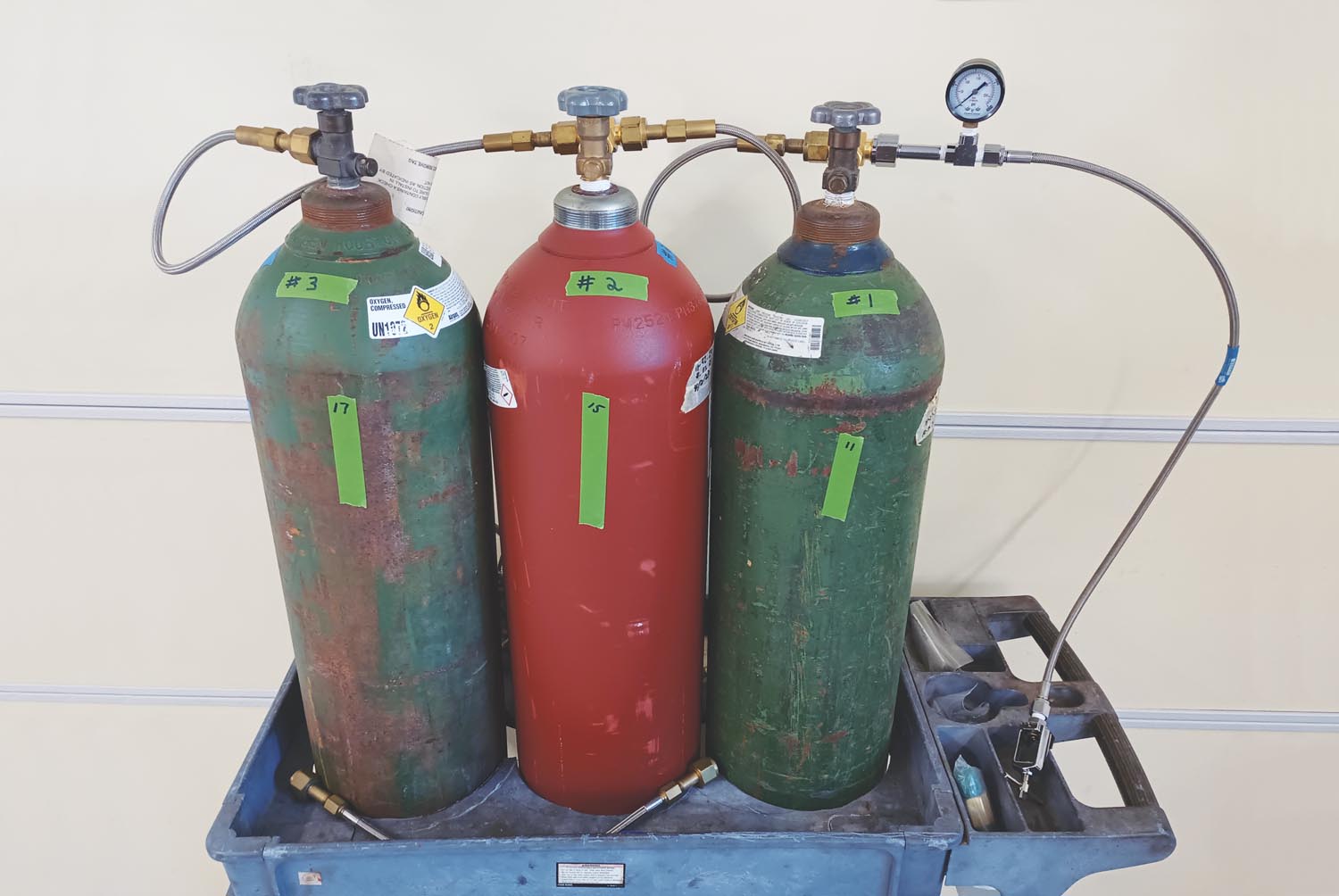
 www.kitplanes.com
There was also an article a while ago about putting and oxygen system in an RV-4 that had some good ideas. Couldn't find that link..........
!!) a whack it probably wouldn't take long. There was an article in Kitplanes last year about building your own tank caddy. You could do one or two tanks, three if you use O2 a lot. And there are people probably on your field who would pay you to refill their bottles.
Roll Your Own Oxygen Cart - KITPLANES
An easy way to move heavy oxygen refill tanks.
www.kitplanes.com
There was also an article a while ago about putting and oxygen system in an RV-4 that had some good ideas. Couldn't find that link..........
I do own an 80 cu Oxy /acetylene bottle.
A second one would allow for a cascading self fill station.

 www.mhoxygen.com
Too late for this trip but worth exploring.
A second one would allow for a cascading self fill station.
How to Cascade Oxygen Supply Tanks | MHOxygen
Protect the high-end pressure in your supply tanks by cascading multiple oxygen supply tanks together.
www.mhoxygen.com
Too late for this trip but worth exploring.

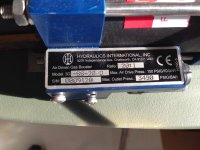
I bought a second hand booster pump that allows me to fill bottles to 2200psi with an O2 bottle as low as about 300psi. It’s a pretty big investment even used, but I’m hoping to fly for another 20 years and I live in Colorado, so I’m hoping to get my money’s worth. I also fill bottles for neighbors all the time for free or something very minimal. ($5-ish).
Let's get back to my original statement, the one that caused you to suggest that 4 years of University-level chemistry and a post-graduate year of Physical Chemistry was insufficient to make. "Oxygen supports combustion, but oxygen itself is neither combustible nor explosive". Yeah...I'm gonna stand by thatYes, I understand it is an oxidation process. This whole thread is about filling bottles with high pressure O2, so I felt that generically stating O2 is safe without an existing flame source seems inappropriate as many people may not understand these principles and risks and get a false sense of security.
People filling O2 bottles really need to understand the risks associated with that and those risks go beyond what we are discussing here.
 .
.
How much do used ones go for?I bought a second hand booster pump that allows me to fill bottles to 2200psi with an O2 bottle as low as about 300psi. It’s a pretty big investment even used, but I’m hoping to fly for another 20 years and I live in Colorado, so I’m hoping to get my money’s worth. I also fill bottles for neighbors all the time for free or something very minimal. ($5-ish).
View attachment 92290
I've written prescriptions for oxygen for pilots several times over the years as a convenience. It was not something I promoted or charged for, but word gets around. A couple of things:My experience with scuba shops has been very uneven. Welding places around here won’t touch refilling customer bottles. Going to try the medical route, my doctor says he’s game.
- this will likely limit you to Medical Supply stores
- not all medical supply places have the ability to fill oxygen cylinders
- most medical supply places can only fill a cylinder with a CGA870 tank valve (there are adapters but the store might not have them)
- some medical supply places will be uncomfortable filling an oxygen cylinder for cash instead of billing Medicare or an insurance company...others will be happy to provide a non-insurance discount. for cash to avoid the paperwork and 90 day payment delay
- smaller locally-owned medical supply places are more likely than big chain-based ones
- when being prescribed for non-medical aviation use, the wording of the prescription matters a lot, with some variation state-by-state. The doctor (usually) can't just write "for aviation use, use as directed". There's a specific verbiage that is usually required.
- this can vary widely state-by-state, region-by-region, store-by-store
Last edited:
Terrific info, really appreciate it!I've written prescriptions for oxygen for pilots several times over the years as a convenience. It was not something I promoted or charged for, but word gets around. A couple of things:
- this will likely limit you to Medical Supply stores
- not all medical supply places have the ability to fill oxygen cylinders
- most medical supply places can only fill a cylinder with a CGA870 tank valve (there are adapters but the store might not have them)
- some medical supply places will be uncomfortable filling an oxygen cylinder for cash instead of billing Medicare or an insurance company...others will be happy to provide a non-insurance discount. for cash to avoid the paperwork and 90 day payment delay
- smaller locally-owned medical supply places are more likely than big chain-based ones
- when being prescribed for non-medical aviation use, the wording of the prescription matters a lot, with some variation state-by-state. The doctor (usually) can't just write "for aviation use, use as directed". There's a specific verbiage that is usually required.
- this can vary widely state-by-state, region-by-region, store-by-store

I had an O2 Rx, but the local medical oxygen place wouldn't refill or give me a cylinder unless I was on a recurring delivery plan. They only wanted insurance customers. Cash buyers likewise freaked them out.I've written prescriptions for oxygen for pilots several times over the years as a convenience. It was not something I promoted or charged for, but word gets around. A couple of
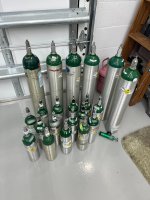
I ended up getting a batch of filled cylinders for cheap on FB marketplace. I use O2 rarely, so the plan is to just use one and throw the empty away.
Living in an area with a lot of elderly results in this sort of "cleaning out the house" situation happening fairly often.
Attachments
Some or most hospitals will fill O2 tanks for patients. If you do get a prescription but can't find a medical supply store, try calling the local hospital's Respiratory Therapy department, or ask your doctor to arrange that when he/she writes the prescription.
Last edited:
But where do you get the low pressure oxygen to start with?I bought a second hand booster pump that allows me to fill bottles to 2200psi with an O2 bottle as low as about 300psi. It’s a pretty big investment even used, but I’m hoping to fly for another 20 years and I live in Colorado, so I’m hoping to get my money’s worth. I also fill bottles for neighbors all the time for free or something very minimal. ($5-ish).
View attachment 92290
I'm guessing he was just indicating one of these allows him to fill from a single large tank rather than a multi-tank cascade system, but still get the A/C's tank up to max pressure. Not sure what the relative costs of the two systems might be.But where do you get the low pressure oxygen to start with?
Tom_AZ is correct. This allows me to pull from a single bottle rather than using a cascading system. I can run the single bottle down to 3-500psi. I’m sure somebody can do the math for an exact number, but I seem to get a bunch of fills from a single 125 cu.ft. bottle. I also happened to inherit a 3 bottle cascading system from a friend who got out of flying. I have 2 big bottles sitting here needing to be exchanged.But where do you get the low pressure oxygen to start with?
Major pain asked how much used ones go for… I honestly don’t remember what I paid because it’s been 5-6 years, but I think it was in the neighborhood of $1200.
And that is why I recommended not to go the bottle exchange route. A 125-cu ft bottle weighs over 60 lbs. My N2 system I use the exchange method but that is a 20-cu ft bottle and weighs less than 20 lbs. and easily hand able but looks like crap due to rusting, wear and it's been refilled hundreds of times. (I have not used it this much but everyone else has) Buy a nice aluminum cylinder, CFFC or CFF and find a technical dive shop to re-fill it or bite the bullet and let your FBO do it for personal oxygen use or find a medical outlet that can do it. (Finding a technical dive shop in Florida was very easy for me but others might have more difficulty)Tom_AZ is correct. This allows me to pull from a single bottle rather than using a cascading system. I can run the single bottle down to 3-500psi. I’m sure somebody can do the math for an exact number, but I seem to get a bunch of fills from a single 125 cu.ft. bottle. I also happened to inherit a 3 bottle cascading system from a friend who got out of flying. I have 2 big bottles sitting here needing to be exchanged.
Major pain asked how much used ones go for… I honestly don’t remember what I paid because it’s been 5-6 years, but I think it was in the neighborhood of $1200.
A 60 pound O2 bottle is the least of my worries in terms of transport. Everybody’s got a different situation. I like having an extremely small O2 bottle in my plane. It weighs so little and takes up so little space that I usually just leave it in all the time. You never know when I’ll do an impromptu trip to Steamboat.And that is why I recommended not to go the bottle exchange route. A 125-cu ft bottle weighs over 60 lbs. My N2 system I use the exchange method but that is a 20-cu ft bottle and weighs less than 20 lbs. and easily hand able but looks like crap due to rusting, wear and it's been refilled hundreds of times. (I have not used it this much but everyone else has) Buy a nice aluminum cylinder, CFFC or CFF and find a technical dive shop to re-fill it or bite the bullet and let your FBO do it for personal oxygen use or find a medical outlet that can do it. (Finding a technical dive shop in Florida was very easy for me but others might have more difficulty)
Having a bunch of 125 cu ft cylinders and an O2 booster around allows me to refill my tiny bottle after approximately 4 hours of use. It’s as simple and common as topping off the fuel tanks for me. I have the Mountain High 4.0 cu ft cylinder and their EDS system for my RV3. I’ll probably use their 8.8 cu ft bottle for the Rocket, but I haven’t gotten that far with the Rocket so far.
