Van's Air Force

The definitive Van's Aircraft support community! Buying, building or flying an RV? Join our exclusive family of mentors and enthusiasts!

Subaru FF Alternatives

dry clutch torsion springs

I have a question about the springs in a traditional auto clutch disc. Several psru vendors seem to point to these as an example of how autos dampen the torsional vibration.

But I was under the impression that these springs really only do anything at very large low-frequency torque inputs, such as rapid clutch engagement when the car is not moving. I think the spring pre-load is high enough that typical torsional vibration at n/2rev (where n is the number of cylinders) and higher harmonics of that, the springs do not flex and the clutch disc is essentially solid.

Certainly the dual-mass torsion spring flywheels do the job, but I don't think a traditional dry clutch plate does anything for TV.

Am I correct?
 
I have a question about the springs in a traditional auto clutch disc. Several psru vendors seem to point to these as an example of how autos dampen the torsional vibration.

But I was under the impression that these springs really only do anything at very large low-frequency torque inputs, such as rapid clutch engagement when the car is not moving. I think the spring pre-load is high enough that typical torsional vibration at n/2rev (where n is the number of cylinders) and higher harmonics of that, the springs do not flex and the clutch disc is essentially solid.

Certainly the dual-mass torsion spring flywheels do the job, but I don't think a traditional dry clutch plate does anything for TV.

Am I correct?

I put a torque wrench on some discs I had laying around a number of years back and the strongest springs bottomed out at around 80 ft./lbs. A number of others were closer to 50-60. At these levels you're not going to break anything nor do they offer any useful damping at the typical amplitudes we are concerned with- usually on the order of many hundreds to thousands of ft./lbs. when we reach resonance.

I think this was wishful thinking on the part of some PSRU designers who really didn't grasp TV.

Even DM flywheels may not be up to the task of dealing with TV with a prop/gearbox combination they were never designed for. Again, PSRU designers using OTS auto parts for very different applications and simply crossing their fingers with little or no scientific analysis done.
 
I put a torque wrench on some discs I had laying around a number of years back and the strongest springs bottomed out at around 80 ft./lbs. A number of others were closer to 50-60. At these levels you're not going to break anything nor do they offer any useful damping at the typical amplitudes we are concerned with- usually on the order of many hundreds to thousands of ft./lbs. when we reach resonance.

I think this was wishful thinking on the part of some PSRU designers who really didn't grasp TV.

Even DM flywheels may not be up to the task of dealing with TV with a prop/gearbox combination they were never designed for. Again, PSRU designers using OTS auto parts for very different applications and simply crossing their fingers with little or no scientific analysis done.

I don't think you can infer how they behave from measuring their static torque to begin flexing or to bottom out. The springs and mass in the clutch disc also is a 2nd order system with its own natural frequency and response curve. At high frequencies, I think it acts essentially rigid, and would transmit extremely high torques with virtually no displacement of the springs. What matters most is where the natural frequency is of the clutch disc relative to the various modal frequencies of the engine-psru-prop system. My assumption is that the clutch natural frequency is well below the primary resonance frequency of the system --- but I admit that may not be true. Thus my question.
 
I don't think you can infer how they behave from measuring their static torque to begin flexing or to bottom out. The springs and mass in the clutch disc also is a 2nd order system with its own natural frequency and response curve. At high frequencies, I think it acts essentially rigid, and would transmit extremely high torques with virtually no displacement of the springs. What matters most is where the natural frequency is of the clutch disc relative to the various modal frequencies of the engine-psru-prop system. My assumption is that the clutch natural frequency is well below the primary resonance frequency of the system --- but I admit that may not be true. Thus my question.

Not much mass or inertia in a clutch disc compared to the rotating parts of the engine and a propeller. I think you need to look at the purpose and application these parts are designed for. They are really there to smooth initial transfer of torque between the pressure plate/ flywheel and transmission input shaft on slow engagement where the engine is usually not producing much torque.

In an aircraft application in cruise with the engine producing say 150+ ft. lbs at 150-300hz firing frequency, I'd hazard to say that the springs are fully compressed and out of the equation altogether, therefore of no useful benefit in cruise.

However, at lower mean torque levels and frequencies such as we'd see at ground idle/ taxi conditions, there COULD be some benefits as this is closer to what the components were designed for. Indeed, most PSRU TV issues I've experienced and heard about are down at lower frequencies. Since every system is different though, we certainly can't assume that is always the case. Additionally, even at idle, if we get resonance, peak torque values could be 40 to 100+ times that of the mean crankshaft torque and could still break things.

In the end, mathematical analysis or actual measurement is the best ways to be sure TV amplitudes are not exceeding design limits of the drive system.
Throwing a clutch disc in between the engine and drive with neither is a hit and miss affair.

An engineered coupling/TV absorber would always be a better choice than an OTS clutch disk in my view but as we've seen, many combinations of parts can work well over hundreds or thousands of hours of operation where other combinations can last minutes.
 
Last edited:
I put a torque wrench on some discs I had laying around a number of years back and the strongest springs bottomed out at around 80 ft./lbs. A number of others were closer to 50-60. At these levels you're not going to break anything nor do they offer any useful damping at the typical amplitudes we are concerned with- usually on the order of many hundreds to thousands of ft./lbs. when we reach resonance.

The outer portion of the disc (with the friction elements) is an inertia, modeled as part of the pressure plate and flywheel. The hub and spline shaft is part of a different inertia. The springs are a connecting stiffness between the inertias.

Obviously if the springs will coil bind at a torque less than the normal WOT operating torque, the springs are no longer serving as a soft element at that load. The connecting torsional stiffness is then the (probably higher) spring rate of the shafting. I think that is the point you were trying to make. "Torque to bottomed" is of no use for TV calculations. Need to know ft-lbs per radian, or per degree. I measured some Subaru clutches back in the 90's, but have no idea where to find the data now.

An engineered soft element would accept many times mean torque without reaching an angular displacement limit.

BTW, clutch springs offer no useful damping because they are springs.

In theory, resonant torque can reach infinity, but never does because even the worst system has some small amount of damping. As a practical matter, the prop is a very large anchor inertia against which the rest of the system oscillates....and the rest of the system (the engine) is chock full of viscous friction, an excellent damping force. So, hundreds of thousands of ft-lbs would be excessive for the systems of interest here. Anyway, they would all break instantly at the first pass through a resonant RPM. Reality says we're worried about torsional stress levels well below instant failure, but above a fatigue limit for some component in the train.

I have a question about the springs in a traditional auto clutch disc. Several psru vendors seem to point to these as an example of how autos dampen the torsional vibration.

But I was under the impression that these springs really only do anything at very large low-frequency torque inputs, such as rapid clutch engagement when the car is not moving. I think the spring pre-load is high enough that typical torsional vibration at n/2rev (where n is the number of cylinders) and higher harmonics of that, the springs do not flex and the clutch disc is essentially solid.

Certainly the dual-mass torsion spring flywheels do the job, but I don't think a traditional dry clutch plate does anything for TV.

Am I correct?

The springs always flex under oscillating input torque, unless angular displacement due to load causes them to coil bind. Can't be otherwise. The engine output torque always oscillates, at any RPM, and there are no infinitely stiff materials.

Does that make a clutch center a good choice of soft element? Not in my book.
 
Mike Talmadge completed the first ground runs on the new gearbox with no problems cropping up. He'll check for excess fuzz on the magnetic drain plug and send out a gearbox oil sample soon.
 
Torsion vibration evaluation in alternative engines

The outer portion of the disc (with the friction elements) is an inertia, modeled as part of the pressure plate and flywheel. The hub and spline shaft is part of a different inertia. The springs are a connecting stiffness between the inertias.

Obviously if the springs will coil bind at a torque less than the normal WOT operating torque, the springs are no longer serving as a soft element at that load. The connecting torsional stiffness is then the (probably higher) spring rate of the shafting. I think that is the point you were trying to make. "Torque to bottomed" is of no use for TV calculations. Need to know ft-lbs per radian, or per degree. I measured some Subaru clutches back in the 90's, but have no idea where to find the data now.

An engineered soft element would accept many times mean torque without reaching an angular displacement limit.

BTW, clutch springs offer no useful damping because they are springs.

In theory, resonant torque can reach infinity, but never does because even the worst system has some small amount of damping. As a practical matter, the prop is a very large anchor inertia against which the rest of the system oscillates....and the rest of the system (the engine) is chock full of viscous friction, an excellent damping force. So, hundreds of thousands of ft-lbs would be excessive for the systems of interest here. Anyway, they would all break instantly at the first pass through a resonant RPM. Reality says we're worried about torsional stress levels well below instant failure, but above a fatigue limit for some component in the train.


The springs always flex under oscillating input torque, unless angular displacement due to load causes them to coil bind. Can't be otherwise. The engine output torque always oscillates, at any RPM, and there are no infinitely stiff materials.

Does that make a clutch center a good choice of soft element? Not in my book.

Hello.
this is a question to Dan.
I am currently modelling an aircraft transmission system, like you did for the RV6 with a subaru engine, and did measure the stiffness and inertia of all the elements in the drive train.
I have used to find the modal frequencies a Holzer algorithm. I am now building a small system to measure the torsional vibrations while the engine is running using a strain gauge.

question : Is the holzer method a good one to find the mode frequencies? I would say so. Is it accurate for mode shapes? Not so much I think.

Would you recommend a different methos to calculate the modes?

I based my work on this C code :

http://ethesis.nitrkl.ac.in/3454/1/ethesis_vishwajeet(108me038).pdf

Thanks for your help.

Olivier.
 
Hello.
this is a question to Dan.
I am currently modelling an aircraft transmission system, like you did for the RV6 with a subaru engine, and did measure the stiffness and inertia of all the elements in the drive train.
I have used to find the modal frequencies a Holzer algorithm. I am now building a small system to measure the torsional vibrations while the engine is running using a strain gauge.

question : Is the holzer method a good one to find the mode frequencies? I would say so. Is it accurate for mode shapes? Not so much I think.

Would you recommend a different methos to calculate the modes?

I based my work on this C code :

http://ethesis.nitrkl.ac.in/3454/1/ethesis_vishwajeet(108me038).pdf

Thanks for your help.

Olivier.

Hello Oliver,

The Holzer method has been the standard for a very long time. I am a non-professional, and not qualified to judge the practical differences between a Holzer tabulation and other methods. The paper you referenced finds no huge practical difference between the finite and Holzer methods when given the same input values.

At the practical level, most errors in prediction of frequency and mode shape are due to calculating with inaccurate values of stiffness and inertia, so that is where I would concentrate my efforts if predicted accuracy is important.

Here is an excellent source for useful vibration software. There is a nice Holzer code on the list:

http://www.vibrationdata.com/software.htm

Finally, I have a strain gauge, full bridge, placed at 45 degrees of the shaft axis, to capture the TVs while the shaft turns. I try to place the gauge where the largest deformation is on the mode shape, but this is not easy sometimes. I think that anyhow, anywhere we place the gauge, we should see when the modes are excited, due to a peak in the amplitude at the given mode shape, right?
Is the location of the gauge critical, or we will see the TVs anyhow, no matter where we place it?

I will have to monitor modes up to 300Hz, and I will sample the gauge 20 times that to see well. Should be more than enough.

Thanks for your help.

Assuming a constant cross section shaft, you may place the bridge anywhere along the length and get the same result.

It is possible to have a nth mode oscillating with some force somewhere in the system, without significant oscillation at the propshaft, thus the strain bridge may not offer much information about that mode. However, that would generally be possible only with four inertias or more (if the prop is inertia 1, consider 3 oscillating between 2 and 4). In the context of propeller speed reduction, we're mostly concerned with the first and second modes. A strain bridge on the propshaft should provide an accurate shaft stress and frequency for the first mode, and at minimum, provide frequency for the second.

Example, from one of my experiments circa 1999. The plot is oscillating vibratory torque, not engine output torque. The values were taken as you describe, with a strain gauge set on the propshaft. Readers should note that the 180 ft lb peak was recorded with the engine at the very small part throttle opening necessary to hold that RPM. That resonant peak would be much higher at WOT, which should explain why uncontrolled resonant behavior breaks PSRUs.

a5dnh0.jpg
 
Last edited:
Tank you Dan for your reply.

My model has 9 inertias.

the mode which bothers me ( on the paper) is indeed not generating much movement on the prop, but generated quite some destructive results on one of the shafts.

I will measure, and will post on the forum if there is something valuable for the community.

Olivier.
 
rubber dampners

Ross, yes I had SPG- 4. I don't claim to be an engineer, but was very impressed with the use of a BMW/Mercedes drive shaft type rubber coupling to act as shock/torque absorber. Plus the 3 blade cool prop (which fits rotax hub) very light. Airtrikes indicated it was good up to 160HP. I think they may have raised HP.

For what it is worth, please be careful with purchasing off brand rubber couplings. I have done this and cut them open and my suspicions were validated, virtually no significant reinforcing fibers, on the cheap off brands.

The German made couplings that are recommended for the BMW 5 series is the SGF-GAB01-017. They usually run between $60 to $80 each off amazon or Ebay. If they are SGF you will see GAB01-017 stamped on them and they will come in factory packaging. If they are not marked, do not buy them.

Charlie
 
Good News

Mike Talmadge has finished flight testing his redrive to replace the Eggenfellner redrives and will be building production ones for those interested in 2019.
 
Last edited:
I was involved in an effort to get MT to come to US and do vibration analysis of MT prop and H6 engine.

The results were very good which gave confidence to continue the effort.
So far as engine, psru and prop were concerned, it was a comfort.

But that in flight testing probably is different than what is being discussed here. PSRU failure happened down the road and must have been caused by bearing load factors, not vibration.
sooo which set up do you prefer ??? Im flying a rv6a subie ej25 with an egg gen1 Im looking to set it up for XC. and piece of mind and dependability.
 
David-aviator hasn't been on the forum since 2019.
 
Im considering the spg-4 for my ej22 in an rv6a anyone flying this combo.
If the SPG-4 is what I think it is, then there is an offset between the input and output shafts. The egg Gen 1 through 3, Mike T's, Geared Drives, do not have an offet, the output is inline with the input. The Marcotti gearbox, i believe, has a small offset of less than 2 inches.
Anything with an offset is not going to be an easy swap.
 
I have Mike Talmadge’s gearbox, after a shaft failure on my Egg gearbox a few years ago. Excellent performance. Drop in replacement. Highly recommended for performance and reliability.
I also have the MT prop Dave Domeier had on his plane (small world).
 
I have Mike Talmadge’s gearbox, after a shaft failure on my Egg gearbox a few years ago. Excellent performance. Drop in replacement. Highly recommended for performance and reliability.
I also have the MT prop Dave Domeier had on his plane (small world).
 
I'll just throw this out there but I have a good Gen 3 Red Gearbox and a 3 bladed Quinti Avio prop and controller with the spinner that came off my engine conversion that I would be interested in selling.
 
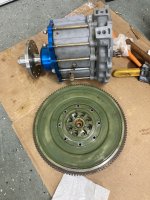
If anyone wants it for free, I have what I think is a Gen 2 Egg reduction drive removed from a complete FWF package. Never flown. Engine going back in a car. PM me before I throw it and the flywheel away.
 

Attachments

  • IMG_7700.jpeg
    IMG_7700.jpeg
    2.5 MB · Views: 27
If anyone wants it for free, I have what I think is a Gen 2 Egg reduction drive removed from a complete FWF package. Never flown. Engine going back in a car. PM me before I throw it and the flywheel away.

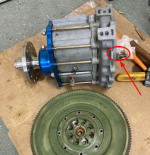
The input shaft, if in good condition, and if compatable with the Gen3 gearbox, may have some value. The rest of the gearbox should be scrapped.

1765489635741.png
 
The input shaft, if in good condition, and if compatable with the Gen3 gearbox, may have some value. The rest of the gearbox should be scrapped.

View attachment 104488
As I understand Egg swapped the gear box from a 1 to a 2 and the motor was test run a few minutes on the plane. When he said to go to version 3 the owner hung it up and put in storage. Lots of anti -seize on it but no wear. Flywheel now gone, boxed up to ship to a new owner for free.
 
No interest on free gearbox, getting recycled then. Have other new parts like supercharger, air/oil coolers, intake/exhaust that have alternate use with car projects. PM an offer for what you want. Motor mounts already trashed.
 
No interest on free gearbox, getting recycled then. Have other new parts like supercharger, air/oil coolers, intake/exhaust that have alternate use with car projects. PM an offer for what you want. Motor mounts already trashed.

I'll send you a PM

-Jeff
 
Back
Top