

Van's Air Force
You are using an out of date browser. It may not display this or other websites correctly.
You should upgrade or use an alternative browser.
You should upgrade or use an alternative browser.
Best way to repair printed 3D part
- Thread starter Webb
- Start date


Most 3D printed parts are likely to be PLA, but you may occasionally see PETG or ABS. There are solvents specifically intended to glue PLA that you can buy. I've used PLA GLOOP before and it works great.

The go-to in the 3D printing world seems to be Gorilla Glue's version of crazy glue, although i've used LocTite's version as well with equal success. Both come out as a gel and it's not an "instant" bond but will bond up rock hard in a few minutes. Seems to work well on both PLA and PETG. If Acetone didn't phase it, I don't think it's ABS.

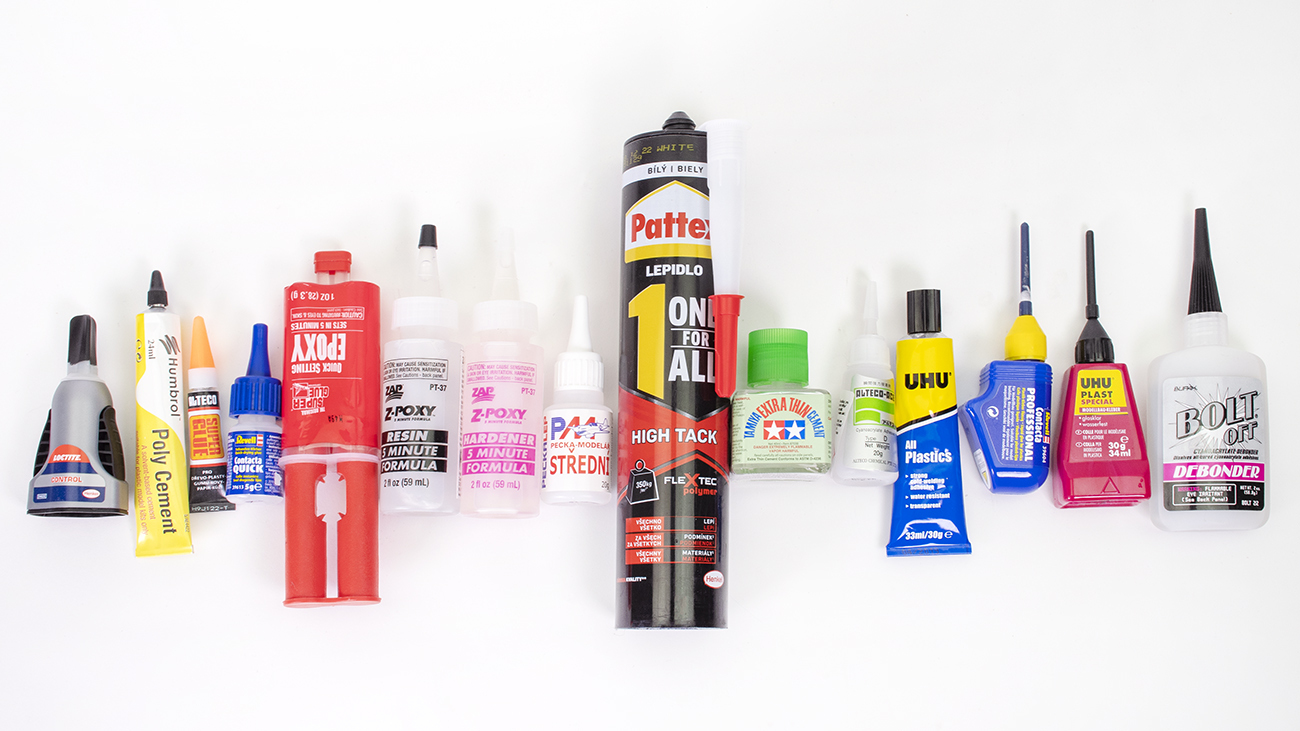
Here is an excellent guide to glues and solvents for 3D printed items. First step is finding out the material the print was made from. If your 3d print is suffering from poor layer adhesion during printing, you can expect additional failures. If the parts are large enough a hot wire welder might work with the glue.
 blog.prusa3d.com
John Salak
RV-12 N896HS
The Great Guide to Gluing and Assembling 3D Prints - Original Prusa 3D Printers
There are many reasons why you would want to cut a 3D model into more pieces and print those separately. An insufficient print volume is the most obvious reason. Even with relatively modest-sized printers like the Original Prusa MINI+ or Original...
blog.prusa3d.com
John Salak
RV-12 N896HS


I would have more luck pulling one out of my hat since I purchased and don’t own a 3D printer.Print anther new one!

1bigdog
Well Known Member
I would have more luck pulling one out of my hat since I purchased and don’t own a 3D printer.
Hi WebbI would have more luck pulling one out of my hat since I purchased and don’t own a 3D printer.
Without knowing the chemistry this is a guessing game. You could try weldon but I agree that you should print one. Many libraries have publicly accessible 3D printers. You provide the STL or GCODE and they will print for you, or hopefully at least get you started. Which reminds me, I’ve got to print one of those as well. Good luck.
This is the stuff you want:

 www.3dgloop.com
Unless the print is a different material, which is unlikely. The person who printed it may even tell you what material on the product page.
PLA Gloop! 120ml (4oz) — 3D Gloop!
PLA Gloop! Don’t want to wait for our backorderd products? Check out our re-sellers ! Have you ever tried to glue your PLA 3D prints together? If so, what do you use? CA Glue? Epoxy? Convoluted friction/soldering iron welding? … Let us guess, you’ve had something glued together with these inf
www.3dgloop.com
Unless the print is a different material, which is unlikely. The person who printed it may even tell you what material on the product page.


Mike S
Senior Curmudgeon
Real mechanics use metal, not 3d printed plastic.Real mechanics use pro-seal
These days PETG is a lot more common as it's both easy to print and more thermally stable once printed. I've melted more than one PLA enclosure for my Stratux by leaving it in the cockpit. My PETG cell-phone mount has been rock-solid.Unless the print is a different material, which is unlikely.
I also use PETG for functional car/airplane stuff. I was kind of assuming that someone selling prints may not know any better, or that they would be likely to be "good enough" in PLA. Of note, I find the PETG GLOOP to work, but to be a huge pain in the ass to work with. It evaporates too quickly. Could be that the parts I'm gluing are too big...These days PETG is a lot more common as it's both easy to print and more thermally stable once printed. I've melted more than one PLA enclosure for my Stratux by leaving it in the cockpit. My PETG cell-phone mount has been rock-solid.


I think the word all of you are searching for is faze. Just sayin.....Weld-on didn’t phase it. CA seemed like it was the ticket till I snapped the controller in and cracked the glue seam. It’s now in the trash and a new one on its way.
I think the word all of you are searching for is faze. Just sayin.....
I must be going thru a faze……..hehehe

I recently made repairs to plastic parts on my car using super glue and baking soda. It was a molded tab which held a nut plate. thin plastic (roughly 1/16") which stuck out perpendicular to the main piece. The bond was stronger than the original part. See video.
The result wasn't very pretty, and I couldn't sand it with the 200 grit paper I had laying around. Probably needed a Dremel to clean it up for a better appearance, but this part was hidden so it didn't matter.
The result wasn't very pretty, and I couldn't sand it with the 200 grit paper I had laying around. Probably needed a Dremel to clean it up for a better appearance, but this part was hidden so it didn't matter.
I will drift a bit if readers will tolerate it. I have maintained for years that junior college should offer a course called adhesives 101.
As RVers surely know, there are so many "glues" in our world now.... it is hard to know what to use as broken materials vary widely.
In the youtube era, there probably is a great tutorial on modern adhesives. I am of the school that appreciates a written reference to be able to quickly go through a list and pick the "right" one for any task at hand. So, a video is only of short term utility.
But, the post above is a great example of a "trick" that some have used for years. The baking soda ends up rock hard. And it makes the cure time almost instantaneous.
So, my hat is off to the original poster, bringing up the topic.
As RVers surely know, there are so many "glues" in our world now.... it is hard to know what to use as broken materials vary widely.
In the youtube era, there probably is a great tutorial on modern adhesives. I am of the school that appreciates a written reference to be able to quickly go through a list and pick the "right" one for any task at hand. So, a video is only of short term utility.
But, the post above is a great example of a "trick" that some have used for years. The baking soda ends up rock hard. And it makes the cure time almost instantaneous.
So, my hat is off to the original poster, bringing up the topic.
PETG is used more often in cockpits because it handles temperature better than PLA but more flexible than ABS, but it doesn't adhere with glue very well if at all. The best way for PETG is to melt it back together with a soldering iron as others have mentioned.Not ever fooling with 3D printing, I can only describe the material as black plastic. Acetone didn’t phase it. I was thinking of our good friend JB Weld epoxy may be the best solution.

Thank you for the offer but it wasn’t an expensive replacement. Relocation of the new one was an improvement so something more came out of something less.Send me a picture with some dimensions, I’ll print you a new one
flyvans.com
Well Known Member
PLA in the cockpit is definitely the wrong material...
PET-G or better at a minimum.
Besides, the model and slicer settings will affect mechanical strength massively.
Even in which axis you print can have a big impact on mechanical strength...
If you broke a piece, try flipping the horizontal and vertical axis.
PET-G or better at a minimum.
Besides, the model and slicer settings will affect mechanical strength massively.
Even in which axis you print can have a big impact on mechanical strength...
If you broke a piece, try flipping the horizontal and vertical axis.
I have a file for one of those too. If it ever breaks again let me know
Thank you kind sir. Hopefully there won’t be a next time.
