Van's Air Force

The definitive Van's Aircraft support community! Buying, building or flying an RV? Join our exclusive family of mentors and enthusiasts!

Axis and redundancy

JDA_BTR

Well Known Member
Patron
My first thought was the Axis is awesome. Now I'm thinking about redundancy.

But is it correct that the EIS is all there, so the GEA-24 is not needed?
Is it also correct that whereas the GTX-375 has GPS and transponder, the Axis does not cover the transponder function?
Would I still want the lighting controller for lights and flaps and trim and such?
 
The install manual covers most everything one needs to know. Its a huge document but it has bookmark links on the table of contents and references.
 
Prices and options the garmin team posted on this forum were for the most basic options available. You'll still need GEA-24 for engine monitoring capabilities. Axis hooks up to remote transponder behind the panel
 
My first thought was the Axis is awesome. Now I'm thinking about redundancy.

But is it correct that the EIS is all there, so the GEA-24 is not needed?
Is it also correct that whereas the GTX-375 has GPS and transponder, the Axis does not cover the transponder function?
Would I still want the lighting controller for lights and flaps and trim and such?

A GEA-24 is still needed for EIS integration into AXIS.

AXIS does not have an integrated transponder. The options continue to be GTX45R (remote mount), GTX 345 (panel mount), or GNX 375 (IFR GPS, XPNDR, panel mount).

A GAD27 electrical control interface is still beneficial for aircraft utilizing those functions.
 
A GEA-24 is still needed for EIS integration into AXIS.

AXIS does not have an integrated transponder. The options continue to be GTX45R (remote mount), GTX 345 (panel mount), or GNX 375 (IFR GPS, XPNDR, panel mount).

A GAD27 electrical control interface is still beneficial for aircraft utilizing those functions.
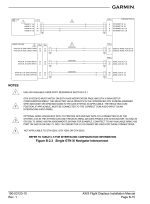
Is the GAD 29 still needed to Interface the ARINC 429 from the GTN 650/750xi's VOR/LOC/GS receiver? or is all of that available via HSDB now and we can (finally) retire the ARINC transmogorifier?
 
Is the GAD 29 still needed to Interface the ARINC 429 from the GTN 650/750xi's VOR/LOC/GS receiver? or is all of that available via HSDB now and we can (finally) retire the ARINC transmogorifier?

The GAD29 can be eliminated from the interface in lieu of HSDB. However, the GAD29 can optionally be kept for redundancy to external backup indicators like the G5, if power to the primary GDU is lost.
 
The GAD29 can be eliminated from the interface in lieu of HSDB. However, the GAD29 can optionally be kept for redundancy to external backup indicators like the G5, if power to the primary GDU is lost.
What functions are lost on the g5 if the gad 29 is removed?

Aka what functions am I gaining by spending the extra $1000.
 
What functions are lost on the g5 if the gad 29 is removed?

Aka what functions am I gaining by spending the extra $1000.
If you have a GTN Xi, and AXIS display, and a G5, and the AXIS display fails, the GTN Xi data will not crossfill to the G5. If a GAD 29 is installed, it will. This is an economical way to achieve increased system redundancy for aircraft to be flown in IMC.
 
If you have a GTN Xi, and AXIS display, and a G5, and the AXIS display fails, the GTN Xi data will not crossfill to the G5. If a GAD 29 is installed, it will. This is an economical way to achieve increased system redundancy for aircraft to be flown in IMC.
Correct me if I’m wrong but the only ‘data’ lost will be vertical/horizontal deviation on an approach?
 
If you have a GTN Xi, and AXIS display, and a G5, and the AXIS display fails, the GTN Xi data will not crossfill to the G5. If a GAD 29 is installed, it will. This is an economical way to achieve increased system redundancy for aircraft to be flown in IMC.
So, if the IFR integrated axis display fails, without an external navigator, does the g5 or mfd display guidance? Is that gps board connect directly with other displays or is its communication driven through the main display board and therefore dependant upon it.?
 
This is the kind of thing I’m wanting to know - what *practical* loss of info will occur.

I’m probably going to go with a gnx375 with a couple of AXIS base models.
That is what i think i would do. Doesn’t cost any more and would seem to provide better backup. But this is early and don’t think we yet know how independent all of these integrated boards really are.
 
Will the axis update via WiFi? It’s the only thing the g3x doesn’t do that I’d really want. Otherwise it looks like it doesn’t change much for my needs since I’m going to want a 375 vs the integrated option.
 
If you go with a Garmin GI-275 as the standby instrument, you get built-in GPS navigation (“VFR only”). In a dual AXIS setup, one full blown IFR GPS Nav/comm/VOR screen and a second VFR-only screen, paired with a GI-275, this has the same or more redundancy as typical G3X touch installations with single stand-alone navigator. This assumes you can still use the nav/comm functions from the AXIS on the GI-275 remotely (given a failed display), which I haven’t checked in the installation manual.

My limited reading on the AXIS suggests the system is modular, just internal to the screen. Likely failure points are the screen itself and the nav/comm radio modules (those can run pretty hot).

Very few experimental aircraft have dual IFR-certified gps’ due to cost and available panel real-estate. With both Garmin and Dynons announcements this week, that will change for those of us regularly flying in IMC.
 
If you run an 8” VFR and 11” axis NAV/COM, I take it the 8” will use the navigator from the 11” if the 11” display fails?
 
While it is possible only the display would fail I believe a power supply failure is more likely, taking out all Axis functionality on that unit.

I was leaning towards a GDU116C and a GDU116B but now I am leaning towards 2 x GDU116B, GNX375, GMA245 and GTR205.
With a single IFR nav this is looking more robust but currently we do not have full information. This combo also looks a little cheaper more cost effective.

I would also be interested in how 2 x GDU116C (or NC) fails but regardless this is probably outside my budget.
 
If you go with a Garmin GI-275 as the standby instrument, you get built-in GPS navigation (“VFR only”). In a dual AXIS setup, one full blown IFR GPS Nav/comm/VOR screen and a second VFR-only screen, paired with a GI-275, this has the same or more redundancy as typical G3X touch installations with single stand-alone navigator. This assumes you can still use the nav/comm functions from the AXIS on the GI-275 remotely (given a failed display), which I haven’t checked in the installation manual.
Once again the G5 seems to be a better backup for the new Axis glass panel when using the Garmin Autopilot. In the Axis Experimental Pilot user guide under standby instruments Garmin specifically states.. "The G5 and GI 275 are compatible with the AXIS™ flight displays. However, the GI 275 is not capable of communicating with the GFC 500 using the AXIS and may be configured to interface with a third party autopilot." Why would anybody go with a more expensive, heavier and complicated GI 275 that provides less functionality to a Garmin autopilot-equipped flight deck?
 
The 275 may not offer AP interface (minor point imo) but it way more capable than the G5 as a backup.
The AP can be operated from either screen so who cares.
The 275 interfaces via HSDB so no need for GAD29.
 
Last edited:
In what way is the 275 more capable?
If the 275 can’t operate the autopilot what can it do that’s better than the G5?
 
Once again the G5 seems to be a better backup for the new Axis glass panel when using the Garmin Autopilot. In the Axis Experimental Pilot user guide under standby instruments Garmin specifically states.. "The G5 and GI 275 are compatible with the AXIS™ flight displays. However, the GI 275 is not capable of communicating with the GFC 500 using the AXIS and may be configured to interface with a third party autopilot." Why would anybody go with a more expensive, heavier and complicated GI 275 that provides less functionality to a Garmin autopilot-equipped flight deck?
That makes little sense to me-the GI-275 is capable of controlling a GFC500 in a stand-alone installation, along with third-party autopilots. Note that Garmin specify the GI-275 as the standby AI for the G3000 Prime flight deck used in business jets; it is certified to higher standards than the G5 (less TSO requirements waived). I don't know if it can drive the AP in those installations, but it should be able to in ours, with the appropriate software.
 
In what way is the 275 more capable?
If the 275 can’t operate the autopilot what can it do that’s better than the G5?
There is a 275 available with onboard adahrs and gfc500 compatibility. It seems like that would be a good backup alternative. Am I missing something?
 
For those who consistently and regularly fly in IMC in your homebuilt airplane, please disregard the following statement(s)/question(s).

Why is it so vitally important to be so concerned about multiple redundancy? Don’t get me wrong, I understand the concern about the single screen failure situation. My question is based upon the idea that, other than the above mentioned group of pilots, how many of us have to have the kind of multiple redundant systems being hashed out here? If you lose your navigation tool and are NOT in IMC, how much of a problem is that? On the other hand, if you lose your primary flight information because your display screen went black, that is a bit more important for the remainder of us not socked in IMC. Redundant power to the screen and all feeding LRUs would be important. The G5 serves as a good back up if everything goes TU. If you are not flying a scheduled flight where “everything be dam(n)ed, I have to continue this flight”, we should all be putting the crippled airplane down ASAP and fixing the problem on the ground.

Just my .02.

Live Long and Prosper!
 
Back
Top