Van's Air Force

The definitive Van's Aircraft support community! Buying, building or flying an RV? Join our exclusive family of mentors and enthusiasts!

High oil Temperature

WWhunter

Well Known Member
I purchased an RV-8 with an IO-360 (200HP) with Hartzel CS prop. New to injected and CS after nearly 40 years of flying lower powered fixed pitch planes.

I am trying to get initial practice, essentially doing takeoff and landings. Since I am staying in the pattern, the prop or mixture basically aren't touched. I can only get two circuits in before the oil temp starts getting over 200 degrees. Once it gets there it rises raather quickly. By my 3rd landing it is starting to get into the yellow. Basically done for the day. This are my reading:

Oil temperature 224.

EGT CHT
#1 1141 291
#2 1128 292
#3 1170 339
#4 1105 295

Number 3 cylinder is definitely hotter than the rest, but this seems to be my typical experience with several diferent planes that I have owned. Is this typically that big of a difference spread?

I removed the cowling and checked all the baffling, which looked good. No oil cooler blockage. The oil cooler is mounted at the rear of the baffling. The vernatherm being stuck, or the oil cooler might be restricted, is a possibility.

My thoughts are that flying at the slow speeds of pattern work are a contributing factor, but would like advice/comments on what else it could be. Ideas?

Thank you
 
I purchased an RV-8 with an IO-360 (200HP) with Hartzel CS prop. New to injected and CS after nearly 40 years of flying lower powered fixed pitch planes.

I am trying to get initial practice, essentially doing takeoff and landings. Since I am staying in the pattern, the prop or mixture basically aren't touched. I can only get two circuits in before the oil temp starts getting over 200 degrees. Once it gets there it rises raather quickly. By my 3rd landing it is starting to get into the yellow. Basically done for the day. This are my reading:

Oil temperature 224.

EGT CHT
#1 1141 291
#2 1128 292
#3 1170 339
#4 1105 295

Number 3 cylinder is definitely hotter than the rest, but this seems to be my typical experience with several diferent planes that I have owned. Is this typically that big of a difference spread?

I removed the cowling and checked all the baffling, which looked good. No oil cooler blockage. The oil cooler is mounted at the rear of the baffling. The vernatherm being stuck, or the oil cooler might be restricted, is a possibility.

My thoughts are that flying at the slow speeds of pattern work are a contributing factor, but would like advice/comments on what else it could be. Ideas?

Thank you
I have almost the same numbers in my IO-360 angle valve (200HP), #3 is 30-40 degrees hotter than the rest.
During the summer, I remove the air dams from the front of the engine. My oil temps can get in that range on a hot day and I have a 13-row oil cooler installed behind #3 using showplanes oil cooler mount.
 
I purchased an RV-8 with an IO-360 (200HP) with Hartzel CS prop. New to injected and CS after nearly 40 years of flying lower powered fixed pitch planes.

I am trying to get initial practice, essentially doing takeoff and landings. Since I am staying in the pattern, the prop or mixture basically aren't touched. I can only get two circuits in before the oil temp starts getting over 200 degrees. Once it gets there it rises raather quickly. By my 3rd landing it is starting to get into the yellow. Basically done for the day. This are my reading:

Oil temperature 224.

EGT CHT
#1 1141 291
#2 1128 292
#3 1170 339
#4 1105 295

Number 3 cylinder is definitely hotter than the rest, but this seems to be my typical experience with several diferent planes that I have owned. Is this typically that big of a difference spread?

I removed the cowling and checked all the baffling, which looked good. No oil cooler blockage. The oil cooler is mounted at the rear of the baffling. The vernatherm being stuck, or the oil cooler might be restricted, is a possibility.

My thoughts are that flying at the slow speeds of pattern work are a contributing factor, but would like advice/comments on what else it could be. Ideas?

Thank you
My numbers below are back in mid-June, the oil temp in this case is during cruise but during TnGos on a hot day I definitely see the high oil temps and have seen them in the 220s. I had the same concerns, that vernatherm may have been stuck but I tested and got some help from a local A&P to confirm that the vernatherm was good.

Alt 10700
MP 20.5
FF 7.6 GPH
Oil Temp 195

#1 1315 304
#2 1346 340
#3 1373 364
#4 1318 324
LOP
 
What size oil cooler do you have?

I ran into this issue on my RV-7A, even in cruise. When I purchased it, wheel pants were removed… so less cooling airflow for a given airspeed. Installing them made a world of difference. But, still runs hotter than I’d like. I replaced vernatherm… no dice. In my case, the oil cooler is simply undersized. I have a 200hp IO-360 as well (IO360-C1C6), and the builder selected an 8-row P20004C.

I am in the process of upgrading to an Aero Classics 13-row, with the Showplanes mount and expect that to be the proper fix. Hoping to wrap up this week.
 
Last edited:
Most (mine included) angle valve (200hp) powered RVs are not good at tolerating touch and go opearations in the summer. Your numbers are not really pointing to abnormal operation to me. Your CHTs are actually cooler than optimum. Remember these engines are air and fuel cooled. In a touch and go we ask full power (full fuel, not much airspeed) for a short period to get to pattern altitude and then we remove most of the fuel (cooling) and stay at a low airspeed (not much air for cooling). This cycle does not last long before oil temps rise. Does your aircraft do fine on cooling in a cruise mode?
 
your cht/egt as mentioned is totally fine (or even low). what is the OAT ? oil temp in the 220's is not ideal but totally fine. if it goes down in cruise i wouldnt worry about it too much. in the long term maybe a larger oil cooler as mentioned. i think i went from a 9 row to a 12 row in my rv6. helped for sure.
 
My ideas:
Find the manual for your engine.
Read it.
Make note of redline oil temps. What is ideal? What is maximum?
If you are in the ideal range OR not at maximum- chill out!!!
What is your oil level and what is maximum? Oil serves as a coolant.

While you are at it, make note of cht and egt limits.

Good that you looked at baffling.
 
Remember the Harzell BA CS prop starts to mimic a flat disc at low pitch (high RPM). Oil temps will be higher as there is less engine cooling air getting to the oil cooler.

When I replaced the baseball bat FP Sensenich prop on my first build with the nice Hartzell BA prop I noted two things on first flight:
- The acceleration on takeoff was amazing
- Oil temp was much higher than normal after landing

It took me awhile to figure it out. Let the engine breath some between landings by going to a high pitch (lower RPM).

I’ll note that your EGTs show a lot of fuel going into your engine. I suggest a few GAMI data runs to see what is going on. At first blush on your numbers #3 looks leaner than the rest. Do the GAMI data runs after you check for intake leaks. See Vic’s latest video on how to check for induction leaks:

Carl
 
I purchased an RV-8 with an IO-360 (200HP) with Hartzel CS prop. New to injected and CS after nearly 40 years of flying lower powered fixed pitch planes.

I am trying to get initial practice, essentially doing takeoff and landings. Since I am staying in the pattern, the prop or mixture basically aren't touched. I can only get two circuits in before the oil temp starts getting over 200 degrees. Once it gets there it rises raather quickly. By my 3rd landing it is starting to get into the yellow. Basically done for the day. This are my reading:

Oil temperature 224.

EGT CHT
#1 1141 291
#2 1128 292
#3 1170 339
#4 1105 295

Number 3 cylinder is definitely hotter than the rest, but this seems to be my typical experience with several diferent planes that I have owned. Is this typically that big of a difference spread?

I removed the cowling and checked all the baffling, which looked good. No oil cooler blockage. The oil cooler is mounted at the rear of the baffling. The vernatherm being stuck, or the oil cooler might be restricted, is a possibility.

My thoughts are that flying at the slow speeds of pattern work are a contributing factor, but would like advice/comments on what else it could be. Ideas?

Thank you
Define yellow. Lycoming only publishes
I purchased an RV-8 with an IO-360 (200HP) with Hartzel CS prop. New to injected and CS after nearly 40 years of flying lower powered fixed pitch planes.

I am trying to get initial practice, essentially doing takeoff and landings. Since I am staying in the pattern, the prop or mixture basically aren't touched. I can only get two circuits in before the oil temp starts getting over 200 degrees. Once it gets there it rises raather quickly. By my 3rd landing it is starting to get into the yellow. Basically done for the day. This are my reading:

Oil temperature 224.

EGT CHT
#1 1141 291
#2 1128 292
#3 1170 339
#4 1105 295

Number 3 cylinder is definitely hotter than the rest, but this seems to be my typical experience with several diferent planes that I have owned. Is this typically that big of a difference spread?

I removed the cowling and checked all the baffling, which looked good. No oil cooler blockage. The oil cooler is mounted at the rear of the baffling. The vernatherm being stuck, or the oil cooler might be restricted, is a possibility.

My thoughts are that flying at the slow speeds of pattern work are a contributing factor, but would like advice/comments on what else it could be. Ideas?

Thank you
Define yellow. The Lycoming Operator’s manual only defines a desired temp of 180° and a maximum temp of 245° at ambient temp above 80°. Your numbers seem fine to me. I wouldn’t worry about it unless you’re getting close. FWIW, I have a 4” SCAT feeding a plenum attached to a large Stuart Warner oil cooler. My temps rarely get above 190°.
 
If you need/want to practice takeoffs and landing with high OAT just insert a short 10 or 15 minute flight leg between landings. During that delay time get the airspeed up, power down (maybe 65% or so) and lower the RPM as Carl suggests. Lowering the power and RPM while maintaining higher airspeed will keep the engine happy and you can then go shoot another landing. Now you are practicing engine management in addition to the patten work.
 
Define yellow. Lycoming only publishes

Define yellow. The Lycoming Operator’s manual only defines a desired temp of 180° and a maximum temp of 245° at ambient temp above 80°. Your numbers seem fine to me. I wouldn’t worry about it unless you’re getting close. FWIW, I have a 4” SCAT feeding a plenum attached to a large Stuart Warner oil cooler. My temps rarely get above 190°.
The yellow range on the Dynon in the plane starts at 220. The highest I saw was 234, which is what caught my attention. By the time I took a picture it was down to 224.
OAT was mid 80's possibly got close to 90 by the time I had to shut down. All I know is it was too hot for this Minnesota farmboy!

Thanks everyone for the advice and comments. I'm a little bit more at ease now and will get some altitude and see what happens.
 
I purchased an RV-8 with an IO-360 (200HP) with Hartzel CS prop. New to injected and CS after nearly 40 years of flying lower powered fixed pitch planes.

I am trying to get initial practice, essentially doing takeoff and landings. Since I am staying in the pattern, the prop or mixture basically aren't touched. I can only get two circuits in before the oil temp starts getting over 200 degrees. Once it gets there it rises raather quickly. By my 3rd landing it is starting to get into the yellow. Basically done for the day. This are my reading:

Oil temperature 224.

EGT CHT
#1 1141 291
#2 1128 292
#3 1170 339
#4 1105 295

Number 3 cylinder is definitely hotter than the rest, but this seems to be my typical experience with several diferent planes that I have owned. Is this typically that big of a difference spread?

I removed the cowling and checked all the baffling, which looked good. No oil cooler blockage. The oil cooler is mounted at the rear of the baffling. The vernatherm being stuck, or the oil cooler might be restricted, is a possibility.

My thoughts are that flying at the slow speeds of pattern work are a contributing factor, but would like advice/comments on what else it could be. Ideas?

Thank you
Be sure your concessions to the probe are good. I had crimped connection that were not perfect and caused resistance and false reading. By soldering them instead, my oil temps went down 10 degrees. It is worth a try.
 
Back to the initial post, the truth is that an airplane configured like this really isn;t a “touch and go” airplane like the certified trainers we al grew up with. Back when I have owned Cubs and my trusty Yankee, I coudl go up and go round and roudn for an hour trying to perfect landings - all for very little gas and plenty of flight time. They were overcooled by design (and we also didn’t have much in the way of reliable instrumentations, so what we didn’t know, we didn’t know…..), and I LOVE landing airplanes, so I did that a lot.

High powered, complex (by definition) airplanes aren’t really built for goign aroudn and around at low speed in the pattern. I rarely do more than one touch and go in an RV for the very reason you’re finding - temperatures just keep going up. So you make the most of learning from each landing, and - of course - if you just love doing repetitive T&G’s, that means you have to go out and buy a Cub to add to your hangar quiver….. N+1 you know……😉
 
Post #1 regarding your hot #3 cylinder. Are you familiar with the casting of cylinders and how this casting can block cooling air to the #3 (and #2) cylinder? The info and the resolution is detailed in this thread.

 
Back to the initial post, the truth is that an airplane configured like this really isn;t a “touch and go” airplane like the certified trainers we al grew up with. Back when I have owned Cubs and my trusty Yankee, I coudl go up and go round and roudn for an hour trying to perfect landings - all for very little gas and plenty of flight time. They were overcooled by design (and we also didn’t have much in the way of reliable instrumentations, so what we didn’t know, we didn’t know…..), and I LOVE landing airplanes, so I did that a lot.

High powered, complex (by definition) airplanes aren’t really built for goign aroudn and around at low speed in the pattern. I rarely do more than one touch and go in an RV for the very reason you’re finding - temperatures just keep going up. So you make the most of learning from each landing, and - of course - if you just love doing repetitive T&G’s, that means you have to go out and buy a Cub to add to your hangar quiver….. N+1 you know……😉
Paul,

Thanks!! I will take the advice of less round and round flights. I can fulfill my pattern work to one of the other planes. I was hoping to get out this morning but not in the heat and gusts currently here.

But both my wife and I got quite the chuckle out of the "N+1" comment. I currently have a RANS S7 (currenlty on amphibs), a Murphy Rebel, and another Rebel close to completion. Have a strip by Itasca State Park where I keep the flying Rebel and the RANS amphib. I'm trying to thin my herd a bit, not add to it! I got a good wife....she wouldn't say much if I got another plane, other than, where am I going to put it.
 
Last edited:
Post #1 regarding your hot #3 cylinder. Are you familiar with the casting of cylinders and how this casting can block cooling air to the #3 (and #2) cylinder? The info and the resolution is detailed in this thread.


Thank you for posting that! I will first do as others have mentioned and limit my T/O and landings to see if that helps. But the article you linked is great information.
Keith
 
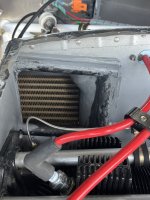
I have a 13 row showplanes cooler mounted behind the #3 cylinder. In an effort to increase cooling through the cooler I bonded carbon tubes to the perimeter of the opening like a picture frame. I slit the tubes and slipped them in place so the opening hole wouldn't be reduced by more than the wall thickness of the tubes. The results were pretty dramatic…perhaps a 10f improvement. Airflow does not like abrupt edges.
 
IMG_4466.jpeg
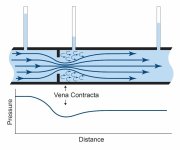
Here’s the tubular picture frame I’m talking about. They hysol was wet and ive since sanded it smooth. The phenomenon this is solving is called “vena contracta”. My temps used to hover around 205 most days and now they rarely climb above 195.
 

Attachments

  • IMG_5785.jpeg
    IMG_5785.jpeg
    73.9 KB · Views: 1
Back
Top