Steve Crewdog

Well Known Member
Patron
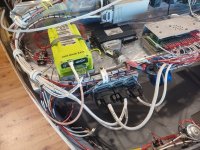
Got a bunch of wires traveling from the upper left to the main buss on the lower right, divided into subsytems. They're secured pretty well to where they're not moving. The anal retentive side of me says I need to bundle everything together, the "you might need to repair this someday" side says they're secure, they're ok, leave them alone, if you bundle them together that's one more thing you'll have to undo.


Thoughts?
 

Attachments

  • Bundling bundles.jpg
    Bundling bundles.jpg
    374.9 KB · Views: 131
Doesn't matter. Even if it's clean enough to eat dinner, tomorrow you will need to add a wire.
I get flamed but I like industrial Velcro. Makes it easy to change.

BTW, I am adding a wire!
 
That’s pretty neat compared to many airplanes I have seen Stve. If it were mine, I’d probably do a little bit more lacing on that fan of power wires over on the right - some of the loops on the far end are pretty free and can flop around a bit. Otherwise, its just how ADHD you want to be. I generally tell folks to fan their hand through the wire bundles, and if wires can move around and randomly hit structure or edges, they might want to tie things down better. But…. You’re not going to the moon!
 
That’s pretty neat compared to many airplanes I have seen Stve. If it were mine, I’d probably do a little bit more lacing on that fan of power wires over on the right - some of the loops on the far end are pretty free and can flop around a bit. Otherwise, its just how ADHD you want to be. I generally tell folks to fan their hand through the wire bundles, and if wires can move around and randomly hit structure or edges, they might want to tie things down better. But…. You’re not going to the moon!

Thank you, Flight, and Good eye, I haven't gotten to that side yet. To be honest I'm a bit nervous about trimming them down to fit neater, I know that as soon as I trim one I'll mess up the redo and have a too-short wire, or eventually I'm going to have a bad connection and have to redo the spade and won't have any wire left to do so. Not sure how I'd put a service loop in there so I'm looking at it, debating, waiting to get my never up.


Brandon: This is actually the umpteenth time I've redone the harness, the more I've done the better I've gotten, and I can tell where I did wiring at the start vs ones I did later as I got more proficient. Hard part is telling myself "That's good enough. LEAVE IT ALONE!!!" and moving on to another part of the project. (Better is the enemy of Best.) You might want to check this article out about GearTies, I stopped using zipties for the build because I was terrified I was going to nick a wire taking them off.

Gear Ties: A Temporary Way To Secure Wiring Harnesses as You Build​

 
Last edited:
I ended up having to re-terminate a gaggle of wires because they weren't routed well during the initial wire routing. Here's what I learned--the hard way: while you're in process, use nylon cable clamps like you can get from Lowe's aircraft supply to secure wires into highways. When you're done pulling the last wire (if that's a thing), remove the nylon cable clamps and replace them with cushioned Adel clamps of the equivalent size. You can also use Velcro cable wraps to temporarily bundle cables during the wiring process. Again, when you're done, lace the wires together properly to prevent flopping around. There's more than one way to skin a cat, but that's a cheap and easy way to do it that eliminates rework.
 
That’s pretty neat compared to many airplanes I have seen Stve. If it were mine, I’d probably do a little bit more lacing on that fan of power wires over on the right - some of the loops on the far end are pretty free and can flop around a bit. Otherwise, its just how ADHD you want to be. I generally tell folks to fan their hand through the wire bundles, and if wires can move around and randomly hit structure or edges, they might want to tie things down better. But…. You’re not going to the moon!

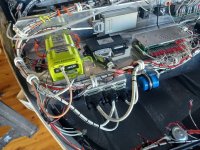
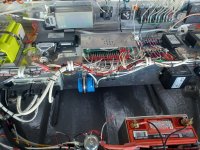
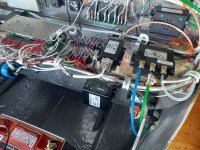
How's that, Paul?

I'd still like to do something about the 2 wires coming from L-> R in the (2) pic, they're hanging out a bit too much for me. But it's time to move on and I can come back to it. On to the next section.
 

Attachments

  • Bundled bundles (2).jpg
    Bundled bundles (2).jpg
    372.6 KB · Views: 49
  • Bundled bundles (3).jpg
    Bundled bundles (3).jpg
    374.5 KB · Views: 49
  • Bundled bundles (5).jpg
    Bundled bundles (5).jpg
    394.7 KB · Views: 49
Steve: Looks good for someone that doesn't do it very much.
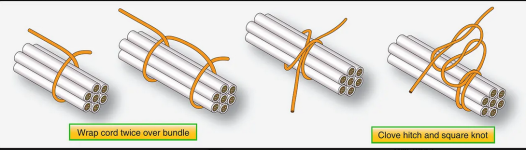
One tidbit of info though, the running tie technique, although it's still in the standards, has been pretty much abandoned for more than 30 years by production. Any where the tie gets cut, it can and will unravel from that point, in both directions, until it hits a full knot. Our company abandoned it during the F-111 production days.
 
Steve: Looks good for someone that doesn't do it very much.
One tidbit of info though, the running tie technique, although it's still in the standards, has been pretty much abandoned for more than 30 years by production. Any where the tie gets cut, it can and will unravel from that point, in both directions, until it hits a full knot. Our company abandoned it during the F-111 production days.

Thank you, and that makes sense. I was taught by an old USN Chief, who wanted me to do lacing instead of zipties, he felt the zipties would eventually cut into the wires.

Looks like this will be my only build unless I do a Quicksilver MX, being an aviation geek I'm trying as much as possible to do it Old School. (I laced my fabric wings instead of riveting them, and they're much prettier, IMHO.) I'll switch over for the rest.

Can't believe Australia actually buried their Pigs when they retired them.
 
Can't believe Australia actually buried their Pigs when they retired them.
Had to so that the radialogic hazards could be controlled. The 'Vark used DU for counterweights in various places. Only way to remove the DU is to destroy the areas to gain access. Turns out to be less expensive and dangerous to simply bury the airframes in a tightly controlled location.
We still were supporting F-111 testing with USAF and NASA, when I left flight test, back in the '90's. NASA was flying one with an adaptive wing and USAF was still certifying weapons carriage.
 
Had to so that the radialogic hazards could be controlled. The 'Vark used DU for counterweights in various places. Only way to remove the DU is to destroy the areas to gain access. Turns out to be less expensive and dangerous to simply bury the airframes in a tightly controlled location.
We still were supporting F-111 testing with USAF and NASA, when I left flight test, back in the '90's. NASA was flying one with an adaptive wing and USAF was still certifying weapons carriage.

I was doing Brisbane layovers for a while, RiverFire is just not the same without a Pig doing a dump and burn.

 
Steve: Looks good for someone that doesn't do it very much.
One tidbit of info though, the running tie technique, although it's still in the standards, has been pretty much abandoned for more than 30 years by production. Any where the tie gets cut, it can and will unravel from that point, in both directions, until it hits a full knot. Our company abandoned it during the F-111 production days.

One thing I've already noticed is that the single loop/tie/knot gives a lot more flexibility when you have wires coming/going to/from the run. I'm sold already. Thanks for the tip!
 

Attachments

  • Wire lacing single loop.png
    Wire lacing single loop.png
    403.5 KB · Views: 14