PabloSniper
Active Member
Hello gentlemen of the Vans Forum!
After several mistakes and some not-so-sensible suggestions, I believe this time I’ve hit the mark.
This is not my project, and I’m not claiming any credit for it — I’m just an aviation enthusiast who sees opportunities.
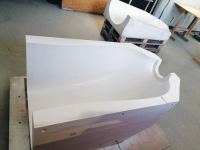
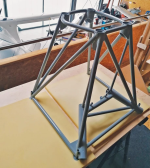
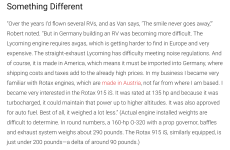
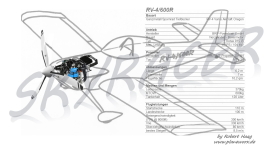
Robert Haag, a German engineer, built an RV-4 with a Rotax 915iS engine, using a new engine mount and a longer cowling to accommodate the lighter engine, which had to be positioned further forward from the firewall. And gentlemen, the result is truly a masterpiece.
Well, in order not to clutter this suggestion with images, I have made a YouTube video to explain this suggestion in detail.
Link to Kitplanes article about it: https://www.kitplanes.com/rotax-anyone/
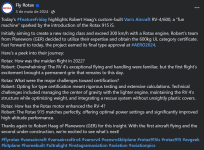
However, as you can see in this post from Rotax, Robert has classified his RV as an ultralight, with a maximum takeoff weight of 600 kilograms ( 1,320 pounds)
Personally, I don't see any advantage in that, since Van's design specifies a maximum takeoff weight of 680 kilograms, or 1,500 pounds. So, I put together a table with the actual data of the standard RV-4 and Robert's RV-4 (considering the maximum takeoff weight as designed by Van's), along with three other variants with estimated data, including the 916iS, 914UL, and 912iS. It is worth noting that Robert's RV-4 is equipped with a parachute weighing 17 kilograms (approximately 37 pounds).
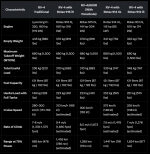
As you can witness, the Rotax engines give new life to the old RV-4. It transforms from being a one-and-a-half-seater into a true two-seater, with enough margin to fill the fuel tanks, load the baggage compartment, and still comfortably accommodate two heavy passengers.
Not to mention the fuel savings.
Possible issues to be addressed in this suggestion:
Not to mention that, with a Lycoming engine similar to the RV-8, it offers virtually nothing that the RV-8 doesn’t already provide.
The reduced cost of assembly (as the Rotax is cheaper than the Lycoming), the greater fuel efficiency, the increased useful load, and the reduction in total build hours would make this aircraft a sales success beyond even the most optimistic expectations.
I sincerely hope that this topic will receive the support of the community and that it will reach those responsible at Van's.

My best regards,
PabloSniper
P.S.: As you could see in the video, an Italian builder made an RV-4 with a Rotax 912 100hp.
However, I was unable to get in touch with him to obtain the performance figures.
Just to make it perfectly clear, I am not requesting a new aircraft design; I am only proposing an engine modification to an existing, well-established project, which has a large community of enthusiasts and is already renowned for its excellent flight characteristics.
I never imagined in my life that writing a topic on a forum could take so much time. It took hours and hours of research and video editing, I hope you like the result.
And now a message for someone responsible for Van's.
I'm not only going to buy one for myself, but I promise to dedicate my time and use my YouTube channel with around 50 thousand followers to promote your product here in Brazil.
Although we are a backward country, we have the second largest civil aviation fleet in the world, behind only the United States of America. The RV-10 is responsible for 73% of the civil aircraft here. And this proposed model would be a huge success in a poor and large country like ours.
We would have the possibility of making a transfer between one city and another, at a lower cost than in a car. And that is fantastic.
After several mistakes and some not-so-sensible suggestions, I believe this time I’ve hit the mark.
This is not my project, and I’m not claiming any credit for it — I’m just an aviation enthusiast who sees opportunities.
Robert Haag, a German engineer, built an RV-4 with a Rotax 915iS engine, using a new engine mount and a longer cowling to accommodate the lighter engine, which had to be positioned further forward from the firewall. And gentlemen, the result is truly a masterpiece.
Well, in order not to clutter this suggestion with images, I have made a YouTube video to explain this suggestion in detail.
Link to Kitplanes article about it: https://www.kitplanes.com/rotax-anyone/
However, as you can see in this post from Rotax, Robert has classified his RV as an ultralight, with a maximum takeoff weight of 600 kilograms ( 1,320 pounds)
Personally, I don't see any advantage in that, since Van's design specifies a maximum takeoff weight of 680 kilograms, or 1,500 pounds. So, I put together a table with the actual data of the standard RV-4 and Robert's RV-4 (considering the maximum takeoff weight as designed by Van's), along with three other variants with estimated data, including the 916iS, 914UL, and 912iS. It is worth noting that Robert's RV-4 is equipped with a parachute weighing 17 kilograms (approximately 37 pounds).
As you can witness, the Rotax engines give new life to the old RV-4. It transforms from being a one-and-a-half-seater into a true two-seater, with enough margin to fill the fuel tanks, load the baggage compartment, and still comfortably accommodate two heavy passengers.
Not to mention the fuel savings.
Possible issues to be addressed in this suggestion:
- But if Robert is already making the parts, why should Van's do it?
- Many builders do not trust third-party services, but if Van's offers it, it would have the full confidence of the public.
- But the RV-4 is an old kit, and demand for it is low compared to other models.
- The demand is low because assembling the standard kit takes about 2,000 to 2,500 hours, as its parts are not pre-drilled. If this kit were updated to the level of the RV-12, which requires only 800 to 900 hours to complete, it would have much greater appeal.
Not to mention that, with a Lycoming engine similar to the RV-8, it offers virtually nothing that the RV-8 doesn’t already provide.
The reduced cost of assembly (as the Rotax is cheaper than the Lycoming), the greater fuel efficiency, the increased useful load, and the reduction in total build hours would make this aircraft a sales success beyond even the most optimistic expectations.
I sincerely hope that this topic will receive the support of the community and that it will reach those responsible at Van's.
My best regards,
PabloSniper
P.S.: As you could see in the video, an Italian builder made an RV-4 with a Rotax 912 100hp.
However, I was unable to get in touch with him to obtain the performance figures.
Just to make it perfectly clear, I am not requesting a new aircraft design; I am only proposing an engine modification to an existing, well-established project, which has a large community of enthusiasts and is already renowned for its excellent flight characteristics.
I never imagined in my life that writing a topic on a forum could take so much time. It took hours and hours of research and video editing, I hope you like the result.
And now a message for someone responsible for Van's.
I'm not only going to buy one for myself, but I promise to dedicate my time and use my YouTube channel with around 50 thousand followers to promote your product here in Brazil.
Although we are a backward country, we have the second largest civil aviation fleet in the world, behind only the United States of America. The RV-10 is responsible for 73% of the civil aircraft here. And this proposed model would be a huge success in a poor and large country like ours.
We would have the possibility of making a transfer between one city and another, at a lower cost than in a car. And that is fantastic.
Last edited: