Race Bannon

I'm New Here
Good evening to all and my compliments! Have flown the past 50 years in military, commercial, and general aviation. Having experienced another lengthy vertical learning curve regarding all things Vans, and with more to learn...I recently purchased a 2005 RV-9A, low time airframe and engine at ~400hrs. Since that purchase, I have a few initial questions for the group.

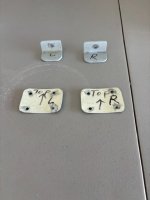
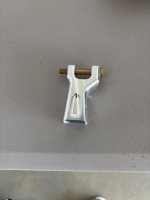
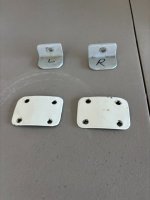
First, looking for identification of pieces/parts per 3 attached photos...they seem familiar to me but not sure where these parts (2 dark brackets, 2 white brackets/plates, and an aluminum part with a bolt through it) are used or located on a 9A, if they go on her at all.
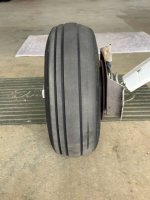
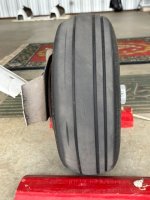
Second, tire photos. The inside tread wear is unusual on both tires according to multiple tread wear posts on this site. These tires were made in 2022 and best I can tell have about 90 hours on them (no idea total landings). On the prebuy, I noticed the landing gear stop flange was oriented aft (not IAW SB 14-12-22). That condition was corrected per the SB. I also noticed tire psi to be on the below side of recommended pressure and that was corrected as well. On the prebuy flight there were no unusual landing vibrations, yawing, bouncing, etc. My gut tells me to flip each tire on the wheel, watching closely the wear pattern afterwards...perhaps an aft facing stop flange caused this wear pattern. I'm based on a good hard surface runway. What say you?

Thanks in advance!
 

Attachments

  • IMG_7160.jpeg
    IMG_7160.jpeg
    36.2 KB · Views: 109
  • IMG_7161.jpeg
    IMG_7161.jpeg
    38 KB · Views: 109
  • IMG_7169.jpeg
    IMG_7169.jpeg
    30.8 KB · Views: 103
  • IMG_7170.jpeg
    IMG_7170.jpeg
    58.7 KB · Views: 100
  • IMG_7173.jpeg
    IMG_7173.jpeg
    59.9 KB · Views: 103
I’d guess the tires were flipped before you bought the airplane.

But I’d just replace them now and watch how they wear. I find Goodyear Flight Special II to be a good value.

Carl
 
I’d guess the tires were flipped before you bought the airplane.

But I’d just replace them now and watch how they wear. I find Goodyear Flight Special II to be a good value.

Carl
+1. Just so you understand, in flight the wheels "droop" a bit due to their own weight. This results in first point of contact on landing being on the outside of the tires. But I'd leave them for a bit, watch and see if the wear moves outboard (normal). If it doesn't investigation is required.
 
+1. Just so you understand, in flight the wheels "droop" a bit due to their own weight. This results in first point of contact on landing being on the outside of the tires. But I'd leave them for a bit, watch and see if the wear moves outboard (normal). If it doesn't investigation is required.
That is why Carl rightly so pointed out the fact they have been recently flipped. You have 100 - 200 landings to monitor the wear. It will occur on the outside where your tires are almost pristine. (Almost) As others have pointed out you have the Jack Points lifts that will make it very easy to flip in the next 100 - 200 landings. I doubt these are the original tires so fly and watch.
 
+1. Just so you understand, in flight the wheels "droop" a bit due to their own weight. This results in first point of contact on landing being on the outside of the tires. But I'd leave them for a bit, watch and see if the wear moves outboard (normal). If it doesn't investigation is required.
Thanks Bob, seems like a logical trouble-shooting approach (don't flip the tire yet). Agree with starting on the simple/easy “fixes” first and in a safe manner. By installing the nose gear landing flange in the correct position and with proper tire inflation, I should begin to see outside tread wear on the mains…in other words, a backwards stop flange could have caused the inside tread wear by “dragging” the mains through taxi turns or fast turns off the runway. However, should the remaining groove lines on the inside of the tread completely disappear, time to stop and get into deeper trouble-shooting. Do I have that correct?
 
That is why Carl rightly so pointed out the fact they have been recently flipped. You have 100 - 200 landings to monitor the wear. It will occur on the outside where your tires are almost pristine. (Almost) As others have pointed out you have the Jack Points lifts that will make it very easy to flip in the next 100 - 200 landings. I doubt these are the original tires so fly and watch.
Copy all. The previous owner stated he did not flip the tires or bought new ones. This was the 4th Vans completed by the builder, the workmanship is immaculate. Something I’m learning about experimental aircraft is on-going maintenance documentation…sometimes it’s there and sometimes it ain't. For instance, the only recorded tire change in the logbooks occurred in 2006 and these don’t look like 20 year old tires. Will plan to follow yours and Bob’s advice on moving forward, thanks!
 
Copy all. The previous owner stated he did not flip the tires or bought new ones. This was the 4th Vans completed by the builder, the workmanship is immaculate. Something I’m learning about experimental aircraft is on-going maintenance documentation…sometimes it’s there and sometimes it ain't. For instance, the only recorded tire change in the logbooks occurred in 2006 and these don’t look like 20 year old tires. Will plan to follow yours and Bob’s advice on moving forward, thanks!
Sorry, totally confused. You originally stated, " These tires were made in 2022 and best I can tell have about 90 hours on them (no idea total landings).'

The airframe was produced in 2005 now has 2022 tires. Seems these tires cannot be original. Hopefully you had an experienced RV builder that did your pre-buy.
 
Sorry, totally confused. You originally stated, " These tires were made in 2022 and best I can tell have about 90 hours on them (no idea total landings).'

The airframe was produced in 2005 now has 2022 tires. Seems these tires cannot be original. Hopefully you had an experienced RV builder that did your pre-buy.
All good and agree these tires are not original build tires. My point was to the documentation or lack thereof. These tires (Michelin Air) are about 4 years old according to the born-on date marked on the tire. There is no documentation in the past 4 years as to who put them on or when, including any brake pad changes or other wheel maintenance. There is documentation that tires were changed in 2006. Was trying to link (in my mind) the nose gear stop flange incorrectly installed as a potential cause of the tread wear. Maybe I need to flush that idea. Additionally, there is some description in the logbook about nose gear upgrade maintenance in 2019 and in 2023 through an anti-splat nose gear modification including the skid plate, perhaps that's when the stop flange orientation was incorrectly installed...and who knows, maybe that's when the new mains went on in 2023...a logical deduction without proper documentation. My prebuy was conducted by an experienced pilot, aircraft builder/restorer, A&P/AI. Cheers!
 
Logbooks... sigh. Yeah logbooks for EAB aircraft are often terrible.
I admit, though I keep pretty good logbooks, that I've never recorded any tire work.

Big question - SB (service bulletins), are those in the logs? See the list at Vansaircraft.com for your model.
Many are annual recurring inspection points.
I've run into planes where not only were they not recorded, but they were never performed, and the plane has had sign offs by an A&P.
 
My point was to the documentation or lack thereof.
I do very little of my own maintenance but scrupulously log everything I do, complete with pictures. My A&P is likewise really good about logbook entries. I was just looking at the logs after he completed my condition inspection and I note that there have been several tire change entries over the years.
 
Logbooks... sigh. Yeah logbooks for EAB aircraft are often terrible.
I admit, though I keep pretty good logbooks, that I've never recorded any tire work.

Big question - SB (service bulletins), are those in the logs? See the list at Vansaircraft.com for your model.
Many are annual recurring inspection points.
I've run into planes where not only were they not recorded, but they were never performed, and the plane has had sign offs by an A&P.
Agree with your observations. Was once told the money is in the logbooks...complete and accurate that is. I or my mech log everything we do to the aircraft I own, been that way for 50 years, takes all the guess work out and clearly shows the mechanical condition until additional maintenance is required.
During the prebuy, we reviewed/completed and made logbook entries for all applicable SB's, and then noted all Letters, and Notifications as listed on the Vans website for the 9's, that was part of my vertical learning curve during the looking and buying process. I remember the days when mechs wrote small novels regarding the work they performed...these days you get the standard IAW part 43 and at the time of signature it is airworthy, and you might get some recorded compressions. I'm not mech-bashing...I understand why mechs do this now, and I don't blame them...IMHO, it's why one of the most important relationships a pilot has is with his mech. Will turn these records into an AVLOG system soonest.
 
I’ve used an ADLOG system on the last three RV’s that I built. It’s convenient, easy to use, and keeps all my records in one place. I created my own pages for each section and it’s all in a three ring binder with individual tabbed sections for Aircraft, Engine, Propeller, completed CI checklists, SB’s, W & B, Equipment List, + DOCS such as PAPR’s, etc. The buyers of the airplanes I’ve sold using this system appreciated the detail and organization of the ADLOG.
 
Last edited: