Status
Not open for further replies.

PabloSniper

Active Member
Hello, gentlemen!
I would like to point out to everyone that this topic is not intended to create a suggestion. But rather to create a brainstorm. Where perhaps, possibly, or improbably some of them may or may not be used, okay?
Well, before I present my (possibly crazy) ideas, I would like to point out that I am a fan of Rotax engines, and I believe that Van's should have other projects with Rotax, besides the RV-12, which in a way is already a reference for flight school trainers.
If this thread goes the way I want it to, we'll probably have some good ideas here (I'm not claiming that mine are)
Well, my 3 suggestions are all geared toward a twin-engine RV-10 using two Rotax 915 iS.
The first would be a sort of mini Baron.
A classic approach, with engines in the wings.
Similar to the RV-6 Twin Jag, but using lighter and stronger engines.


The second and third are more daring, with the engines aligned with the axis of the aircraft.
One has two engines in the front of the fuselage, connected to two contra-rotating propellers similar to the Macchi 72, an Italian aircraft from the 1930s, winner of the Schenneider Trophy, setting a record of over 700 kilometers per hour.
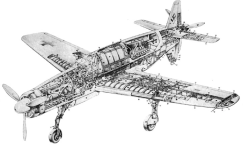
And the last one is based on the Do-335, the fastest piston fighter of WWII.


Let's awaken the creativity that exists within each one of us, and try to come up with good ideas.
I look forward to hearing your ideas.
 
 
While it is ugly, it may require the least amount of re-engineering effort.

Yes, I agree.
The only thing I can't understand is the following.
Why hasn't any other aircraft used the method used by the Italians in this Macchi 72?
In my opinion, it seems like the best way to configure a twin-engine aircraft.
This is a project from 1933.
If it was already possible to do this almost 100 years ago.
Do we not have the technology today?

1748033784721.png
 
Last edited:
Yes, I agree.
The only thing I can't understand is the following.
Why hasn't any other aircraft used the method used by the Italians in this Macchi 72?
In my opinion, it seems like the best way to configure a twin-engine aircraft.
This is a project from 1933.
If it was already possible to do this almost 100 years ago.
Do we not have the technology today?

View attachment 88387
It’s a mechanical nightmare and the smallest failure can lead to a disastrous end result.
 
It’s a mechanical nightmare and the smallest failure can lead to a disastrous end result.
At first I thought the same thing.
But then I realized it's not that difficult.

1748040869299.png


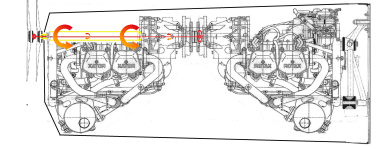
This is a simple, rough sketch—no focus on aesthetics—but it clearly illustrates the concept and shows exactly how the configuration can be achieved.
This system features two Rotax engines mounted face to face. The engine on the right (Engine 1) is mounted on the firewall of the aircraft (in the image I left only one engine with its cradle, but in real life both would have it.) and has an internal shaft (shown in red) that passes through the tubular shaft of the left engine (Engine 2), driving the front propeller—the one furthest from the engines. Engine 2 has an external tubular shaft (shown in yellow in the image) that wraps around the shaft of Engine 1 and drives the rear propeller—the one closest to the engines. Because the engines are mirrored, they rotate in opposite directions, creating a contrarotating propeller system without the need for gearboxes or drive mechanisms. To make this design feasible, the intake manifolds of Engine 2 had to be modified to allow space for the through shaft.

Without the need for pulleys or gears.
Just a shaft running through the inside of another shaft.
 
Last edited:
At first I thought the same thing.
But then I realized it's not that difficult.

View attachment 88394


This is a simple, rough sketch—no focus on aesthetics—but it clearly illustrates the concept and shows exactly how the configuration can be achieved.
This system features two Rotax engines mounted face to face. The engine on the right (Engine 1) is mounted on the firewall of the aircraft (in the image I left only one engine with its cradle, but in real life both would have it.) and has an internal shaft (shown in red) that passes through the tubular shaft of the left engine (Engine 2), driving the front propeller—the one furthest from the engines. Engine 2 has an external tubular shaft (shown in yellow in the image) that wraps around the shaft of Engine 1 and drives the rear propeller—the one closest to the engines. Because the engines are mirrored, they rotate in opposite directions, creating a contrarotating propeller system without the need for gearboxes or drive mechanisms. To make this design feasible, the intake manifolds of Engine 2 had to be modified to allow space for the through shaft.

Without the need for pulleys or gears.
Just a shaft running through the inside of another shaft.
Sounds easy, doesn't it?

As JonJay said, it can be a mechanical nightmare.

Driveshafts can be problematic to start with and putting one inside the other even more so.

It certainly is possible; not likely practical.

The -10 is a pretty refined design, it is going to be hard to make it better by adding another engine. What is the goal of adding the second engine? You will be adding complexity, structure, and weight; what are you hoping to gain?
 
At first I thought the same thing.
But then I realized it's not that difficult.

View attachment 88394


This is a simple, rough sketch—no focus on aesthetics—but it clearly illustrates the concept and shows exactly how the configuration can be achieved.
This system features two Rotax engines mounted face to face. The engine on the right (Engine 1) is mounted on the firewall of the aircraft (in the image I left only one engine with its cradle, but in real life both would have it.) and has an internal shaft (shown in red) that passes through the tubular shaft of the left engine (Engine 2), driving the front propeller—the one furthest from the engines. Engine 2 has an external tubular shaft (shown in yellow in the image) that wraps around the shaft of Engine 1 and drives the rear propeller—the one closest to the engines. Because the engines are mirrored, they rotate in opposite directions, creating a contrarotating propeller system without the need for gearboxes or drive mechanisms. To make this design feasible, the intake manifolds of Engine 2 had to be modified to allow space for the through shaft.

Without the need for pulleys or gears.
Just a shaft running through the inside of another shaft.
I think we have different ideas of what a “mechanical nightmare” means.
History may tell you why this configuration was never developed past the experimental stage.
The Macchi killed two test pilots. The Bugatti replica killed only one, the only one to ever fly it.
These are the only examples I know of but perhaps others can chime in and have some examples of successful application of this concept.
Nested counter rotating propellers will require some pretty clever engineering, as will the engine controls to insure near perfect synchronization. Heaven forbid if the props are controllable.
Also, drive shaft design is a science. There’s more than meets the eye here.

Not trying to discourage, but constructive criticism is part of the brainstorming process. A dual engine, dual propeller airplane loses its appeal when they are 100% dependent on each other.
 
Ask yourself how many hours were put on that Macchi 72 between overhauls - or in its entire lifetime of flying. Most RV owners what an airplane that will go 2,000 hours without a major mechanical problem or overhaul - aircraft of the early days were lucky to go 50 between complete tear downs…especially racing planes…..
 
The -10 is a pretty refined design, it is going to be hard to make it better by adding another engine. What is the goal of adding the second engine? You will be adding complexity, structure, and weight; what are you hoping to gain?
Well, two Rotax 915s are lighter than one IO-540. Two Rotax propellers are lighter than one Hartzel propeller on the IO-540.
Two 915s are cheaper than one 260hp IO-540.
Two 915s have more power than the IO-540 used on the RV-10 (260 vs 282).
When both are in operation, we will have zero torque. Which translates into less rudder use, and therefore more speed.
The 915s are turbocharged, so they maintain power at higher altitudes.
They have FADEC control, which reduces the pilot's workload.
And we will also have engine redundancy, because a Tecnam P2006T can fly with just one 100hp Rotax 912.
Surely the RV-10 can do the same with a 141hp from 915, since they both have the same maximum takeoff weight.
But as you said, it adds complexity.
 
Last edited:
Not trying to discourage, but constructive criticism is part of the brainstorming process. A dual engine, dual propeller airplane loses its appeal when they are 100% dependent on each other.
I like constructive criticism, and I thank you for that.
But each engine controls a propeller. Technically they are independent.
The only dependence between them would be one shaft crossing inside the other shaft.
 
Last edited:
Ask yourself how many hours were put on that Macchi 72 between overhauls - or in its entire lifetime of flying. Most RV owners what an airplane that will go 2,000 hours without a major mechanical problem or overhaul - aircraft of the early days were lucky to go 50 between complete tear downs…especially racing planes…..
The 915 also has a lifespan of two thousand hours, right?
But I couldn't say how long it would last for transmission.
 
Well, two Rotax 915s are lighter than one IO-540. Two Rotax propellers are lighter than one Hartzel propeller on the IO-540.
Which leads to CG issues. The RV-10 needs to be just about at or slightly forward of the forward limit when empty because almost everything you load moves the CG aft. You also cannot use stock rotax props for your counter rotating idea.
Two 915s are cheaper than one 260hp IO-540.
You might want to research that; current retail price on the 915 IS is $52,754...and you need TWO of them. You also cannot use the stock engines for the counter rotating idea.
Two 915s have more power than the IO-540 used on the RV-10 (260 vs 282).
True, and with the turbo, you get the benefit of altitude performance.
When both are in operation, we will have zero torque. Which translates into less rudder use, and therefore more speed.
For a properly trimmed aircraft comparison, the speed difference would be on paper; you would likely not be able to see it in reality. You also haven't considered the cooling drag of TWO liquid cooled engines; it could be quite a bit more than you think.
The 915s are turbocharged, so they maintain power at higher altitudes.
True.
They have FADEC control, which reduces the pilot's workload.
While FADEC is nice, in this discussion, it basically removes the need to change the mixture...unless you are going to add even more complexity and add prop control into the equation.
And we will also have engine redundancy, because a Tecnam P2006T can fly with just one 100hp Rotax 912.
Surely the RV-10 can do the same with a 141hp 915, since they both have the same maximum takeoff weight.
Yes, the -10 would likely fly with just a single engine but if you are going to talk about pilot work load, an engine failure dramatically INCREASES that load. Not to mention that the potential market would be much smaller as you would need to have a multi engine rating to fly it.
But as you said, it adds complexity.
As JonJay has stated, not trying to discourage but there is substantially more to aircraft design than creating AI pictures. In aircraft design, you typically cannot change just one item without affecting 6 others.
 
Which leads to CG issues. The RV-10 needs to be just about at or slightly forward of the forward limit when empty because almost everything you load moves the CG aft. You also cannot use stock rotax props for your counter rotating idea.
The weight difference is not very big.
And two 915s coupled in tandem would be longer than a single io-540.
So we would have a little less weight, but located further forward.
The propeller is not really a problem.
You might want to research that; current retail price on the 915 IS is $52,754...and you need TWO of them. You also cannot use the stock engines for the counter rotating idea.
My research, done a few days ago, showed a 915 at $47,000, and a 260hp io-540 at over $100,000.
One of the engines would be completely stock.
But the second would indeed need modifications to the transmission and intake manifolds.
I say couter rotating but the correct thing would be contra-rotating

While FADEC is nice, in this discussion, it basically removes the need to change the mixture...unless you are going to add even more complexity and add prop control into the equation.
I think the FADEC could be configured to feather one of the propellers in the event of an engine failure.


Yes, the -10 would likely fly with just a single engine but if you are going to talk about pilot work load, an engine failure dramatically INCREASES that load. Not to mention that the potential market would be much smaller as you would need to have a multi engine rating to fly it.
You would probably have to have a multi-engine certification to fly it.


As JonJay has stated, not trying to discourage but there is substantially more to aircraft design than creating AI pictures. In aircraft design, you typically cannot change just one item without affecting 6 others.
Ok, I understand your argument.
But what would be the greatest interest of experimental aviation if not to try out new and old experiences?
How many good aviators died so that aviation could evolve by testing things.
And now, more than 120 years after the invention of aviation, are we going to remain complacent, always doing the same things?
I think we need to take a step forward.
And I'll say more, I'm offering myself as a test pilot for these prototypes without earning a single cent for it. :love:

image (12).jpg

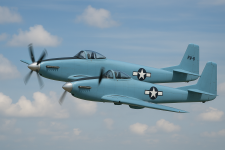
Another option that I think would be wonderful would be a Push-Pull in the style of a Dornier 335.
The fastest piston fighter of WWII.

1748046487751.png

I still get a thrill when I remember a part of a book by Pierre Clostermann, called "The Great Circus"
When he tells how he and his wingman dived their Tempest with emergency power, and still couldn't reach the strange German aircraft. :love:

1748045701720.png

Forgive me if I seem boring in these suggestions.
But I am passionate about aviation.
And even more passionate about past projects.


And it flew wonderfully well with just one engine, as you can see in the video and in the documentaries about him.
 
Last edited:
I get your passion; and I am probably the last person that would say not to experiment and try new things.

That said, the mods you are proposing are far beyond simple mods. The fact is, you would be better off to start with a specific mission and a clean sheet of paper than to try and make a -10 something that it is not, at least in two of your cases. The more traditional twin idea would be the most promising but not without its own issues.
 
I get your passion; and I am probably the last person that would say not to experiment and try new things.

That said, the mods you are proposing are far beyond simple mods. The fact is, you would be better off to start with a specific mission and a clean sheet of paper than to try and make a -10 something that it is not, at least in two of your cases. The more traditional twin idea would be the most promising but not without its own issues.

And what would you say about a more traditional approach?

Imagem ChatGPT 19 de maio. de 2025, 23_05_38.png

Like a mini Beech Baron :cool:
Same price as the RV-10
With onboard oxygen masks, and fantastic performance at 15,000~20,000 feet. :love:
 
Last edited:
Certainly fun discussions, yet again, history will guide you.
The Axis powers grouped together their top pilots to test the available fighters to see where the resources would be placed .
Hands down, the Italian fighters outperformed the Messerschmidt and the pilots loved them. However, they were so complex and expensive to build, you could produce 5 of them to each Italian fighter. You know what they chose.

Many modern ocean going recreational boats which used to be powered by twin outboards due to reliability concerns have now been replaced by larger single engines. Better HP to weight ratio, fuel economy, $/HP, etc… and reliability is no longer an issue as failures are super rare.

So, if you’re going through the exercise, you’ll have way more interest in a design which is lighter, more efficient, less complex, and cost less than current standard designs.

This will be a tough go for an RV. However, Harmon managed to stuff a large engine in a 4 and made it very appealing. So, carry on…..
 
Last edited:
And what would you say about a more traditional approach?

View attachment 88411

Like a mini Beech Baron :cool:
Same price as the RV-10
With onboard oxygen masks, and fantastic performance at 15,000~20,000 feet. :love:
It all depends on your definition of "fantastic performance".

The RV-10 airframe is limited to 200 KTAS, so it really wouldn't matter if you put PT-6s on it, you are still limited by that Vne.

If you accept the 915 IS fuel burn at 7-9 gph for high power cruise, lets call it 8, you will be burning 16 gph, which is 40% greater than the 540 at lop cruise...and, you will be burning it longer as the turbos facilitate that HP at much higher altitudes.

Speaking of fuel, what would you do about fuel tanks? The location of the engines will require additional structure through the middle of the original tanks. You could probably use the outboard section, as some have done but that is definitely going to affect the stability and handling.

Speaking of stability and handling, you will need to consider how effective the rudder will be; it wasn't designed with an asymmetric thrust line in mind, and it will need to have enough authority to control the yaw in the event of an engine failure, so we will need to define the Vmc speed.

As you can see, change one thing, affect a bunch more.

So for $350k+, you get a sub 200 KTAS aircraft that is going to burn 16 gph and not carry any more than an RV-10.

It really depends on the mission; it is difficult to beat the RV-10 doing the mission it was designed for.

Keep thinking though, it is how we move forward.
 
Another piece of information that I think would be interesting to include in this topic.
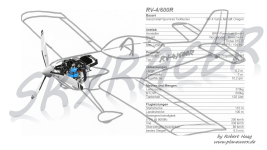
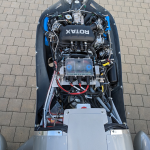
In another topic I commented on Robert Haag's project, which was an RV-4 with a Rotax 915 engine.
1748051157550.png

1748051214631.png

1748051188861.png

1748051237594.png

He made an extremely light RV-4.
And I thought it would be a great improvement over the RV-12, in the LSA category.
But I didn't know that to be in the LSA category, you can't go over 120 knots. So I kindly asked them to remove the thread.
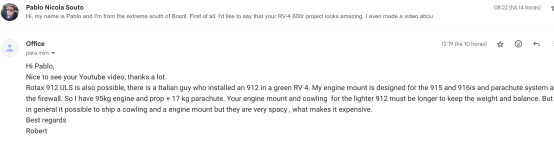
So I sent an email to Robert, congratulating him on the project. And I asked about the possibility of making an RV-4 with a 100HP Rotax 912.

1748051540883.png

And he told me that there is already a 912 100hp RV-4.
Okay, it will go over 120 knots and will not be able to be used as a flight school trainer.
But what if it were an experimental one?
What if the old RV-4 kit was upgraded to RV-12 standards, reducing the hours needed to assemble the kit with a lightweight, inexpensive, fuel-efficient engine?
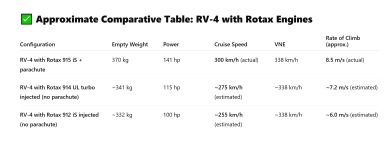
If the 915 has a cruising speed of 300 km/h, let's assume that the 912 can reach 270 km/h. (145 knots)
The same engine as the RV-12 but faster and capable of +6 -3. (Yes, I know Rotax doesn't support negative G.)
That would be a dream plane!

1748051977235.png

I'm sure Van's would have very little work to do to develop this kit and deliver us an airplane with an excellent cruising speed and a low cost per flight hour.
Few people are willing to spend many hours to change the design of the RV-4.
But if it were a standard Van's kit, then it would be a different reality.
And it would still serve a public with less economic power.
And this is not artificial intelligence.
It is real and it has been done.
I would even bet that if Van makes this kit available, already optimized for the 100 hp Rotax 912iS and the 115 hp 914iS, which have practically the same weight, it will be a success.
 
Last edited:
The 915 also has a lifespan of two thousand hours, right?
But I couldn't say how long it would last for transmission.
Core engines are rarely the problem when it comes to power system failures - it is the peripherals, and in particular, reduction drives, gearboxes, etc. The system you are dreaming of would be a mechanical designer’s nightmare to be honest - and before most pilots would depend on it you’d have to get a few million hours on the thing. The BD-5 failed mostly because the extremely simple long driveshaft couldn’t be made to work - and it was dirt simple.

Sketching - even with AI tools and computers - is far from the nitty gritty of aircraft design. Van’s is closing in on three years since the RV-15 first flew, and they are just now getting close to having it the way they want it.
 
Core engines are rarely the problem when it comes to power system failures - it is the peripherals, and in particular, reduction drives, gearboxes, etc. The system you are dreaming of would be a mechanical designer’s nightmare to be honest - and before most pilots would depend on it you’d have to get a few million hours on the thing. The BD-5 failed mostly because the extremely simple long driveshaft couldn’t be made to work - and it was dirt simple.

Sketching - even with AI tools and computers - is far from the nitty gritty of aircraft design. Van’s is closing in on three years since the RV-15 first flew, and they are just now getting close to having it the way they want it.
Your point was spot on!
I understand all the difficulties involved.
But tell me about an RV-4 kit upgraded to less than 1000 hours of build time, with 1320 pounds and optimized for the 100 or 115hp Rotax? As I said in a post before yours.
At least that would be possible, right?
 
Your point was spot on!
I understand all the difficulties involved.
But tell me about an RV-4 kit upgraded to less than 1000 hours of build time, with 1320 pounds and optimized for the 100 or 115hp Rotax? As I said in a post before yours.
At least that would be possible, right?
Anything is possible given enough time and money but not everything is practical.

There is significant engineering, effort, and resources required to produce a production kit. There also needs to be a return on that investment; it is, after all, a business.

I think you are underestimating the design process.
 
Anything is possible given enough time and money but not everything is practical.

There is significant engineering, effort, and resources required to produce a production kit. There also needs to be a return on that investment; it is, after all, a business.

I think you are underestimating the design process.
Ok, let's focus on this specific project, ok?
The plane has already been produced, is already flying, and already has real numbers.
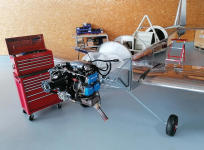
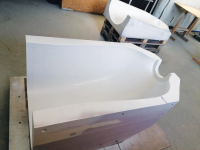
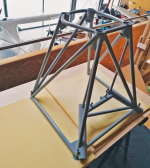
Do you imagine it would be very difficult to copy the new, longer engine mount he made, and a larger engine cowling?

1748057925766.png
"The Rotax cowling is not a one-off. Robert made production molds so he could provide parts to others."

1748057970436.png
"Because the installed weight of the Rotax 915 iS is about 90 pounds less than a typical O-320 installation, an extended engine mount was required."

1748058371650.png

Do you think it would be a problem to Van's produce and develop these two pieces?
I don't think so.


1748060151886.png

The RV-12 has numbers well below the numbers estimated for an RV-4 with the same engine.
 
Last edited:
Ok, let's focus on this specific project, ok?
The plane has already been produced, is already flying, and already has real numbers.
Do you imagine it would be very difficult to copy the new, longer engine mount he made, and a larger engine cowling?

View attachment 88428
"The Rotax cowling is not a one-off. Robert made production molds so he could provide parts to others."

View attachment 88429
"Because the installed weight of the Rotax 915 iS is about 90 pounds less than a typical O-320 installation, an extended engine mount was required."

View attachment 88430

Do you think it would be a problem to Van's produce and develop these two pieces?
I don't think so.


View attachment 88431

The RV-12 has numbers well below the numbers estimated for an RV-4 with the same engine.
Well, considering the previous discussions were in reference to the Rv-10 being modified to a twin, the engine swap in an Rv-4 would be much more realistic.

If the guy that did the one off mod made the cowling molds and a fixture to produce the engine mount, why would vans want to do it? It would seem that if a market exists for the parts, that guy could start his own business and sell the mod.

Vans would then have zero effort or time involved and they still sell the kit so they would benefit from any additional kit sales due to the alternate engine.

If, OTOH, the demand was large enough to effect a positive change to the bottom line after development and production requirements were covered, then vans would have a legitimate reason to produce it. It would certainly be dependent on the demand for that aircraft; I would guess that the -4 doesn’t have the demand of some of the other models, though.
 
Interesting discussion. Building as an E-AB you’re free to modify any design to your hearts content. I see these posts through that lens and support your efforts. If you think your ideas will get Van’s support or buy in from the VAF membership I think you’re going to be disappointed. I’ll state the obvious—there’s way more to bringing the proverbial better mouse trap to market successfully then a few posts on a forum populated mostly by folks who have already bought into the brand. IOW you’re presenting solutions in search of a problem.
 
Last edited:
Well, considering the previous discussions were in reference to the Rv-10 being modified to a twin, the engine swap in an Rv-4 would be much more realistic.
Thank you sir :D

If the guy that did the one off mod made the cowling molds and a fixture to produce the engine mount, why would vans want to do it? It would seem that if a market exists for the parts, that guy could start his own business and sell the mod.

Vans would then have zero effort or time involved and they still sell the kit so they would benefit from any additional kit sales due to the alternate engine.
I think builders don't really like third party modifications. If it was completely standard Van's it would be seen differently.

If, OTOH, the demand was large enough to effect a positive change to the bottom line after development and production requirements were covered, then vans would have a legitimate reason to produce it. It would certainly be dependent on the demand for that aircraft;
That's the point! :love:
I would guess that the -4 doesn’t have the demand of some of the other models, though.
It has no demand because it is an old kit that has not had any updates. The estimated construction time for a standard kit is 2000 to 2500 hours. But what if it were around 800 to 900 hours like an RV-12?
With all the molds already pre-drilled?

And to explain this better, I created a video.


I used all the information that was given to me here on the forum to create this video.
And I appreciate everyone's attention and constructive criticism!
Maybe one day, if the winds blow in favor, we can meet in Oshkosh, fly this RV-4 UL, and have a few beers at night.
Then we will comment "Hey, do you remember that crazy brazilian guy from the forum? It's me :ROFLMAO::ROFLMAO::ROFLMAO:
Once again, my many thanks to everyone! 🙏
 
Last edited:
....It has no demand because it is an old kit that has not had any updates....

Or perhaps because it competes with the RV-8, which has certain advantages over the RV-4. An updated RV-4 would still compete with the RV-8. Now if you were talking about a tandem RV-12, that would be something else.

As the RV-12 design exists, it's not suitable to become a taildragger for a reason that has nothing to do with the landing gear. And the limited popularity of the RV-8A compared to the RV-8 suggests that a nosewheel tandem RV-12 would fail the marketplace.

Dave
 
Greetings, gentlemen!
Here I am again, with yet another crazy idea (or maybe not so crazy).
The RV-9 is considered a cross-country machine, right?
And as far as I know, it’s the only two-seater in the RV lineup truly aimed at cross-country flying, correct?
But what if — just imagine — someone mounted RV-9 wings on an RV-8 fuselage?
We’d get longer wings, a tandem seating layout, and potentially a faster, more efficient cross-country aircraft.
It could even be powered by a 160 hp engine like the RV-9, instead of the typical 180–200 hp used in the RV-8 — reducing both weight and fuel burn.
And who knows — maybe an optional stretch to the fuselage could offer more cockpit space and comfort, especially for larger pilots or those planning longer flights?
Wouldn’t that be an interesting addition to the lineup — built mostly from existing parts, and without major development costs?
What do you guys think?

My best regards!!

1748825756545.png
 
Last edited:
I don't see the point. First not a huge market for a tandem X-country machine. Second you could just throttle back and achieve the same economies and performance without sacrificing top end and acro when you want it.
 
The RV-8 apparently flies very nicely with a 160hp engine. I have a feeling that’s what it was designed around.
Vans always said a light 160 O-320 with a wood prop was the best RV-8.
 
Personally I think the best thing they could do with the RV-8 would be to put a turbine in the front.
Give a Rocket a run for its money!
 
We humans love to take simple things and make them complicated. The more complicated the thing becomes, the more problematic the thing becomes. It's never "less", it's always "more". We tend to do that with everything.
 
We humans love to take simple things and make them complicated. The more complicated the thing becomes, the more problematic the thing becomes. It's never "less", it's always "more". We tend to do that with everything.
So you are flying a J-3 Cub, right?
 
I don't see the point. First not a huge market for a tandem X-country machine.
I think you're right, but maybe they could conduct some market research to be sure, don't you think ?

Second you could just throttle back and achieve the same economies and performance without sacrificing top end and acro when you want it.
This potential aircraft wouldn't be fully aerobatic like the RV-8, but it could still perform a variety of aerobatic maneuvers. Just like the RV-9, which wasn't designed for that purpose yet is still capable.
However, it would have other advantages, such as easier landings—which can be quite appealing after many hours of flying.

 
It's not the maneuvers it can perform, it's the maneuvers it can survive. Especially in the hands of a pilot like me.

There's a difference.

Dave
 
I think you're right, but maybe they could conduct some market research to be sure, don't you think ?


This potential aircraft wouldn't be fully aerobatic like the RV-8, but it could still perform a variety of aerobatic maneuvers. Just like the RV-9, which wasn't designed for that purpose yet is still capable.
However, it would have other advantages, such as easier landings—which can be quite appealing after many hours of flying.

Nope because I know there’s no need for more market research. I’m sorry but I simply don’t understand this pursuit of trying to fill a non-existent demand with cut and paste designs that really offer no advantage over the existing models.
 
Hope I'm not being disrespectful but I feel compelled to ask the question that keeps dangling out there........PabloSniper, are you a pilot (flight sim doesn't count....)? Have you personally flown any of the RV's? It is difficult to escape your lack of first-hand knowledge of the RV aircraft fleet as you continue to attempt to reinvent RV aircraft..........
 
Last edited:
Nope because I know there’s no need for more market research. I’m sorry but I simply don’t understand this pursuit of trying to fill a non-existent demand with cut and paste designs that really offer no advantage over the existing models.
So, are we going to have a forum where no one is allowed to debate ideas? Is that it?

Hope I'm not being disrespectful but I feel compelled to ask the question that keeps dangling out there........PabloSniper, are you a pilot (flight sim doesn't count....)? Have you personally flown any of the RV's? It is difficult to escape your lack of first-hand knowledge of the RV aircraft fleet as you continue to attempt to reinvent RV aircraft..........
I have flight hours in a Cessna 170A, a 182, a Citabria, a Super Decathlon, an RV-6A, an RV-8A, and in a common argentine aircraft here in Brazil called the Aero Boero.
I don't see it as disrespectful to ask which aircraft someone has flown. But it's discouraging to try to bring up a topic in a group—even just to spark more conversation—and always be criticized for it. Trying to have a dialogue with people from different parts of the world should be more enjoyable. :giggle:
 
Last edited:
So, are we going to have a forum where no one is allowed to debate ideas? Is that it?


I have flight hours in a Cessna 170A, a 182, a Citabria, a Super Decathlon, an RV-6A, an RV-8A, and in a common argentine aircraft here in Brazil called the Aero Boero.
I don't see it as disrespectful to ask which aircraft someone has flown. But it's discouraging to try to bring up a topic in a group—even just to spark more conversation—and always be criticized for it. Trying to have a dialogue with people from different parts of the world should be more enjoyable. :giggle:
No, absolutely not. But debate has at the minimum 2 positions, and you must be prepared that not everyone is going to accept or share your position. Just because someone, in this case me, is shooting holes in your ideas doesn't mean I don't want you to express them. On the contrary I want you to apply critical thinking and address the shortcomings of your ideas. By doing so you may hit upon something that has merit. To this point you simply haven't. In fact, your approach is, IMO, why Sam asked about your piloting background because a lot of what you have proposed seems attributable to a non-pilot that only has a vague understanding at best as to basic aircraft performance plus the engineering and business operations required to bring what you propose to fruition.
 
Last edited:
No, absolutely not. But debate has at the minimum 2 positions, and you must be prepared that not everyone is going to accept or share your position. Just because someone, in this case me, is shooting holes in your ideas doesn't mean I don't want you to express them. On the contrary I want you to apply critical thinking and address the shortcomings of your ideas. By doing so you may hit upon something that has merit. To this point you simply haven't. In fact, your approach is, IMO, why Sam asked about your piloting background because a lot of what you have proposed seems attributable to a non-pilot that only has a vague understanding at best as to basic aircraft performance plus the engineering and business operations required to bring what you propose to fruition.

There's a story about the inventor of the lightbulb, Thomas Edison. The story goes that a journalist once asked him if it was true that it took him a thousand tries to make the lightbulb work. And Edison replied, "No, I just found 999 ways that didn’t work."

So what am I trying to say with this? I’m not claiming to be a genius or an inventor or anything like that. I’m just saying that maybe—just maybe—one of these ideas might turn out to be useful. Or maybe not. Who knows?
 
There's a story about the inventor of the lightbulb, Thomas Edison. The story goes that a journalist once asked him if it was true that it took him a thousand tries to make the lightbulb work. And Edison replied, "No, I just found 999 ways that didn’t work."

So what am I trying to say with this? I’m not claiming to be a genius or an inventor or anything like that. I’m just saying that maybe—just maybe—one of these ideas might turn out to be useful. Or maybe not. Who knows?
I don’t think anyone has a problem with considering new ideas…but…you need to look at them realistically. Just because AI makes a pretty picture doesn’t mean that it fills a need or a want, or more importantly, can be practically built.

So while a twin turbofan, pressurized RV-10 with ER tanks and a 350kt Vne would be really nice, I’m pretty sure it will never happen…except maybe in an AI generated picture.
 
Vans isn’t doing anything special in regard to the basic design and construction of their airplanes. Aluminum aircraft have been designed and built almost exactly the same way for decades.

Box spar, pressed ribs, flush rivets, NACA airfoils, etc…. Nothing new here.
What Van did was bring together the design elements into products that weren’t available to the market, for a reasonable price if at all, and package them in a kit form that could be built/assembled under FAA rules for experimental aircraft. Van kept them simple and light and put relatively big engines in them and hit a segment in the market that probably even surprised him. You could build a performance machine for a fraction of anything commercially out there.
The brilliance wasn’t in the design. The brilliance was in the entire “package”.
Trying to piece meal components together isn’t going to get you where you want to go, wherever that is.
But, Harmon did it with some clever design enhancements, so did others with the F1 etc….. My buddy Bob Mills did it with help and is now flying a swept carbon wing.
 
It's brainstorming so wild ideas are part of the creative process! :)

Van's is a conservative company however and the designs are evolutionary rather than revolutionary.

I'd like to see a strutless high wing version of the RV-9/A (same performance profile, speed, efficiency etc.) using Rotax 915 or 916. It would be different to the RV-15, which is intended for back country flying with bigger loads and a bigger engine.

There is a demand for an economical fast 2 seat high wing design as demonstrated by Sonex securing 50+ deposits for their new design, so I'm sure Van's could succeed with something like this.
 
I don’t think anyone has a problem with considering new ideas…but…you need to look at them realistically. Just because AI makes a pretty picture doesn’t mean that it fills a need or a want, or more importantly, can be practically built.
And that’s exactly why I’m here — to discuss and read your opinions.
So while a twin turbofan, pressurized RV-10 with ER tanks and a 350kt Vne would be really nice, I’m pretty sure it will never happen…except maybe in an AI generated picture.
You must be referring to the RV-10 equipped with two Rotax 915iS engines, which I mentioned would likely perform well at high altitudes, where the IO-540 loses performance.
But right now, at this moment, I had only asked about an RV-8 with RV-9 wings for cross-country flying.
It's brainstorming so wild ideas are part of the creative process! :)
I completely agree! 😇
 
Status
Not open for further replies.