Van's Air Force

The definitive Van's Aircraft support community! Buying, building or flying an RV? Join our exclusive family of mentors and enthusiasts!

DeltaHawk for RV-14

There is a reason I asked @cjs for the comparison of the finished planes. I was guessing that @cjs would have the two planes fairly well equally outfitted.
As such, the final package weight is what matters with the most likely difference being the powerplants.

Tim
Yes Sir. Your question is better than my quick scanning comprehension.

 
If your not having heating problems, I would try to reduce the inlet size first. Less cooling drag.
Hopefully before reducing inlet size they are able to test in much more demanding conditions than western Oregon, for example Phoenix in July, or sitting in a long departure line on a hot day at Oshkosh with the engine running. Longer term they may just need to add more stiffness to the cowl (more surface area with honeycomb core, and/or thicker core, and/or additional layers of carbon fiber...the cowl that I looked at at OSH last year was pretty thin material), but for immediate flight test purposes it'll probably help to open up the lower cowl a bit and reduce pressure differential if there's a structural concern. But it will add some drag...
 
Hopefully before reducing inlet size they are able to test in much more demanding conditions than western Oregon, for example Phoenix in July, or sitting in a long departure line on a hot day at Oshkosh with the engine running. Longer term they may just need to add more stiffness to the cowl (more surface area with honeycomb core, and/or thicker core, and/or additional layers of carbon fiber...the cowl that I looked at at OSH last year was pretty thin material), but for immediate flight test purposes it'll probably help to open up the lower cowl a bit and reduce pressure differential if there's a structural concern. But it will add some drag...
Checksix,
We’re in alignment - all is good cooling-wise so far, but we’ve only been flying in moderate OATs and other than a climb Saturday to about 6000’ agl, we haven’t run at Full Power. DeltaHawk did cooling requirement calcs based on their experience with the Cirrus install and are pretty confident re the inlet sizing. We suspected the exit area was a bit small (and it is), but knew we could deal with it after first flights.

BTW - The cowl has been refined since last year at KOSH. It’s holding up very well and is very rigid. What actually happened is we ‘popped’ the oil door open in flight (at about 170 kts). The pressure literally flexed the door enough that the latch slipped. No damage to anything but it did cut short our limited speed tests - we were at 65.0MP/168KTAS and intended to go up in 5.0 increments to 90.0 MP to see what numbers we’d get.

Misc thoughts on the cowl while we’re at it…super easy to remove and install. I’ll cut a video at some point to show this. It’s a four piece unit. Also, very rigid. With it in place, one can grab it by the inlets and shake the whole plane rigorously and not see any flex on the cowl.
 
What is the flashing red RPM alarm telling you? That would drive me a little crazy.
That was the faulty RPM reading from the panel. It’s why we purchased the TruTach rpm gauge and mounted it on the glare shield. To your point - it was driving us nuts on the first flight. We thought for a moment we had overspun the prop, but quickly suspected it was the gauge (if we had really hit the 9000 rpm it registered, no doubt we’d have slung a blade or three).

If I have this correct, the stock g3x set-up reads rpm from the spark plug wires. Well, there are no spark plugs on the deltahawk - so, long story short, we’re working on an alternative way to get the data.
 
Short update:
Only was able to get in two flights this week (yesterday) before the weather goes to crap for today and the weekend.

Fixed the wheel pants. Made some adjustments to the G3X displays to suit our personal preferences (thanks Jason at Aerotronics - he makes doing this easy). Fixed the slightly heavy wing (adjusted the flaps). And, the biggest task, modified the lower cowling to allow for more exit air - this seems to have worked (at least the oil door didn’t pop open on the last flight!). Temps looks good - but they did before. We haven’t run full power except for T/O. We’ll do this soon and see if all temps remain good.

Still have a bunch a minor squawks that we’re whittling away at. Nothing significant, but all time-suckers. Between these and the weather we likely won’t be back in the air until middle of next week.
 
That was the faulty RPM reading from the panel. It’s why we purchased the TruTach rpm gauge and mounted it on the glare shield. To your point - it was driving us nuts on the first flight. We thought for a moment we had overspun the prop, but quickly suspected it was the gauge (if we had really hit the 9000 rpm it registered, no doubt we’d have slung a blade or three).

If I have this correct, the stock g3x set-up reads rpm from the spark plug wires. Well, there are no spark plugs on the deltahawk - so, long story short, we’re working on an alternative way to get the data.
The g3x will accept a standard tach signal. Basically a 5 or 12 volt square wave signal that most every ecu outputs. I can’t imagine this engines ecu doesn’t have a tach output. That would be a serious oversight.
 
The g3x will accept a standard tach signal. Basically a 5 or 12 volt square wave signal that most every ecu outputs. I can’t imagine this engines ecu doesn’t have a tach output. That would be a serious oversight.
Larry, I don't believe this engine has an ECU. All analog for simplicity.
 
Larry, I don't believe this engine has an ECU. All analog for simplicity.
Marc on an unrelated question, bought and read your book, learned a lot, my question is I have two set of landing lights, the seven stars ( leading edge) and the Aveo zip tips that will be connected to the VP-X. I will be putting the tips on one bank A and the leading edge on another. the seven stars are 7.5 amps on each side. I am using a terminal block . I ran 14AWG from the lights to the terminal block. I will probably be running them continuously so my question is what size wire do I run from the VP-X to the terminal block to feed the two lights. The terminal block will be no more than two feet away from the VP-X. My email is [email protected]. Sorry for the unrelated text.
 
The g3x will accept a standard tach signal. Basically a 5 or 12 volt square wave signal that most every ecu outputs. I can’t imagine this engines ecu doesn’t have a tach output. That would be a serious oversight.

lr172,
There is no ECU — the engine’s fuel system is fully mechanical. This was to keep things simple and enhance reliability.

The entire system is mechanical: no CAN buses, no ECU, no FADEC. The engine will operate normally even if the master is shut off or all electrical power was lost in flight. Only analog gauges and sensors are used to track engine parameters.

All that said, the rpm thing has been resolved. DH worked with Garmin on this. Still, we need to take the prop off, move a sensor, and reconfigure the g3x.

Craig
 
lr172,
There is no ECU — the engine’s fuel system is fully mechanical. This was to keep things simple and enhance reliability.

The entire system is mechanical: no CAN buses, no ECU, no FADEC. The engine will operate normally even if the master is shut off or all electrical power was lost in flight. Only analog gauges and sensors are used to track engine parameters.

All that said, the rpm thing has been resolved. DH worked with Garmin on this. Still, we need to take the prop off, move a sensor, and reconfigure the g3x.

Craig
Thanks for the clarification; a very nice feature. I assume you will drill the ring gear for a magnet and add a hall effect sensor. I did similar for my EI. I just machined a bushing to go in the 12 holes and epoxied a magnet in the bushing and used retainer compound to hold the bushing in the holes.
 
Not a lot to report - we’re just slogging through test flights and tweaks.

Here’s a landing video from Friday.


Overall, things are good so far. Still have not pushed the speed/performance envelope - hope to explore that later this week.

I’m more comfortable with each flight with the diesel and it’s differences from the lycoming. Nothing bad - it’s just a bit different.

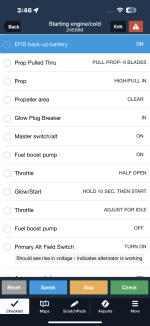
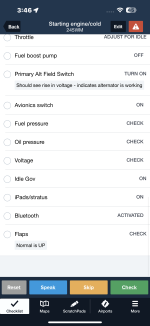
For instance - Start up procedure is a bit different. Here’s a couple screen shots of my start up list on foreflight:

IMG_8078.png

IMG_8079.png

You’ll notice ‘new’ items such as the Glow Plug, and missing things such as there is no “adjust mixture”.

In the air, the plane handles like an RV. No surprises there. On the ground, all is good although the larger wheels (not related to the deltahawk engine) make seeing over the cowl in the 12-2 position a bit of a challenge. Nothing an occasional S-turn doesn’t handle. I do think the larger wheels give a smoother taxi ride, and they look good.

That’s it for now.
 
I’m more comfortable with each flight with the diesel and it’s differences from the lycoming. Nothing bad - it’s just a bit different.

For instance - Start up procedure is a bit different. Here’s a couple screen shots of my start up list on foreflight:

You’ll notice ‘new’ items such as the Glow Plug, and missing things such as there is no “adjust mixture”.

In the air, the plane handles like an RV. No surprises there. On the ground, all is good although the larger wheels (not related to the deltahawk engine) make seeing over the cowl in the 12-2 position a bit of a challenge. Nothing an occasional S-turn doesn’t handle.
Craig, thanks for the updates.

Curious about the purpose of pulling the blades through (does '9 blades' mean three full crank rotations?). I asked about this at OSH last year wondering if the inverted Vee was susceptible to hydraulic lock like a radial and got the impression that DeltaHawk didn't think it would be an issue, so maybe there's a different reason like moving excess oil back to the sump (like Rotax 912 series prior to checking oil level) and/or priming the pressure side of the pump?

Also after engine start the checklist first reduces the throttle to idle and then afterward turns on the Idle Governor. Would it be easier to turn on the Idle Gov first so you can pull throttle to idle without inadvertently killing the engine?

Regarding ground visibility over the nose, it's not just larger tires...this prototype installation has a huge spinner, longer cowl, and higher/more blunt front end than the IO-390 installation, so I would think that must be a factor as well. Still hoping with the Rev 2 installation they can lower the plane of the top cowl to match the plane of the forward skin along with reduced spinner diameter...that will improve fwd visibility, especially in the taildragger (and probably improve aesthetics and reduce drag as well).
 
Check6,

On the prop being pulled through - it’s priming the oil pump. However, we’re not sure it’s even needed for that. Mostly, we’re just erring on the side of being cautious. Pulling the prop may disappear from the list - but, for now it’s there.

As for the idle gov and when to engage it - we need to be at a high idle fuel setting to start as the engine needs a bit more fuel to catch, then when stabilized, engine is brought down to a normal idle and the idle gov engaged. I’ve tried it both ways - that is engaging the idle gov before start or afterward. It definitely starts easier when it’s not engaged until after cranking the motor to life.

Regarding the cowl and visibility: no doubt the new cowl has an impact - but, in my opinion the larger tires have the greater affect on the forward viz. That said, the slightly redesigned cowl for the V2 (with the new, smaller block) will lessen whatever impact the cowl is having on the view.

Btw - will u be at AirVentire this year?
 
Check6,

On the prop being pulled through - it’s priming the oil pump. However, we’re not sure it’s even needed for that. Mostly, we’re just erring on the side of being cautious. Pulling the prop may disappear from the list - but, for now it’s there.

As for the idle gov and when to engage it - we need to be at a high idle fuel setting to start as the engine needs a bit more fuel to catch, then when stabilized, engine is brought down to a normal idle and the idle gov engaged. I’ve tried it both ways - that is engaging the idle gov before start or afterward. It definitely starts easier when it’s not engaged until after cranking the motor to life.

Regarding the cowl and visibility: no doubt the new cowl has an impact - but, in my opinion the larger tires have the greater affect on the forward viz. That said, the slightly redesigned cowl for the V2 (with the new, smaller block) will lessen whatever impact the cowl is having on the view.

Btw - will u be at AirVentire this year?
Good info, thanks. Will def be at OSH this year (been going every year since 1995, except 2020 of course). Looking forward to seeing you and the 14 there!
 
  • Like
Reactions: cjs
Latest Update: Finally finished the EAA test cards!

Plane is performing very well with no major hick-ups. Probably would have completed the phase one a week or so earlier, but between waiting on a replacement oil temp probe and non-related duties (on the personal front) things drug out a bit.

Big take-ways so far:

1. Maybe most importantly - the plane flies like an RV. I am splitting time between it and my Lycoming-powered RV14, and the handling seems to be the essentially the same. That said, this Version-1 of the DeltaHawk is heavier than a stock RV14, with a more forward CG. And, this is noticeable, but not significantly so, in some flight regimes (eg I am seeing about a 10-15% initial climb performance difference vs the Thunderbolt with bumped compression RV14). That said, on Version-2 with the new lighter block, the weight will be within about 35-45 pounds of stock, with a COG right in the middle of the range (and 20 more hp), so it’s expected any differences will then be negligible. BTW - I am purposely not publishing numbers (W&B) on V1 since they will not be the numbers on the final (block) version, and having these numbers hang around in the ether of the internet could cause them to be conflated with the final version numbers.

2. Fuel Economy/Range/Cruise Performance: Very impressive so far, and we have yet to explore flight above 12K', where it should get better, nor have we unleashed full power. Consistently, we're seeing about 30mpg at 160-165 KTAS (184-190 mph) - that's about a 1500 mile range with full tanks. And, still in the high 20's at 170 KTAS. Based on the data accumulated so far - Vne is possible at about 10-12K msl. As a point of reference, I flew my current/other RV14 Wednesday, LOP at 9500' - the Lycoming was getting 20.3 mpg. This is about the best I can get with the Lycoming. The DeltaHawk is significantly more efficient. Btw - DeltaHawk is currently well into design on the v2 cowling (and whole firewall forward package) using the learnings we’ve gained from this V1 install. They expect to see an 8-15 mph gain in cruise speeds for a given power setting. This may be a bit optimistic, but time will tell. As it stands currently, the efficiency is excellent. And, combined w $3.25 JetA, it’s got me smiling a lot.

3. No more constant fiddling with the mixture control. This really hits me when I get back in my Lycoming-powered RV. Probably making too much about this, but no fiddling with the mixture makes me happy.

4. More temps to monitor: In addition the normal lycoming stuff (oil pressure/temp, fuel flow, rpm, power/mp), with the DH there is coolant temp, TIT (turbo), CCP - crank case pressure, fuel temp, etc. Not a big burden overall, especially with the parameters all programed into the G3X (if a temp gets out of range, it will sound the alert).

Will fly the plane to DeltaHawk’s facility (Racine, WI) soon and plan to have it at AirVenture for the week.
 
Last edited:
@cjs

How does the sound and vibrations compare?

Tim
The DeltaHawk engine sounds different than the lycoming. Not better or worse, just a bit different. It’s “distinctive” someone commented to me (it was meant as a compliment). Personally, I’ve only heard it unfiltered while it’s on the ground. Once in the plane I have my noise reduction headset on and at that point I’m not sure I can tell the difference between the engines.
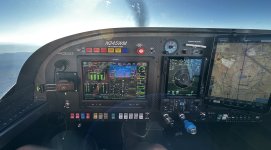
As for vibration - the engine is very smooth. Again, I’m not noticing any difference between it and the lycoming. No noticeable vibrations in the cockpit while flying. It does idle less smoothly, but as soon as the power goes in it smooths out nicely.
 
Brief update…

The DeltaHawk is in Racine, and weather permitting it’ll be up to Oshkosh tomorrow afternoon. In the morning we have a flight scheduled with someone from an aviation media outlet (sorry - can’t recall exactly which one as I write this).

Someone has also asked us what kind of fuel efficiency we get at 100 kts. Not sure who would fly that slow - but whatever, it’ll give us something to do on one of the flights tomorrow. Based on what I’ve seen so far, I suspect it’s going to be 40+ mpg. I’ll post it.

Looking forward to meeting some of you at AirVenture. Come by and say hello.
 
Here’s a screen shot showing some numbers from the flight over to WI…

IMG_8269.jpeg

Speed: 167 KTAS was a bit slower than most of the flight - just happened to be the config when I took a pic of the panel. Mostly, cruise was more like 175 KTAS (at 65.0 MP/ 2450 rpm).

Efficiency: Good fuel econ at 27.4 mpg. My current IO390 bests at just about 21 mpg at this speed/altitude. We’ve been gathering data at many different power/rpm/altitude settings - and, if one is willing to poke along at 140 ktas, we’re seeing about 35 mpg.

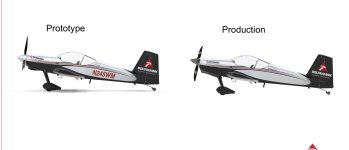
Btw - DH engaged a CFD specialist for the new cowling (going on the second RV14 that’s in production currently in Eugene, OR), and they tell me to expect a decent increase in speed/efficiency.

Here’s a shot of what it’s looking like (current prototype vs version2):

IMG_8339.jpeg
 
Last edited:
Very cool. I’ve been around a while and seen countless unsuccessful attempts at versions of this. I’m always impressed by people’s tenacity and vision even if it dosent ultimately translate to success.

I’m super excited to see this looking like it might be the one. Best of luck!

PS I love the monster spinner :-)
 
Here’s a link to a PowerPoint DeltaHawk created that summarized some of the key changes being made to the “second” RV14 (V2) in production at Eugene, OR. We’ve all learned a lot from the “first” RV14 (V1 - N245WM) and while its performance is excellent there remain opportunities for improvement. DH’s goal with V2 is a complete package ready to go to market. Personally, based on the experience with both DH and the plane this past year, I am excited and optimistic. I suspect in a few years this engine/airframe combo will be the overwhelming choice of RV builders. Time will tell…
 

Attachments

Are they working on a nose wheel version? I'd love to put a deltahawk on when I'm ready for an engine, assuming it's ready in time, but I'm building a nose wheel.
 
Are they working on a nose wheel version? I'd love to put a deltahawk on when I'm ready for an engine, assuming it's ready in time, but I'm building a nose wheel.
Yes - they are working on a nose gear version.
 
Update:

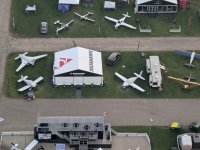
Oshkosh was good. Great meeting many of you in person. DeltaHawk hosted the plane at their booth along with the Cirrus and the twin Velocity.

2796074813249674653.jpeg

245WM is now back in Racine. DeltaHawk plans to dismantle quite a few things to see how they have faired over the initial 50 hours of flight time. Once this is completed I’ll bring it back to Oregon. This might be as late as end of September - partially due to my schedule demands.

When the plane is back in Eugene, we’ll continue to collect more flight data and expand the flight envelop. We are looking forward to having reps from Vans and some of the media folks up in the air with us.

We are already well into the build of version 2 - it will be the package DeltaHawk intends to sell. I’ll update as we make progress.
 
Last edited:
CJS,
I was at the booth when an older, possibly British gentleman showed you his fuel valve and you said that’s what you have in the plane, I didn’t get the name or brand. Would you mind sharing?
Also, is there any hope of an RV-10 fwf in the next couple of years?
 
CJS,
I was at the booth when an older, possibly British gentleman showed you his fuel valve and you said that’s what you have in the plane, I didn’t get the name or brand. Would you mind sharing?
Also, is there any hope of an RV-10 fwf in the next couple of years?
Wild guess Andair... Very well known company that makes selector valves, filters, gascolators, fuel injector pumps: https://www.andair.co.uk/
Their products can be purchased from the usual suspects, Spruce, Vans Store... They are expensive but well made....
 
Last edited:
HEY ANY REAL WORLD PERFORMANCE YET... Not just oh yeah it was burning X going to Oshkosh...

Love to see side by side test vs Lycoming powered RV-14, 200HP or 210HP angle valve IO-360/390.
Sea Level, Top Speed
8000' Top Speed
time to climb from ground to 8000', 12000', 16,000',
Take off Distance Ground Roll and To 100' AGL.
Last not least fuel burn, top speed, climb, cruise.... the diesel should be better but how much.
 
CJS,
I was at the booth when an older, possibly British gentleman showed you his fuel valve and you said that’s what you have in the plane, I didn’t get the name or brand. Would you mind sharing?
Also, is there any hope of an RV-10 fwf in the next couple of years?
The Deltahawk RV14 has the Newton SPRL Fuel Valve. We went with it partially due to the Andair not being available at the time. In the ‘new’ DeltaHawk RV14 that we are currently building, it looks like DH will go with the Andair valve.
 
HEY ANY REAL WORLD PERFORMANCE YET... Not just oh yeah it was burning X going to Oshkosh...

Love to see side by side test vs Lycoming powered RV-14, 200HP or 210HP angle valve IO-360/390.
Sea Level, Top Speed
8000' Top Speed
time to climb from ground to 8000', 12000', 16,000',
Take off Distance Ground Roll and To 100' AGL.
Last not least fuel burn, top speed, climb, cruise.... the diesel should be better but how much.
We’ve published quite a bit of data so far on performance (not just “oh yeah, it’s burning x…”). It’s in the thread. That said, we’re currently focused on finalizing the design of the FF package on the new series block while finishing the build on the #2 plane. The numbers that will matter, will come from it - since the #2 plane is the one that will represent the package DeltaHawk will sell. Additionally, we expect the performance numbers to be a bit better than those achieved in the #1 plane.
 
Flew 245WM from Racine, WI to Woodruff, SC and spent the last few days at the Triple Tree Fly- Inn just SE of Greenville, SC where DeltaHawk was the guest of the owners.

Gorgeous field anchored with an Augusta-quality 7000’-plus grass runway and first rate facilities.

Here’s a video of a low pass we did over the field - everyone tells me the plane sounds amazingly good. I’m always in the cockpit so I can’t really tell (especially with the Bose headsets) - so, I’ll take their word for it. You can get a little flavor of the sound if you turn up the volume on this clip.

 
Flew 245WM from Racine, WI to Woodruff, SC and spent the last few days at the Triple Tree Fly- Inn just SE of Greenville, SC where DeltaHawk was the guest of the owners.

Gorgeous field anchored with an Augusta-quality 7000’-plus grass runway and first rate facilities.

Here’s a video of a low pass we did over the field - everyone tells me the plane sounds amazingly good. I’m always in the cockpit so I can’t really tell (especially with the Bose headsets) - so, I’ll take their word for it. You can get a little flavor of the sound if you turn up the volume on this clip.

Nice ! What prop did you settle on? Root cause of the first prop that did not work?
 
Gotcha.
That prop testing (referred to in the previous post) was all before we finished the build or started the flight testing.
Don’t recall the models exactly, but DH had a bit of a problem w the metal props and the harmonics of the prop. But, in the end, Hartzell steppped up and brought their props down to Racine for testing on DH’s stands and confirmed the 3-bladed raptor composite was a good fit. So much so that they are giving the warranty to DH buyers that they give everyone else.

All this said, DH is still talking with other prop manufacturers with the goal of providing a few choices to builders.

Lastly, I can say I’ve been very pleased with the Hartzell so far.
 
Brief update:
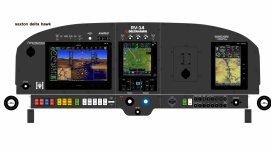
All is progressing with the #2 DeltaHawk RV14. Fuse and wings are mostly complete, and next week we’ll install the panel from aerotronics (see below).IMG_9355.jpeg Btw - the “empty” areas on the panel are for an iPhone (left of large g3x) and large iPad (right of gtn750). Both will use MyGoFlight mounts and have usb power outlets behind them.
We’re also installing Pure Med’s oxygen concentrator just below the panel.

Mid-December the plane will be ready to transport from SynergyAir (Eugene, OR) to DeltaHawk (Racine, WI) for the fitting of the new series 400 DHK200 (the 200 hp variant).

SynergyAir has done the majority of the build so far, and once DH has fitted the engine and FF components, the plane will come back to Eugene for final assembly - likely in early April. The plan is to complete test flights and have the plane at AirVenture in July.

A lot of work has been done to refine the integration of the engine and firewall forward components. It’s shaping up to be a very nice package.

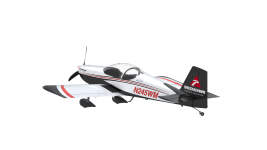
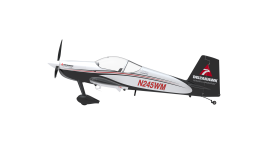
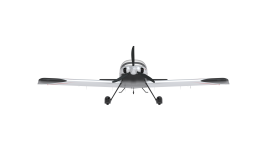
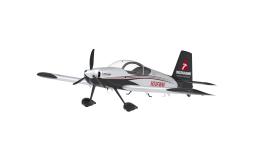
Here’s the latest renderings with what will likely be the final cowling design:

RV14 DH Cowl Concept6 002_Camera_Right.png

RV14 DH Cowl Concept6 002_Camera_Front.png
RV14 DH Cowl Concept6 002_Camera_Front ISO.png
RV14 DH Cowl Concept6 002_Camera_Back ISO.png
 
Last edited:
A lot of work has been done to refine the integration of the engine and firewall forward components. It’s shaping up to be a very nice package.

Here’s the latest renderings with what will likely be the final cowling design:
Thanks for the update Craig, the updated cowl rendering looks beautiful!
 
Would love to see performance numbers at cross country altitudes (greater that 10,000 ft/) Actually posting a .CSV of the flight would be even better.
\
Thanks !
 
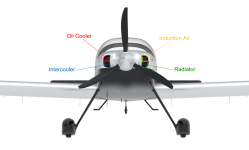
Craig, I noticed in the updated cowl renderings that the induction air inlet on the bottom cowl has been eliminated. Will there be a fourth dedicated duct (in addition to the existing three for radiator, intercooler, & oil cooler) that runs all the way up to either the left or right main air inlet? Or are they tapping off one of the existing three ducts further back for induction air?
 
Craig, I noticed in the updated cowl renderings that the induction air inlet on the bottom cowl has been eliminated. Will there be a fourth dedicated duct (in addition to the existing three for radiator, intercooler, & oil cooler) that runs all the way up to either the left or right main air inlet? Or are they tapping off one of the existing three ducts further back for induction air?

The two inlets will be split internally into four paths, one of which, as you guessed, will be induction air.
 
Craig, I noticed in the updated cowl renderings that the induction air inlet on the bottom cowl has been eliminated. Will there be a fourth dedicated duct (in addition to the existing three for radiator, intercooler, & oil cooler) that runs all the way up to either the left or right main air inlet? Or are they tapping off one of the existing three ducts further back for induction air?
Here’s a visual on the scheme:
image.png
 
Back
Top