
Awesome!

Van's Air Force
You are using an out of date browser. It may not display this or other websites correctly.
You should upgrade or use an alternative browser.
You should upgrade or use an alternative browser.
DeltaHawk for RV-14
- Thread starter czechsix
- Start date

Yes, its the one in the photos/videos - the Hartzell. Could be other options down the line, but for now the Hartzell composite is working fine.
High Speed Run-up....sounding real good.
Not quite at full-power (about 2/3rds).
Wait for it....at about the 10 second mark.
Not quite at full-power (about 2/3rds).
Wait for it....at about the 10 second mark.

This is one of those occasions where validation will be key. The prop could be fine, until it suddenly isn’t. We all welcome the good news to date.Yes, its the one in the photos/videos - the Hartzell. Could be other options down the line, but for now the Hartzell composite is working fine.
Good lord that’s a good sounding PP.
Vans will allow deletions to Finish kitsJust saw this in the EAA newsletter:
DeltaHawk Engines Developing RV-14 Package
DeltaHawk Engines announced this week that engineering and development is now underway on a firewall-forward installation package for the company’s new DHK family of FAA-certified jet-fuel-powered piston engines for Van’s RV-14 aircraft. The first installation will be aboard an RV-14 owned by Lindy-winning aircraft builder Craig Saxton, EAA 432253, and the aircraft is anticipated to fly during late spring 2024.
I would sure be interested in this if it comes to fruition, assuming it is a well developed firewall forward package and is cost competitive with the IO-390. One obvious downside is it will require a new engine mount and presumably a new cowl as well, and Van's won't let you delete these items from the finish kit anymore. Maybe if there's enough interest Van's will eventually get behind this effort (sort of like they've done with Beringer wheels & brakes) if/when they have time to think about product development again...

I think they only allow changes to the FWF kit - but I could be wrong. I just checked their website and it says "Note that we do not allow additions to or deletions of items from kit orders."Vans will allow deletions to Finish kits
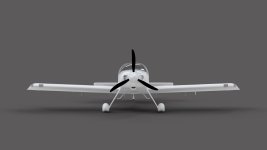
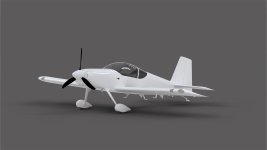
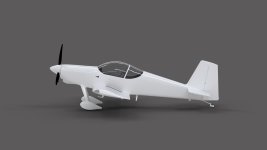
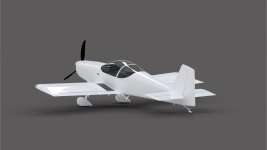
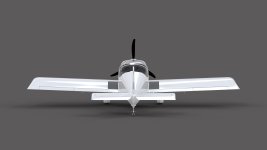
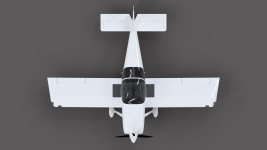
Here are some full renderings of the test mule DeltaHawkRV14. Keep in mind that this will not be the final configuration, as the second plane with the newer smaller/lighter block will allow for a more aerodynamic shape to the cowl. That aside, I am pretty pleased with the aesthetic - especially as the guy who will be flying it around (all kinds of Rodney Dangerfield comments about Ugly Babies come to mind).
Also, worth noting - we anticipate a bit of a performance boost on the second cowl as well. This first cowl has not been optimized for cooling efficiency. Not unlike the stock RV14, there are likely some speed/efficiency gains to be made with a well engineered cowl. But, until we accumulate some flight data, we don't know what this may be. On my current RV14, for example, top speed increased 7 mph with a modified Sam James design vs the stock cowl I had for the first 70 hours (top speed went from 214 mph to 221 mph).
Also, worth noting - we anticipate a bit of a performance boost on the second cowl as well. This first cowl has not been optimized for cooling efficiency. Not unlike the stock RV14, there are likely some speed/efficiency gains to be made with a well engineered cowl. But, until we accumulate some flight data, we don't know what this may be. On my current RV14, for example, top speed increased 7 mph with a modified Sam James design vs the stock cowl I had for the first 70 hours (top speed went from 214 mph to 221 mph).

Looks really nice!Here are some full renderings of the test mule DeltaHawkRV14. Keep in mind that this will not be the final configuration, as the second plane with the newer smaller/lighter block will allow for a more aerodynamic shape to the cowl. That aside, I am pretty pleased with the aesthetic - especially as the guy who will be flying it around (all kinds of Rodney Dangerfield comments about Ugly Babies come to mind).
Also, worth noting - we anticipate a bit of a performance boost on the second cowl as well. This first cowl has not been optimized for cooling efficiency. Not unlike the stock RV14, there are likely some speed/efficiency gains to be made with a well engineered cowl. But, until we accumulate some flight data, we don't know what this may be. On my current RV14, for example, top speed increased 7 mph with a modified Sam James design vs the stock cowl I had for the first 70 hours (top speed went from 214 mph to 221 mph).
View attachment 81071View attachment 81072View attachment 81073View attachment 81074View attachment 81075View attachment 81076


Jjackh10
Well Known Member
Sounds like competition pulling tractor. Just need to make the injectors bigger so it'll roll a little coal!This is one of those occasions where validation will be key. The prop could be fine, until it suddenly isn’t. We all welcome the good news to date.
Good lord that’s a good sounding PP.

Hopefully NOT this much coal!Sounds like competition pulling tractor. Just need to make the injectors bigger so it'll roll a little coal!

czechsix
Well Known Member
This past Oshkosh (2024...post-chapter 11) both Rian and Greg told me Van's would allow deletions from the Finish Kit such as the engine mount, cowl, and related components that would not be needed for the DeltaHawk installation. But the current online order form for the Finish Kit does indeed state (in two places) that no deletions are allowed. Suggest you ask Van's directly if you plan to order the Finish kit any time soon. My Finish Kit order is postponed indefinitely waiting to see what happens with DeltaHawk and the Continental CD-170 FWF packages for the 14A...once we have prices, weight/CG specs, and performance data, will revisit with Van's to see what their policy is at that point which could be entirely different from whatever it is now.I think they only allow changes to the FWF kit - but I could be wrong. I just checked their website and it says "Note that we do not allow additions to or deletions of items from kit orders."
This past Oshkosh (2024...post-chapter 11) both Rian and Greg told me Van's would allow deletions from the Finish Kit such as the engine mount, cowl, and related components that would not be needed for the DeltaHawk installation. But the current online order form for the Finish Kit does indeed state (in two places) that no deletions are allowed. Suggest you ask Van's directly if you plan to order the Finish kit any time soon. My Finish Kit order is postponed indefinitely waiting to see what happens with DeltaHawk and the Continental CD-170 FWF packages for the 14A...once we have prices, weight/CG specs, and performance data, will revisit with Van's to see what their policy is at that point which could be entirely different from whatever it is now.
Have they considered drilling the flywheel with 12 holes 30 degrees spacing like the lycoming has for use in balancing the propellerWell, its been a bit coming, but here is an update on the DeltaHawk project and some pics and videos with the engine mounted and running on our airfame.
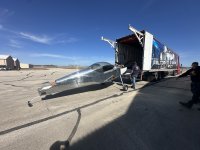
Short summary: All is well - engine is mounted and running good. The engine/airframe should be back at SynergyAir in Eugene by the end of the month (was hoping to get it back next week but some heavy snows have messed with our shipping arrangements).
More details:
Video first:
- In its current guise, the DeltaHawk engine you're seeing in the pix/video is the 180 HP version. The bump to 200 hp will happen once we confirm all is well after the remainder of the ground and flight testing - the bump is essentially a re-tune to the current package. The primary task gating the bump up is ensuring all cooling objectives are met (with the cowl in place and in flight conditions). The current Cirrus installation is currently running at 200 hp and is doing very well, so we don't expect any issues - just want to be cautious
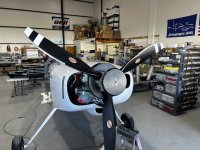
- Reminder - this is the 'older' (larger/heavier) block. Ultimately, the DeltaHawk RV14 will have the 'newer' block that was shown at OSH last year and which weighs a bit less, is a bit smaller (noticeable in the flywheel especially) and has a lot of the plumbing routed internally. We are sending the second airframe over for that build shortly.
- Our schedule once the current engine/airframe returns to SynergyAir Eugene is final assembly and then test flights. We are allowing 8 weeks for final assembly - a bit generous compared to the 3-4 weeks we normally allocate, but again who knows what little gremlins may rear their heads. This would put first flight beginning of May. This gives us about 12 weeks to complete the test-flight phase and get to OSH with some time on the Hobbs. Something we think is very doable.
- We will update the progress frequently once the plane is at SynergyAir. We'll shoot/post short videos 2-3x per week showing progress and notable things that may be of interest to everyone following the project. We will cover not just the engine, but things related to the overall build of the plane - SynergyAir has built over 200 RVs and they have a lot of tips, tricks, thoughts that may be of interest to folks building RVs and RV14s in particular. Finally, I am not sure if this thread will continue in the Alternative Engine section or get moved - that's not my call. So, if you lose it like happened last year, just look elsewhere in the forum.
- Word of caution - resist the urge to get too wrapped up in small details on the installation just yet. There are some temporary fittings in place, for instance, as we await some final spec fittings - and, sundry other things that may not completely reflect what the final product will look like.
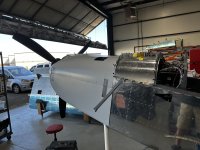
View attachment 80829View attachment 80831View attachment 80832View attachment 80833
Couldn’t say … but, I’m sure they’re watching this thread so they probably have it on the list now!Have they considered drilling the flywheel with 12 holes 30 degrees spacing like the lycoming has for use in balancing the propeller
Your climb rate will be reduced without wings and controllability without a tail might be a challenge ha ha.
Looks great.. sounds cool. Nice workmanship.
Looks great.. sounds cool. Nice workmanship.

High Speed Run-up....sounding real good.
Sounds, and looks good

OTOH, my bird will start tipping forward at anything >2300 (3 bl MT), don't see anything equivalent here, whatever that means.
Thanks for all the info provided to date.
Finally the plane is enroute back to Eugene. ETA is March 17th at SynergyAir. We’re all waiting, tools in hand! Will post more frequently once we get our mitts on it.Sounds, and looks good
OTOH, my bird will start tipping forward at anything >2300 (3 bl MT), don't see anything equivalent here, whatever that means.
Thanks for all the info provided to date.
Attachments
My Finish Kit order is postponed indefinitely waiting to see what happens with DeltaHawk and the Continental CD-170 FWF packages for the 14A...once we have prices, weight/CG specs, and performance data, will revisit with Van's to see what their policy is at that point which could be entirely different from whatever it is now.
What FWF for the Cd-170? I missed that.
Tim
Big day - plane arrived at SynergyAir (Eugene) on Saturday. We’ll be posting updates on the final assembly about twice a week as we gain our feet on all things relate to video posting (hey, we’re plane builders not video guys).
Last edited:
This is great... big mile stone.... All the best. 
We appreciate the updates Craig!! I really hope the DeltaHawk succeeds. We need Lycoming/Continental alternatives/competition.We’ll be posting updates on the final assembly about twice a week as we gain our feet on all things relate to video posting (hey, we’re plane builders not video guys).
Do we need this? Ha ha. Kidding... I don't think they are the same or in competition. I am a Lyc Fanboy who drives a Diesel VW (+50 mpg)... Love me some diesel. All the debate of Pros and Cons has been beat to death... I do hope it is a big success. It is not new, there are other aircraft diesels out there, but this is a 2-stroke, turbo and supercharged diesel. Pretty cool and unique. Makes sense. I can't wait to get performance. I will do a fly off in my O-360 180hp Hartzell RV-7...We appreciate the updates Craig!! I really hope the DeltaHawk succeeds. We need Lycoming/Continental alternatives/competition.
There is innovation here or at least some clever application to the aviation market. I never would have guessed that TDI could be safely applied in an aircraft. The electrical load and associated weight of a back-up fuel system would have been outrageous. I assumed if aircraft engine could have gotten close, it would have a secondary port injection system as a back-up. The mechanically driven individual (per cylinder) fuel pumps are one of many smart applications. The simplification of associated aircraft electrical architecture is a significant hidden benefit unless being compared to a magneto ignition, vintage fuel delivery system. There are other hidden costs when comparing a ridiculously priced Lycoming with this insanely priced newcomer.Do we need this? Ha ha. Kidding... I don't think they are the same or in competition. I am a Lyc Fanboy who drives a Diesel VW (+50 mpg)... Love me some diesel. All the debate of Pros and Cons has been beat to death... I do hope it is a big success. It is not new, there are other aircraft diesels out there, but this is a 2-stroke, turbo and supercharged diesel. Pretty cool and unique. Makes sense. I can't wait to get performance. I will do a fly off in my O-360 180hp Hartzell RV-7...
As someone else has mentioned, application to a military UAV would be huge for the parent company. This could easily happen, market share taken from Rotax, if the hidden costs of gasoline logistics is considered.
I for one am rooting hard for these guys even though I'll never see a personal benefit.
The way around this is to get a copy of the finish kit for the model you are building. Rather than ordering a finish kit, simply order the parts you need from that kit "ala carte", omitting what you don't want. That is what I did.I think they only allow changes to the FWF kit - but I could be wrong. I just checked their website and it says "Note that we do not allow additions to or deletions of items from kit orders."
There is a significant price difference in parts ordered ala carte vs as part of a kit though. I think that's relatively new, but I just experienced it today. Had I ordered my FWF kit as individual items, the cost would have been substantially higher.The way around this is to get a copy of the finish kit for the model you are building. Rather than ordering a finish kit, simply order the parts you need from that kit "ala carte", omitting what you don't want. That is what I did.
There is a YouTube Video of European guy that put a VW 4 Cyl TDI Diesel ina Cessna. Of course there was the ill fated Raptor that a Gentalman named Peter flew, with a VW V6 TDI... The later had a complicated hydraulically controlled prop with a belt drive. It was a prop seal that failed and caused engine shutdown and safe forced landing in field. The Saga is well documented on YouTube. The plane was a pusher canard 4 place, but was so heavy it was hat gross weight with half fuel and one person, the pilot. It was a scratch design (but looked like a Velocity Canard Pusher), and I give him credit for trying. . The plane was called the Raptor.There is innovation here or at least some clever application to the aviation market. I never would have guessed that TDI could be safely applied in an aircraft. The electrical load and associated weight of a back-up fuel system would have been outrageous. I assumed if aircraft engine could have gotten close, it would have a secondary port injection system as a back-up. The mechanically driven individual (per cylinder) fuel pumps are one of many smart applications. The simplification of associated aircraft electrical architecture is a significant hidden benefit unless being compared to a magneto ignition, vintage fuel delivery system. There are other hidden costs when comparing a ridiculously priced Lycoming with this insanely priced newcomer.
As someone else has mentioned, application to a military UAV would be huge for the parent company. This could easily happen, market share taken from Rotax, if the hidden costs of gasoline logistics is considered.
I for one am rooting hard for these guys even though I'll never see a personal benefit.
The whole topic of Car engines in Airplanes I am well versed and followed for many decades and I am unabashedly VERY opinionated. Too much to write here but in summation the concept of "conversions" is NOT going to result in a faster, lighter, higher resale or more reliable. Cost time to build? As much or more. Not going to be less, with turn key off the shelf conversions, verses all DIY junk yard engine overhaul, etc.... The early (Mazda) 13B Wankel's were exciting for a bit (Tracy Cook), but they burn oil and drink gas like crazy. As a kid my Mom had an Mazda RX3. I got my license in it. I loved how the rotary came on the pipes. It eventually toasted apex seals.
The PSRU is a the Achilles heel of all these conversions in one way or the other. There may be some exceptions but takes way more time and talent and tinkering than bolting on a Lycoming. Most conversions (not all) require a Fixed pitch prop is a very expensive electric prop. No for me. Fixed is fine, but for me hydraulic constant speed prop is a must, So that leaves out most conversions. Just my choice, preference, opinion.
The cost of Lycs 6 yrs ago was insane bargain. Prices have increased with everything. My RV-7 if building today would be over double. I went with used O-360A1A 180HP and went through it. Hartzell used in great shape... etc. Used was the norm back in the day. Now people fork over $50K for a new IO390. OUCH... My full kit (slow build) was $17K. Now it's what $45K. Still great values. Good for me...my planes value goes up.
Last edited:
Bummer! In the past, the kit pricing was simply the total cost of all the parts in it. However, back then, when you deleted an item, you only got 75% credit for the omitted item. Hence, if omitting a fair number of items, it was more economical to order "ala carte".There is a significant price difference in parts ordered ala carte vs as part of a kit though. I think that's relatively new, but I just experienced it today. Had I ordered my FWF kit as individual items, the cost would have been substantially higher.
Most of the items I deleted were credited at around 50% of what the item was listed for in the store.Bummer! In the past, the kit pricing was simply the total cost of all the parts in it. However, back then, when you deleted an item, you only got 75% credit for the omitted item. Hence, if omitting a fair number of items, it was more economical to order "ala carte".
I don’t disagree with your statements but am confused by the relevancy.There is a YouTube Video of European guy that put a VW 4 Cyl TDI Diesel ina Cessna. Of course there was the ill fated Raptor that a Gentalman named Peter flew, with a VW V6 TDI... The later had a complicated hydraulically controlled prop with a belt drive. It was a prop seal that failed and caused engine shutdown and safe forced landing in field. The Saga is well documented on YouTube. The plane was a pusher canard 4 place, but was so heavy it was hat gross weight with half fuel and one person, the pilot. It was a scratch design and I give him credit for trying.
The whole topic of Car engines in Airplanes I am well versed and followed for many decades and I am unabashedly VERY opinionated. Too much to write here but in summation the concept of "conversions" is NOT going to result in a faster, lighter, higher resale or more reliable. Cost time to build? As much or more. Not going to be less, with turn key off the shelf conversions, verses all DIY junk yard engine overhaul, etc.... The early (Mazda) 13B Wankel's were exciting for a bit (Tracy Cook), but they burn oil and drink gas like crazy. As a kid my Mom had an Mazda RX3. I got my license in it. I loved how the rotary came on the pipes. It eventually toasted apex seals.
The PSRU is a the Achilles heel of all these conversions in one way or the other. There may be some exceptions but takes way more time and talent and tinkering than bolting on a Lycoming. Fixed pitch prop is a must or some very expensive electric prop. No for me.
The cost of Lycs 6 yrs ago was insane bargain. Prices have increased with everything. My RV-7 if building today would be over double. I went with used O-360A1A 180HP and went through it. Hartzell used in great shape... etc. Used was the norm back in the day. Now people fork over $50K for a new IO390. OUCH... My full kit (slow build) was $17K. Now it's what $45K. Still great values. Good for me...my planes value goes up.
The subject power plant is an aviation purposed, direct drive, clean sheet, diesel engine. Like legacy power plants, it does not need ship power to continue operation, I.e. no ignition system and while the fuel delivery system isn’t fully redundant, it is fault tolerant. The reported BSFC is 40% better than legacy designs and can burn non-aviation diesel fuel. It has received FAA certification. Why you would lump this design in with your examples is confounding, at least to me.
Last edited:
Have you verified your comments in post 328 by comparing the finish kit cost versus the store price of it's individual parts? [I did that for my 8A finish kit] I had assumed that the 25% was Vans profit margin at the time and that the reduced "credit" price was to maintain their profit margin for the kit. [ie They make the same profit, regardless of what you omit] I wonder if post bankruptcy, the new profit margin has been increased???? Or have they given builders a discount when purchasing a sub kit??? Or only raised the profit margin on single parts???Most of the items I deleted were credited at around 50% of what the item was listed for in the store.
czechsix
Well Known Member
Tim, see the last several paragraphs of the recent KP article about the RV-9A with CD-155. Plans are to offer FWF packages for the 7/8/9 with CD-155 and the 14 with CD-170: https://www.kitplanes.com/the-jet-a-burning-rv-9a/. Might be worth starting a separate thread to discuss (or continuing a previous CD-155 thread) to avoid derailing this one...What FWF for the Cd-170? I missed that.
Tim
A bit of an update and misc specifics on the progress now that we have the plane back at Synergy Air, Eugene.
Still looks like we can make our target for first flight May 1st. Final assembly is/will take longer than usual - lot of cowling work to do. Addressing this is the current focus. Nothing that can’t be handled, it’s just that it’s not a stock Vans cowl, so there are some learnings - all of which will help v2 be a better end product.
Still looks like we can make our target for first flight May 1st. Final assembly is/will take longer than usual - lot of cowling work to do. Addressing this is the current focus. Nothing that can’t be handled, it’s just that it’s not a stock Vans cowl, so there are some learnings - all of which will help v2 be a better end product.
Attachments
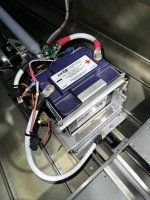
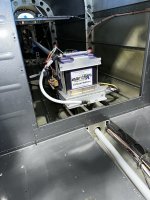
Here is battery set-up (see pics):
We’re using an EarthX LifePO4, model ETX1600
It’s mounted rear of the bulkhead and sits on the transponder. Aerotronics gave its blessing from an electrical interference perspective.
We’ll add an external charging port that penetrates the skin below the fuselage.
That said, overall final set-up will likely evolve once we see how the CG shakes out. And, the transponder will likely end up by itself on internal wall behind the bulkhead.
We’re using an EarthX LifePO4, model ETX1600
It’s mounted rear of the bulkhead and sits on the transponder. Aerotronics gave its blessing from an electrical interference perspective.
We’ll add an external charging port that penetrates the skin below the fuselage.
That said, overall final set-up will likely evolve once we see how the CG shakes out. And, the transponder will likely end up by itself on internal wall behind the bulkhead.
Attachments
czechsix
Well Known Member
DeltaHawk just announced that they're working on STC packages for the Cessna 172/182, and their announcement also says "DeltaHawk is now accepting firewall forward engine package orders for the Van’s RV-14". This makes it sound like you can actually place an order instead of just reserving a production slot with a $1K deposit like in the past. Anyone at SNF right now have any more information? I don't see any pricing or order form on their website yet.
Making progress..
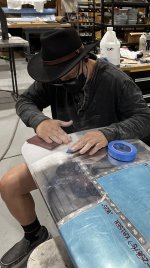
This week we made good progress on the cowling. The deltahawk guys tried their best to fit it in Racine, but unfortunately it needed a reworking to get it set up properly. In their defense - they’re engine guys, not kit builders. It’s looking good now.
Also completed work on the wing and rudder fairings. Synergy sprays them with an epoxy primer that helps achieve a very nice finish in the paint stage. Still, lots of sanding and detail work.
We’ll likely attach the elevator and rudder this coming week. Then it’s on to attaching the wings.
This week we made good progress on the cowling. The deltahawk guys tried their best to fit it in Racine, but unfortunately it needed a reworking to get it set up properly. In their defense - they’re engine guys, not kit builders. It’s looking good now.
Also completed work on the wing and rudder fairings. Synergy sprays them with an epoxy primer that helps achieve a very nice finish in the paint stage. Still, lots of sanding and detail work.
We’ll likely attach the elevator and rudder this coming week. Then it’s on to attaching the wings.
Attachments
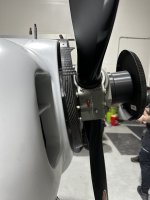
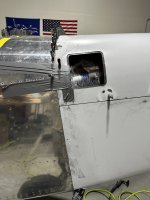
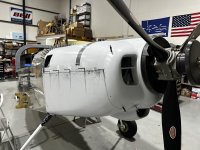
Here’s a short video that shows a bit of the cabin heat arrangement. You’ll see the distribution vent and core location. Not visable is the intake area w the controllable fan - it’s in the upper avionics area.
The system we’re using is different than the stock set up which draws heat from a muff attached to the exhaust pipes. Ours is more like an automotive system with a heater core and controllable ventilation fan.
With the location of the vents and controllability of the fan, we’re hoping for a bit better heater performance. The main shortcoming I’ve noticed with the stock system is uneven distribution. Especially at higher altitudes in ‘cold’ weather. I generally will find my feet roasting whilst I’m shivering due to a cold torso. Hopefully, this setup will address this - especially, as I can see the DH14 spending more time at altitude where it’s turbo’d engine should be in its sweet spot.
Heater
The system we’re using is different than the stock set up which draws heat from a muff attached to the exhaust pipes. Ours is more like an automotive system with a heater core and controllable ventilation fan.
With the location of the vents and controllability of the fan, we’re hoping for a bit better heater performance. The main shortcoming I’ve noticed with the stock system is uneven distribution. Especially at higher altitudes in ‘cold’ weather. I generally will find my feet roasting whilst I’m shivering due to a cold torso. Hopefully, this setup will address this - especially, as I can see the DH14 spending more time at altitude where it’s turbo’d engine should be in its sweet spot.
Heater
Got to see this Power Plant at SnF. Their display had the newer light weight case which incorporated some exterior honeycombing of the structure/case. The dry weight is down to 335#s. Before any fanboys attack. This is the total accessorized weight and redundant associated electrical systems not required, etc. Was fun to get to examine and they had a variety of people manning the display from assembler, to tech rep. A neat piece of engineering.Making progress..
This week we made good progress on the cowling. The deltahawk guys tried their best to fit it in Racine, but unfortunately it needed a reworking to get it set up properly. In their defense - they’re engine guys, not kit builders. It’s looking good now.
Also completed work on the wing and rudder fairings. Synergy sprays them with an epoxy primer that helps achieve a very nice finish in the paint stage. Still, lots of sanding and detail work.
We’ll likely attach the elevator and rudder this coming week. Then it’s on to attaching the wings.
Back to the post. I'm sure they've put a lot of margin in the first cowl; but, that looks like a lot of pending cooling drag. Looking forward to seeing performance numbers. Rooting hard the product/your project.
czechsix
Well Known Member
I have the same thought, the front of the cowl is definitely more blunt than an IO-390, and I think there's high probability DH is going to have to increase the exit size to get adequate cooling for hot weather ops, although if it's adequate for typical cruise conditions they could add cowl flaps instead of increasing the size of the fixed exit area. Hopefully they don't give up most of the diesel efficiency improvement due to excessive aerodynamic drag. Will be very interesting to see real world numbers...you can have a suboptimal installation with respect to cooling drag and still get pretty good true airspeeds with the turbo up high where the air is thin, but 2/3 of my flying is below 5000' so the numbers down low matter to me as well.I'm sure they've put a lot of margin in the first cowl; but, that looks like a lot of pending cooling drag. Looking forward to seeing performance numbers.
Little update:
We’ve spent most of the last three weeks working on fine tuning the cowling and cooling inlet fit. All is looking good now.
DeltaHawk’s engine tech arrives next week to assist as we prepare to fire the beast up.
As I write this we are prepping the plane and spraying primer - we won’t have the plane painted for AirVenture, but it will have a white primer coat (see video below).
It’s worth mentioning we’re using Sky Design’s carbon fiber, and up-sized, wheel pants - and larger wheels/tires. I fly off a grass strip on my ranch and am anxious to see if this combo smoothes the bumps out a bit on the strip. It may cost us a knot or two - as the pants are noticeably larger than stock (see the attached video for a brief look at them). But, maybe not - the design appears slick. Worth noting - these pants shave about 2 days of work vs installing the stock pants. And, seeing both my current 14 and this one side-by-side, I’m liking the proportions of the larger wheel pants. They look beefier. Could just be me.
Primer:
Wheel pants:
Note: I misspoke on the wheel pant video. I should have said what I wrote above, that is, we up-sized BOTH the wheels and tires to use with Sky Designs pants. Not just the tires. In the video, I referenced only up-sizing the tires - which is what I’m doing on my current stock RV14 (with stock wheel pants) as a milder ‘fix’ in my quest to achieve a smoother ride on my grass strip.
We’ve spent most of the last three weeks working on fine tuning the cowling and cooling inlet fit. All is looking good now.
DeltaHawk’s engine tech arrives next week to assist as we prepare to fire the beast up.
As I write this we are prepping the plane and spraying primer - we won’t have the plane painted for AirVenture, but it will have a white primer coat (see video below).
It’s worth mentioning we’re using Sky Design’s carbon fiber, and up-sized, wheel pants - and larger wheels/tires. I fly off a grass strip on my ranch and am anxious to see if this combo smoothes the bumps out a bit on the strip. It may cost us a knot or two - as the pants are noticeably larger than stock (see the attached video for a brief look at them). But, maybe not - the design appears slick. Worth noting - these pants shave about 2 days of work vs installing the stock pants. And, seeing both my current 14 and this one side-by-side, I’m liking the proportions of the larger wheel pants. They look beefier. Could just be me.
Primer:
Wheel pants:
Note: I misspoke on the wheel pant video. I should have said what I wrote above, that is, we up-sized BOTH the wheels and tires to use with Sky Designs pants. Not just the tires. In the video, I referenced only up-sizing the tires - which is what I’m doing on my current stock RV14 (with stock wheel pants) as a milder ‘fix’ in my quest to achieve a smoother ride on my grass strip.
Last edited:
Here a bit of a progress report via video:
We’re making good progress - should be flying by the end of the month.
We’re making good progress - should be flying by the end of the month.
Last edited:
Update:
Tail is done and all control surfaces mated and operational.
Fuselage work will be done this week.
Next week wings go on and get rigged.
Still on schedule for first flight by end of month.
Lastly, this short video may be of interest to folks interested in how we inset the lower fairing into the wheel pants:
Tail is done and all control surfaces mated and operational.
Fuselage work will be done this week.
Next week wings go on and get rigged.
Still on schedule for first flight by end of month.
Lastly, this short video may be of interest to folks interested in how we inset the lower fairing into the wheel pants:
Here is what has been used with the Cirrus test plane, and what will be used on the current RV14 build:
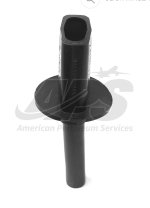
Here is a link to the supplier:

 www.apsaviation.com
However, on V2 we are looking at swapping the 100LL filler assembly with a JetA assembly. As the DeltaHawk engine does not use 100LL (we didn’t do this assembly swap on V1 as we already had the wings built before the DeltaHawk project began).
That said, the DH engine can be run on regular diesel fuel, so if that’s what the builder chooses to do, then an adaptor will still be required (when filling with straight diesel).
Here is a link to the supplier:
JET SPOUT TO 1" ROUND SPOUT ADAPTER (18–20 GPM MAX FLOW RATE)
Jet spout adapter, made of durable impact absorbing urethane polymer, is the quicker way to switch from the ―Duckbill" or ―J" spout to a 1" round spout (1" ID x 6" long) when fueling jet fuel for over wing aircraft (fixed wing or rotor wing).
However, on V2 we are looking at swapping the 100LL filler assembly with a JetA assembly. As the DeltaHawk engine does not use 100LL (we didn’t do this assembly swap on V1 as we already had the wings built before the DeltaHawk project began).
That said, the DH engine can be run on regular diesel fuel, so if that’s what the builder chooses to do, then an adaptor will still be required (when filling with straight diesel).
Last edited:
I’ve seen this video and agree - it’s a pretty good overview of the engine. Reminds me of why I was excited about using it in the first place.This is a great video explaining the engine -

Can you elaborate more on the issue with the first Hartzell composite prop? What was different with the second prop? Seems with diesels harmonics make or break the deal. Thanks, we are all rooting for this to succeed !I’ve seen this video and agree - it’s a pretty good overview of the engine. Reminds me of why I was excited about using it in the first place.

I've been geeking out over this engine ... just talked to one of the guys at Deltahawk, he said they're down to finishing up their Cessna type certificate, hopefully in the next few months, which unlocks their big round of funding and then it's go time!
