Van's Air Force

The definitive Van's Aircraft support community! Buying, building or flying an RV? Join our exclusive family of mentors and enthusiasts!

DeltaHawk for RV-14

I emailed DH earlier this year. They said a target price is $110K including prop for FWF for the RV14 using the DH180. While for the Velocity V-Twin, they were suggesting a target around $120K with prop for the DH200s when they become available. Notice: I said target price.

We agree that time will tell if they hit the target, or even how close to the target they get.

In terms of budget, do not forget the fuel costs. Jet-A is often cheaper then avgas, and the unleaded avgas solutions raise the price another buck or two. Then consider the lower fuel flow by volume (by weight difference should be negligible). With a fuel flow around 1GPH lower, and at least $3 per gallon cheaper. That might have a pretty descent pay back.
Oh, I am ignoring mogas. Generally not available away from the home dome, and even then depends on the local airport giving permission (or not knowing and turning a blind eye).

In terms of investment. DH went under multiple times, the current majority owners (might be sole owners, have not seen definitive statements either way) would likely have little concern or worry about the previous invested millions. e.g. Maybe there was 200 million spent. But the current owners only care about the spending for the past decade, not the past thirty years.

Tim
Yeah when I said the savings at the pump will never pay you back for the additional cost of the DeltaHawk, I was thinking in terms of the avg sport pilot who flies ~50 hrs a year and assuming recent fuel prices in the U.S. Currently AirNav.com shows national average cost of 100LL at $6.19 and Jet A at $5.71. Let's say the RV-14 burns an average of 10 gph with an IO-390 and 7 gph with a DHK200. The annual bill for 100LL would be $3100 and for Jet A it would be $2000, so with a savings of $1100/year you'd never break even on the significantly higher cost of the DH installation. However, it's anybody's guess where prices will settle out on unleaded 100 octane avgas, depending on the cost of production, distribution, liability, taxes, and competition amongst fuel producers (or lack thereof if EAGLE keeps going in circles and GAMI ends up being the sole supplier). Suppose in 2030 the price of 100UL is $8 and Jet A is $6, and maybe you fly 100 hrs a year. Now you're spending $8000/year on 100UL vs. $4200 on Jet A, and the latter starts looking a lot more attractive (after 10 years you would have saved $38K at the fuel pump). For most aircraft owners outside of the U.S. the cost of avgas (not to mention availability) makes the additional investment in a DeltaHawk a pretty easy decision. In the U.S. it's frustrating right now trying to make a decision because there are a lot of variables in play with unknown outcomes.
 
@czechsix

I only see a few variables:
1. When will avgas switch to unleaded?
2. How much additional cost will it be? As of last summer, the minimum number of material cost was $1 per gallon. That means at the pump it will be more than $1
3. What is the final price of the DH FWF packages?
4. What parts of the Vans RV-?? are removed from the kit because of the DH FWF and how much are they worth?

Tim
 
@czechsix

I only see a few variables:
1. When will avgas switch to unleaded?
2. How much additional cost will it be? As of last summer, the minimum number of material cost was $1 per gallon. That means at the pump it will be more than $1
3. What is the final price of the DH FWF packages?
4. What parts of the Vans RV-?? are removed from the kit because of the DH FWF and how much are they worth?

Tim
Other cost variables:
5. What is the real world fuel burn of the DHK200 vs. IO-390 on an RV-14? Hopefully we'll know soon once Craig's airplane is flying.
6. What is the cost to maintain the DHK200? This could range from less expensive than a Lycoming to significantly more, especially if field service uncovers issues not found in development/certification and customers are required to foot the bill for upgraded parts.
7. What is insurance cost, and can you get it? Some folks have had trouble getting insurance on alternative engines, hopefully since the DeltaHawk is certified the underwriters will view it as an acceptable risk comparable to a Lycoming and insure full hull value for reasonable rates (all other things being equal, insurance will still cost more due to the higher hull coverage you'll need with the DHK engine).
8. Biggest unknown is the success of the engine and company. If highly successful you'll be rewarded with good resale value to recoup or even exceed what you invested. If the engine has reliability issues that damage its reputation and/or if DeltaHawk ends up insolvent, you could be left with an almost worthless FWF package that nobody else wants. We've seen it happen before in this industry.
 
Last edited:
For me, reliability is by far the most important consideration in choosing an aircraft engine. The fuel savings with a DeltaHawk is really nice but for me it's a rounding error compared to how much I'll have into my RV-14 when it's done.

The Lycoming is an ancient design by todays's automotive standards and not as reliable as it should be considering how simple it is. But, we have 70 years and millions of hours of experience with them across thousands of airplanes. Lycoming engines are well proven and their weaknesses are well understood.

I'm really glad another company is entering the market with an entirely different way of thinking. The DeltaHawk has great potential - especially in areas that lack easy access to 100LL. But, I wouldn't fly behind it even if it was free until we have hundreds of them in the GA fleet with hundreds of thousands of hours of flight time. But that's just me and I'm probably in the minority in our homebuilder community.
 
For me, reliability is by far the most important consideration in choosing an aircraft engine. The fuel savings with a DeltaHawk is really nice but for me it's a rounding error compared to how much I'll have into my RV-14 when it's done.

The Lycoming is an ancient design by today's automotive standards and not as reliable as it should be considering how simple it is. But, we have 70 years and millions of hours of experience with them across thousands of airplanes. Lycoming engines are well proven and their weaknesses are well understood.

I'm really glad another company is entering the market with an entirely different way of thinking. The DeltaHawk has great potential - especially in areas that lack easy access to 100LL. But, I wouldn't fly behind it even if it was free until we have hundreds of them in the GA fleet with hundreds of thousands of hours of flight time. But that's just me and I'm probably in the minority in our homebuilder community.
For me, reliability is by far the most important consideration in choosing an aircraft engine. The fuel savings with a DeltaHawk is really nice but for me it's a rounding error compared to how much I'll have into my RV-14 when it's done.

The Lycoming is an ancient design by todays's automotive standards and not as reliable as it should be considering how simple it is. But, we have 70 years and millions of hours of experience with them across thousands of airplanes. Lycoming engines are well proven and their weaknesses are well understood.

I'm really glad another company is entering the market with an entirely different way of thinking. The DeltaHawk has great potential - especially in areas that lack easy access to 100LL. But, I wouldn't fly behind it even if it was free until we have hundreds of them in the GA fleet with hundreds of thousands of hours of flight time. But that's just me and I'm probably in the minority in our homebuilder community.
What makes you think the Delta Hawk is reliable? It has few in service. Lycoming is very reliable with millions of hours of service. Failures. Sure a ramp queen on a 40 yr old plane with internal engine corrosion, lack of maintenance. Lycoming flown regularly, maintained and operated by a pilot not a gorilla is very reliable. When delta hawk has 100's of engines in service with 10'0s of thousands of fleet hours, with real world performance data AND I can fly one, I'd consider it (with a price drop). I would never buy a new or alternative engine without flying one and talking to at least three operators. To imply the delta hawk is reliable and Lycoming is not, is pure conjecture and not supported by data.

"The Lycoming is an ancient design by today's automotive standards and not as reliable as it should"
Car engines converted to airplanes can not beat a Lycoming in performance. So 2 stroke diesel is new technology? Hugo Güldner invented the first two-stroke diesel engine in 1899. The technology is over 120 yrs old. Lycoming design is the result, in todays money, billions in research driven by WWII and refinement over a half a century from the best engineers.. Lycoming uses the most advanced materials, processes, quality controls. It is a aircraft spacific engine. Look at the Reno Sport Class? Red Bull Air Races? All Lycoming or Continentals winning. Except a rare engine like the V12 Falcon all Lycoming and Continental. As far as electronic ignition and electronic fuel injection? Lycoming has it but Magnetos and Carburetors or Mechanical Fuel Injection are farm tractor simple and work.

The idea the 180 HP delta hawk is the right engine for RV10, I'd disagree. Yes delta hawk is turbo and super charged and can maintain HP to higher altitude. You know Lycoming's come in turbocharged flavor, if your plan is to fly in the Flight Levels. The delta hawk vs IO540 at 55 to 70 hp deficient to start with from sea level. Think of takeoff and climb performance.

People are comparing finishing kit price? Look at just the price of engine. Lycoming is much less. There is no other way to cut it. Wait time? I don't know but not in market...

Your point if only diesel or Jet a is available in remote areas is solid. I don't fly in North Candida or Africa. Also glad Delta Hawk is in the market and agree, it has potential. They need big manufactures to buy it and certify it in their plane and sell a ton. Sadly planes are not a big market globally at least at the prices they are asking. One problem all the great used planes for a fraction of the price.
 
Last edited:
What makes you think the Delta Hawk is reliable?

You are correct that it doesn't have 100's in service. They have done extensive testing, but testing isn't the same as the real world. However, I do object to the people that try to equate the Delta Hawk with the other diesels that have been put in airplanes. The other diesels are all auto diesel conversions, and just like gasoline auto conversions, they haven't proven to be very reliable overall. Some have been reasonably successful, but as a class, not so much. The Delta Hawk has been designed from the very beginning for aviation, and they've spent the time and $$$ to optimize it for that use. I have no doubt there will be some teething pains for early adopters, but I expect them to be relatively minor.
 
The idea the 180 HP delta hawk is the right engine for RV10, I'd disagree.

I think they mean the 235 HP DeltaHawk. Yes, that's less than the 260 HP that most RV-10s get... but by the time a non-turbo'ed 260 HP engine gets to about 3000 or 4000 feet, it's only making about 235 HP. Above that, a turbo-normalized 235 HP engine makes more power than a "260 HP" engine, right? Something like that.
 
I think they mean the 235 HP DeltaHawk. Yes, that's less than the 260 HP that most RV-10s get... but by the time a non-turbo'ed 260 HP engine gets to about 3000 or 4000 feet, it's only making about 235 HP. Above that, a turbo-normalized 235 HP engine makes more power than a "260 HP" engine, right? Something like that.
I get your point. Is there a 235 HP DeltaHawk? It would affect low land take off slightly, but than again I fly a C182K with 230HP, Continental O-470. It's not too shabby.

Of course a IO-540 can make more than 260HP, nominal 300 hp, 8.7 to 1 version that makes 300 HP, doing math break even point is about 8,000 ft, where the DeltaHawk makes same or more HP wide open. The Lyc IO-540 will be at about 75% power. However your numbers are close and 260HP is Van's recommended power.

Let's see. There is no test data yet? Get them out there and test them, do fly offs against Lycoming. I think the current Delta Hawk at 180Hp would be a better fit for the RV7/8/14. I hope Delta Hawk is a huge success. I am just set in my Lycoming ways, I plan on flying until I hang it up I hope for another 3 decades God willing. In other words I am not in the market for a new aircraft engine. I look forward to seeing them in RV's.
 
Last edited:
Craig any up dates on the install, looking to order an engine being the lead times are what they are. Thunderbolt 3-4 years out, too long for me. Non certified Lyco about 1.5 out. Any information will help Thanks in advance
 
Craig any up dates on the install, looking to order an engine being the lead times are what they are. Thunderbolt 3-4 years out, too long for me. Non certified Lyco about 1.5 out. Any information will help Thanks in advance
Good luck! I’ve been waiting almost 20 years…
 
I’ve been following a long time also was always hopeful I’m glad they finally certified the engine just wish they could give us some answers.
 
I’ve been following a long time also was always hopeful I’m glad they finally certified the engine just wish they could give us some answers.

Recent article in one of the aviation channels (kit plane magazine I recall) where they took a tour of Delta Hawk, stated they do not have manufacture go ahead yet. Correct me if I am wrong. The design is approved as we all know. I do not think they have STC for any existing planes but they are flying in Cirrus and Velocity test beds. From the article the Delta hawk facility was nice, with test equip (dyno), engineering offices, administration you would expect from a company that makes aircraft engines.

Delta Hawk as I read outsources most of the engine and assembles them there in Wisconsin, so their manufacturing floor is pretty sparse at this time. They are not mass producing engines at this time as I read it. The Biz model is to both outsource and grow as needed as orders come in. Makes good Biz sense to me. The other thing I gather from talking to them at OSH, they have their heart set on being a defacto engine of a certified aircraft, be it a Cirrus, Dimond, Cessna, Piper. That makes sense. They need orders. Also STC for existing airframes would be great. Then the experimental market. It is business so the idea is sell them for a profit. I don't think they shun the experimental market, but do they want to get into the FWF kit manufacturing Biz for all the different kits? They will if they can make money. However If I was them I would want a Standard Category aircraft company to do installation and get it certified. I also am sure people getting STC's to retrofit into existing fleet would be something they want others to do. Who knows they may go down that road.

Aviation is a small (tiny) market compared to automotive. I heard a statistic that in one year world wide car production more engines are made than the entire history of aviation by many factors. One year vs 100 years and still aircraft engines are a tiny faction. Millions of engines verses thousand(s). So let that sink in. Aviation makes up for it by charging more. Aircraft engines are hand made low production, with a lot of regulatory QC. OK. Also experimental is a slice of the whole small pie of aviation engines. It makes sense they want to go with deep pockets. $110,000 is a lot for kit plane builder, when a builder can go to Wentworth and buy a used engine, tear it down, inspect, refresh and go for a fraction of the bucks.

Also LSA and rise of the 100-130 hp class of aircraft which use tiny high revving water/oil cooled Rotax mostly has put a damper on higher HP airplanes and higher 180HP engines. I think Rotax has reached the limit with their current platform, the 915iS, 135HP, but that is $45k I recall. There is a 916iS that is 160hp takeoff but 137hp continuous. That is $50k? So Delta Hawk is not too far off or out of line. However a Lyc IO360 180hp is best bang for buck new or used IMHO.

Not to mention alternative engines, which is no real threat to Lycoming, Continental or Delta Hawk for that matter. Alternative engines cut into Rotax market, sub 135 hp. Now with Mosaic LSA's can be bigger heavier aircraft with larger engines, the Lyc and TCM is viable for "LSA", Delta Hawk as well. The limit of LSA will be stall speed of the airframe not as much gross weight. The only niche market that is viable are the Honda, Suzuki, Mitsubishi engine converters, selling used engines with their kits. I am bias and don't think auto conversions are as good as dedicated aircraft engines. That is my opinion, not a bash just not my cup of tea. Aircraft business is kind of tough. These car engine converters is a tiny slice of a tiny slice. To get into aviation business and end up with "one million dollars" (Austin powers) in the bank, you have to start with three million... ha ha.

Bottom line rooting for Delta Hawk. Getting approval is great now they need to make and sell them, a bunch of them. Made in USA, love it. I think it will be a great engine and look forward to seeing them fly and getting some performance numbers.

 
Last edited:
Recent article in one of the aviation channels where they took a tour of Delta Hawk, stated they do not have manufacture go ahead yet. Correct me if I am wrong. The design is approved as we all know. I do not think they have STC for any existing planes but they are flying in Cirrus and Velocity test beds.

Delta Hawk I read outsources most of the engine and assembles it there in Wisconsin, so their manufacturing floor is pretty sparse at this time. The Biz model is to both outsource and grow as needed as orders come in. Makes good Biz sense to me. The other thing I gather from talking to them at OSH, they have their heart set on being the defacto engine of a certified aircraft, Cirrus, Dimond, Cessna, Piper. That makes sense. They need orders. Also STC for existing airframes would be great. Then the experimental market. It is business so the idea is sell them for a profit.

Aviation is a small (tiny) market compared to automotive. I heard a statistic that in one year world wide car production more engines are made than the entire history of aviation by many factors. One year vs 100 years and still aircraft engines are a tiny faction. Millions of engines verses thousand(s). So let that sink in. Aviation makes up for it by charging more. Aircraft engines are hand made low production, with a lot of regulatory QC. OK. Also experimental is a slice of the whole small pie of aviation engines. It makes sense they want to go with deep pockets. $110,000 is a lot for kit plane builder, when a builder can go to Wentworth and buy a used engine, tear it down, inspect, refresh and go for a fraction of the bucks.

Also LSA and rise of the 100-130 hp class of aircraft which use tiny high revving water/oil cooled Rotax mostly has put a damper on higher HP airplanes and higher 180HP engines. I think Rotax has reached the limit with their current platform, the 915iS, 135HP, but that is $45k I recall. There is a 916iS that is 160hp takeoff but 137hp continuous. That is $50k? So Delta Hawk is not too far off or out of line. However a Lyc IO360 180hp is best bang for buck new or used IMHO.

Not to mention alternative engines, which is no real threat to Lycoming, Continental or Delta Hawk for that matter. Alternative engines cut into Rotax market, sub 135 hp. Now with Mosaic bigger heavier aircraft with larger engines will make the Lyc and TCM viable for "LSA", and the Delta Hawk as well. The limit of LSA will be stall speed of the airframe not as much gross weight. The only niche market that is viable are the Honda, Suzuki, Mitsubishi engine converters, selling used engines with their kits. I am bias and don't think auto conversions are as good as dedicated aircraft engines. That is my opinion, not a bash just not my cup of tea. Aircraft business is kind of tough. To get into aviation business and end up with "one million dollars" (Austin powers) in the bank, you have to start with three million... ha ha.

Bottom line rooting for Delta Hawk. Getting approval is great now they need to make and sell them, a bunch of them. Made in USA, love it. I think it will be a great engine and look forward to seeing them fly and getting some performance numbers.

Don’t hold your breath….

I would be surprised if you could buy one for another 5-10 years…
 
A little update. My apologies for the lapse in postings - I’ve had some personal and professional things competing for time. I’m sure many of you with day jobs know how this can be. Also, related I’ve had an issue with the Whirlwind 300 series prop (3-bladed composite) on my current RV14 (not the DeltaHawk one) that’s been concerning and a real pain in the ass so far. I’ll post separately on that under the RV14 forum as the issue may affect others with the same prop.

Regarding the DeltaHawk project, work is progressing on the engine installation to the testbed RV14, albeit with a few hitches. None fatal to the project.

The largest time sucks have been finding a prop and a myriad of small fitment issues with misc Firewall Forward components.

Regarding the prop for the DeltaHawk RV14, the challenge has been to find a prop that will work with the engine. We had one that only lasted about 70 mins on the test stand. Hartzell has stepped up and is working with DeltaHawk on a solution - and it looks likely we’ll be using their three-bladed raptor composite model. Testing is not yet complete, so I can’t say this for sure. Once we have this issue settled we’ll be on to final assembly over at SynergyAir in Eugene, OR.

As for misc fitment issues with components of the FF package - it’s all been little nit-picky stuff. There are a lot of third party components, and the back and forth on getting things fabricated, adjusted, and sometimes re-fabricated, turned out to be a bit more challenging than originally anticipated.

That said, things are progressing well - but, I’m hesitant to say exactly when we’ll be up and flying as my track record on that has been sketchy to date. I’ll update as soon as we have a go on the prop.

Craig
 
A little update. My apologies for the lapse in postings - I’ve had some personal and professional things competing for time. I’m sure many of you with day jobs know how this can be. Also, related I’ve had an issue with the Whirlwind 300 series prop (3-bladed composite) on my current RV14 (not the DeltaHawk one) that’s been concerning and a real pain in the ass so far. I’ll post separately on that under the RV14 forum as the issue may affect others with the same prop.

Regarding the DeltaHawk project, work is progressing on the engine installation to the testbed RV14, albeit with a few hitches. None fatal to the project.

The largest time sucks have been finding a prop and a myriad of small fitment issues with misc Firewall Forward components.

Regarding the prop for the DeltaHawk RV14, the challenge has been to find a prop that will work with the engine. We had one that only lasted about 70 mins on the test stand. Hartzell has stepped up and is working with DeltaHawk on a solution - and it looks likely we’ll be using their three-bladed raptor composite model. Testing is not yet complete, so I can’t say this for sure. Once we have this issue settled we’ll be on to final assembly over at SynergyAir in Eugene, OR.

As for misc fitment issues with components of the FF package - it’s all been little nit-picky stuff. There are a lot of third party components, and the back and forth on getting things fabricated, adjusted, and sometimes re-fabricated, turned out to be a bit more challenging than originally anticipated.

That said, things are progressing well - but, I’m hesitant to say exactly when we’ll be up and flying as my track record on that has been sketchy to date. I’ll update as soon as we have a go on the prop.

Craig

As I mentioned in the post above, I have now posted on the RV14 forum page re the issue I have been having with the Whirlwind prop on my current flying RV14 (not the DeltaHawk RV14). It may be of interest to those of you who have a Whirlwind or are contemplating one. Not sure how to link the thread - but, its in the RV14 forum and clearly labeled as 'Issue with my Whirlwind prop'.

Not sure if this will link: https://vansairforce.net/threads/whirlwind-300-series-composite-prop-issue-on-my-rv14.230704/
 
Craig, quick question, did you ever sell you Lycoming IO 390. Looking to place my engine order, I was going to go with deltahawk but I don’t want to wait that long and the uncertainty. The Thunderbolt is a long wait also so I’m going with the lycoming IO 390 exp119. Unless……..
 
Craig, quick question, did you ever sell you Lycoming IO 390. Looking to place my engine order, I was going to go with deltahawk but I don’t want to wait that long and the uncertainty. The Thunderbolt is a long wait also so I’m going with the lycoming IO 390 exp119. Unless……..
Yes, sold it already.
 
Craig, any chance you could share some updated pics of the DHK installation in the 14? I know it's not done yet but I'm sure there's been plenty of progress since what we saw on display at Oshkosh...

I noticed DeltaHawk posted an update on their FB page that they've started flying the SR20 with the DHK-200 engine, including some performance numbers comparing the 200 hp to the 180 hp that was previously installed.

Thanks,
 
Any update on the prop issue ?
Will update prop thread today. Bottom line, still no prop and still no ETA. Also, still no answer on cost.

Last comm from hartzell was the one on the thread - I’ve had no direct comm with them in spite of reaching out to them. JDW has only communicated to let me know they don’t know eta.

Needless to say, at 10-plus weeks without a plane to fly (and, no end in sight), I’m very frustrated.

Craig
 
Craig, any chance you could share some updated pics of the DHK installation in the 14? I know it's not done yet but I'm sure there's been plenty of progress since what we saw on display at Oshkosh...

I noticed DeltaHawk posted an update on their FB page that they've started flying the SR20 with the DHK-200 engine, including some performance numbers comparing the 200 hp to the 180 hp that was previously installed.

Thanks,
Czecksix,

Noting to post right now - DH is hesitant to let me publish preliminary pics at this point. I think they’re concerned that showing the work in progress will distract as folks focus in on details they may change before the final install.

Things are moving forward. Slower than I think everyone would like - but, I understand why as there are soooo many little detail things that each become a time suck.

I’m taking solace in knowing DeltaHawk is trying to put together a first rate package and not simply rushing something out to keep enthusiasm up. We’ve all agreed that the best strategy is to get it right and then let the numbers (via the flight testing) speak for themselves.

Craig
 
Greetings,
Being new to this forum I hope I’m not asking a redundant question here, but I’m confused why DH has chosen the RV14 as their experimental prototype for this engine? My understanding is the engine has no certification or test data supporting use for aerobatics. Why not use DHK180 in RV9 or some other non aerobatic platform? Expensive engine to not utilize full capability of the airframe. 🤷🏼‍♂️
 
@cjs

I think I am conflating your two threads dealing with props. The WW you have issues with the prop hub and this is a IO-390 based RV14. The DH180 ran into issues where the test prop lasted just over an hour. I assume this was a torsional vibration (TV) issue caused by the power pulses of the DH180 engine. Currently Hartzell is working with DH to solve this issue; using the composite three bladed Raptor.

Do I have it correct? And is there any timeline from Hartzell on the DH issue?

Tim
 
@cjs

I think I am conflating your two threads dealing with props. The WW you have issues with the prop hub and this is a IO-390 based RV14. The DH180 ran into issues where the test prop lasted just over an hour. I assume this was a torsional vibration (TV) issue caused by the power pulses of the DH180 engine. Currently Hartzell is working with DH to solve this issue; using the composite three bladed Raptor.

Do I have it correct? And is there any timeline from Hartzell on the DH issue?

Tim

Tim,

Yes, these were two separate issues. The issue with the Whirlwind prop and hub was with my current RV14 powered by the Lycoming IO-390 Thunderbolt engine. Incidentally, Hartzell has just returned the Whirlwind hub - with the new sleeves - to JDW Props. JDW expects to be shipping it back to me late this week. Hopefully, the plane will be up and flying again in a couple weeks!

On the DeltaHawk/Hartzell prop topic. DeltaHawk has been trying a number of props with the goal of having options for folks. That said, DeltaHawk and Hartzell have tested and are approving the Hartzell Raptor prop for mating with the DeltaHawk engine. This is the combination that is being installed on the plane we are building and hope to have flying in the next couple months.

Craig
 
Greetings,
Being new to this forum I hope I’m not asking a redundant question here, but I’m confused why DH has chosen the RV14 as their experimental prototype for this engine? My understanding is the engine has no certification or test data supporting use for aerobatics. Why not use DHK180 in RV9 or some other non aerobatic platform? Expensive engine to not utilize full capability of the airframe. 🤷🏼‍♂️


406,
I will ask DeltaHawk about the aerobatic capabilities of the engine after the holiday and get back on this topic. That said, as part of the engine certification process, I believe the engine had to show it was capable of some degree of inverted flight without stoppage - and, it did so.

To your question on the choice of the RV14 vs the RV9 for the prototype: The RV14 is by far the more popular plane (therefor more potential engine sales), and I would argue the DHK200 (the target engine for the RV14 - not the DHK180) is ideal for the missions most RV14 pilots fly - which are primarily of the non-aerobatic, cross country type. That said, it does not appear an occasional loop or roll is going to be a problem.

Having flown a lot of RVs over the years, I would suggest most folks looking for an aerobatic RV (especially one with sustained inverted flight capability) would not be looking at the RV14 - they would be likely looking at the tandem models (4/8) or maybe the -7 if the significant other was not down with the back seat on non-aerobatic flights. These are all more manueverable/agile than the larger -14.

Bottom line, I think the engine will satisfy the vast majority of RV14 pilots. Could be wrong on this, and if so, I am sure the forum will let us know!

I do, though, believe there is another pairing (DH+Vans) that may be equally as good as that of the DHK200 and the 14. That would be the down-the-road pairing of the DHK235 with the RV10. It would be significantly lighter than the Lycoming IO-540, yet be turbo/supercharged for outstanding altitude performance (along with all the other benefits it offers).

Craig
 
406,
I will ask DeltaHawk about the aerobatic capabilities of the engine after the holiday and get back on this topic. That said, as part of the engine certification process, I believe the engine had to show it was capable of some degree of inverted flight without stoppage - and, it did so.

To your question on the choice of the RV14 vs the RV9 for the prototype: The RV14 is by far the more popular plane (therefor more potential engine sales), and I would argue the DHK200 (the target engine for the RV14 - not the DHK180) is ideal for the missions most RV14 pilots fly - which are primarily of the non-aerobatic, cross country type. That said, it does not appear an occasional loop or roll is going to be a problem.

Having flown a lot of RVs over the years, I would suggest most folks looking for an aerobatic RV (especially one with sustained inverted flight capability) would not be looking at the RV14 - they would be likely looking at the tandem models (4/8) or maybe the -7 if the significant other was not down with the back seat on non-aerobatic flights. These are all more manueverable/agile than the larger -14.

Bottom line, I think the engine will satisfy the vast majority of RV14 pilots. Could be wrong on this, and if so, I am sure the forum will let us know!

I do, though, believe there is another pairing (DH+Vans) that may be equally as good as that of the DHK200 and the 14. That would be the down-the-road pairing of the DHK235 with the RV10. It would be significantly lighter than the Lycoming IO-540, yet be turbo/supercharged for outstanding altitude performance (along with all the other benefits it offers).

Craig
Down the road…two more decades?
 
406,
I will ask DeltaHawk about the aerobatic capabilities of the engine after the holiday and get back on this topic. That said, as part of the engine certification process, I believe the engine had to show it was capable of some degree of inverted flight without stoppage - and, it did so.

To your question on the choice of the RV14 vs the RV9 for the prototype: The RV14 is by far the more popular plane (therefor more potential engine sales), and I would argue the DHK200 (the target engine for the RV14 - not the DHK180) is ideal for the missions most RV14 pilots fly - which are primarily of the non-aerobatic, cross country type. That said, it does not appear an occasional loop or roll is going to be a problem.

Having flown a lot of RVs over the years, I would suggest most folks looking for an aerobatic RV (especially one with sustained inverted flight capability) would not be looking at the RV14 - they would be likely looking at the tandem models (4/8) or maybe the -7 if the significant other was not down with the back seat on non-aerobatic flights. These are all more manueverable/agile than the larger -14.

Bottom line, I think the engine will satisfy the vast majority of RV14 pilots. Could be wrong on this, and if so, I am sure the forum will let us know!

I do, though, believe there is another pairing (DH+Vans) that may be equally as good as that of the DHK200 and the 14. That would be the down-the-road pairing of the DHK235 with the RV10. It would be significantly lighter than the Lycoming IO-540, yet be turbo/supercharged for outstanding altitude performance (along with all the other benefits it offers).

Craig
Craig,

I look forward to what Delta Hawk has to say. I agree the DHK200 and RV14 will pair very nicely and exceed most expectations. I am currently building RV14A and sitting #6 on the list to receive a DHK 200! My mission: A great cross country plane and occasionally a loop or roll for fun!

Last I checked Lycoming 390-EXP-119 non Thunderbolt deliveries are ETA spring of 2027! Fingers crossed DH has a FWF package available sooner!
 
Down the road…two more decades?
Supposedly the panel for the RV-10 bird was recently completed. I'm not holding my breath either, but rooting for them. While more expensive than an IO-540, that powerplant is far from reasonably priced, with known issues. The DHK200 seems a fair bit beefier, with more modern components etc. Hope they can get the impulse coupling under control!
 
Supposedly the panel for the RV-10 bird was recently completed. I'm not holding my breath either, but rooting for them. While more expensive than an IO-540, that powerplant is far from reasonably priced, with known issues. The DHK200 seems a fair bit beefier, with more modern components etc. Hope they can get the impulse coupling under control!
What impulse coupling are you referring to?
 
I think he's referring to the power impulses coupling into the prop without overstress. Diesels tend to have much stronger power stroke impulses.
Exactly airguy-thank you for clarifying. The issue is “well known.” Personally I’m a bit surprised that Deltahawk are struggling with it.

It is a problem for prop manufacturers; solvable with modern blade materials and prop hub design, but an issue discussed in this thread for the RV-14 firewall forward kit. I’m not too concerned about it, as it’s been solved before in other diesel engine installations, but it appears to have delayed the project a few months.
 
Last edited:
Exactly airguy-thank you for clarifying. The issue is “well known.” Personally I’m a bit surprised that Deltahawk are struggling with it.

It is a problem for prop manufacturers; solvable with modern blade materials and prop hub design, but an issue discussed in this thread for the RV-14 firewall forward kit. I’m not too concerned about it, as it’s been solved before in other diesel engine installations, but it appears to have delayed the project a few months.
Yeah I hope they are able to do adequate testing to make sure the prop is up to the task long-term...that 3-blade carbon fiber Raptor is $30k. If you put several hundred hours on it and then find that the hub or blades are starting to show signs of premature failure, do you think Hartzell or DeltaHawk will fix/upgrade under warranty? Me neither...
 
Exactly airguy-thank you for clarifying. The issue is “well known.” Personally I’m a bit surprised that Deltahawk are struggling with it.

It is a problem for prop manufacturers; solvable with modern blade materials and prop hub design, but an issue discussed in this thread for the RV-14 firewall forward kit. I’m not too concerned about it, as it’s been solved before in other diesel engine installations, but it appears to have delayed the project a few months.
Solving the power pulse in diesel can be done a few ways. Here are the ones I know of:
1. Clutch system, see Theilert/CMI engines.
2. Elastic donut thing, I forget the exact name. This is how Diamond/Austro handles it.
3. HPCR (High Pressure Common Rail), multi-pulse electronic injection. By using a small pilot pulse, with multiple injection sequences, the power pulse can be modulated to reduce the spikes and TV.

The last one is the most effective from what I have read, and from what a few others have posted on other forums. But I would believe it is the hardest to get passed the FAA.

Tim
 
Solving the power pulse in diesel can be done a few ways. Here are the ones I know of:
1. Clutch system, see Theilert/CMI engines.
2. Elastic donut thing, I forget the exact name. This is how Diamond/Austro handles it.
3. HPCR (High Pressure Common Rail), multi-pulse electronic injection. By using a small pilot pulse, with multiple injection sequences, the power pulse can be modulated to reduce the spikes and TV.

The last one is the most effective from what I have read, and from what a few others have posted on other forums. But I would believe it is the hardest to get passed the FAA.

Tim
#3 would be out since their goal is a completely mechanical engine - no electrical dependencies except for starting.
 
#3 would be out since their goal is a completely mechanical engine - no electrical dependencies except for starting.
Agree. And I think that is a mistake. HPCR can be used to significantly reduce the cylinder pressure. I have seen claims that it can be reduced by as much as 25%, and it also significantly reduces TV and all vibration. Reducing cylinder pressure and TV means you can reduce the strength requirements for the engine/case. This reduces the weight... something that is good in a plane.

Have you ever seen a modern MB diesel engine? How quiet and smooth they can be?

Tim
 
Agree. And I think that is a mistake. HPCR can be used to significantly reduce the cylinder pressure. I have seen claims that it can be reduced by as much as 25%, and it also significantly reduces TV and all vibration. Reducing cylinder pressure and TV means you can reduce the strength requirements for the engine/case. This reduces the weight... something that is good in a plane.

Have you ever seen a modern MB diesel engine? How quiet and smooth they can be?

Tim
Not agreeing it is a mistake. It is the path to market they chose. There is elegance in a design which simplifies or eliminates systems. On that front, it would appear they've met (one of) their design goals. Obviously, they have some associated design issues but going to a solution that would require more components, redundant sensors, electrical busses, etc. is a step away from their apparent intentions. My $0.02.
 
Last edited:
HPCR can be used to significantly reduce the cylinder pressure. I have seen claims that it can be reduced by as much as 25%, and it also significantly reduces TV and all vibration. Reducing cylinder pressure and TV means you can reduce the strength requirements for the engine/case. This reduces the weight... something that is good in a plane.

Tim
Can you still make the same power while also reducing cylinder pressure, TV, vibration, and strength requirements? Or does HPCR multi-pulse injection result in a lower power output?

Even if you can make the same power while reducing weight of the engine block, if that solution requires redundant FADEC and electrical systems it may not end up overall lighter than the approach DeltaHawk is taking. But they do need to figure out a way to make sure the $$$ carbon fiber prop holds up long term...
 
Can you still make the same power while also reducing cylinder pressure, TV, vibration, and strength requirements? Or does HPCR multi-pulse injection result in a lower power output?

Even if you can make the same power while reducing weight of the engine block, if that solution requires redundant FADEC and electrical systems it may not end up overall lighter than the approach DeltaHawk is taking. But they do need to figure out a way to make sure the $$$ carbon fiber prop holds up long term...

I am by no means an expert on this topic. I am in the IT space, so I am far afield from my wheelhouse.
With that stated, a number of engineers, some of whom actually work on designing engines are the ones who claimed you can significant reductions in peak pressure if you maintain the same power level. Most of the time, shaping the injections is used to actually increase the power while decreasing the TV.

I would guess the system would be lighter with HPCR. But it would only be a guess. Agree that DH does need to find a way to make sure the props last.

Tim
 
Not agreeing it is a mistake. It is the path to market they chose. There is elegance in a design which simplifies or eliminates systems. On that front, it would appear they've met (one of) their design goals. Obviously, they have some associated design issues but going to a solution that would require more components, redundant sensors, electrical busses, etc. is a step away from their apparent intentions. My $0.02.

Having a goal/vision is good. However, sometimes physics interferes with said goal/vision and altering the requirements or changing the definition can lead to results.
There are times were simple is better, there are times where accepting complexity is better.

As for where DH is right now. I believe @cjs stated that DH has a potential prop solution and is verifying it. The market has waited multiple decades for DH; so waiting a bit longer at this point is not that big of an issue, I think. If DH cannot solve the prop TV issues, then it will be up to DH engineers to figure out a solution, which may involve a redefinition.

Tim
 
A little off subject . I am at the point of making pass thru’s on the fire wall for the control cables. I am installing a IO 390 - 119 exp on a 14A with the aero sport arm rest and throttle quadrant. I was wondering where the pass thru’s ate located on the fire wall or do I just follow Section OP-62 and just use the location on the plans. I also ordered the 3 cables from McFarlane and the lengths were adjusted for the armrest throttle quadrant location. thanks for the help in advance and sorry if this is a repeat question.
 
Having a goal/vision is good. However, sometimes physics interferes with said goal/vision and altering the requirements or changing the definition can lead to results.
There are times were simple is better, there are times where accepting complexity is better.

As for where DH is right now. I believe @cjs stated that DH has a potential prop solution and is verifying it. The market has waited multiple decades for DH; so waiting a bit longer at this point is not that big of an issue, I think. If DH cannot solve the prop TV issues, then it will be up to DH engineers to figure out a solution, which may involve a redefinition.

Tim
Stupid question , but I understand a Deltahawk engine is installed and flying in a SR20. What prop is that using?
Thanks
K
 
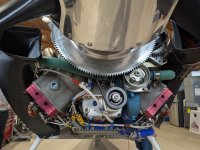
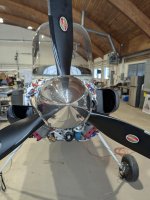
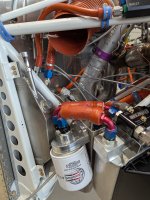
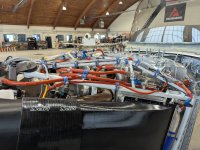
Well, its been a bit coming, but here is an update on the DeltaHawk project and some pics and videos with the engine mounted and running on our airfame.

Short summary: All is well - engine is mounted and running good. The engine/airframe should be back at SynergyAir in Eugene by the end of the month (was hoping to get it back next week but some heavy snows have messed with our shipping arrangements).

More details:
  • In its current guise, the DeltaHawk engine you're seeing in the pix/video is the 180 HP version. The bump to 200 hp will happen once we confirm all is well after the remainder of the ground and flight testing - the bump is essentially a re-tune to the current package. The primary task gating the bump up is ensuring all cooling objectives are met (with the cowl in place and in flight conditions). The current Cirrus installation is currently running at 200 hp and is doing very well, so we don't expect any issues - just want to be cautious
  • Reminder - this is the 'older' (larger/heavier) block. Ultimately, the DeltaHawk RV14 will have the 'newer' block that was shown at OSH last year and which weighs a bit less, is a bit smaller (noticeable in the flywheel especially) and has a lot of the plumbing routed internally. We are sending the second airframe over for that build shortly.
  • Our schedule once the current engine/airframe returns to SynergyAir Eugene is final assembly and then test flights. We are allowing 8 weeks for final assembly - a bit generous compared to the 3-4 weeks we normally allocate, but again who knows what little gremlins may rear their heads. This would put first flight beginning of May. This gives us about 12 weeks to complete the test-flight phase and get to OSH with some time on the Hobbs. Something we think is very doable.
  • We will update the progress frequently once the plane is at SynergyAir. We'll shoot/post short videos 2-3x per week showing progress and notable things that may be of interest to everyone following the project. We will cover not just the engine, but things related to the overall build of the plane - SynergyAir has built over 200 RVs and they have a lot of tips, tricks, thoughts that may be of interest to folks building RVs and RV14s in particular. Finally, I am not sure if this thread will continue in the Alternative Engine section or get moved - that's not my call. So, if you lose it like happened last year, just look elsewhere in the forum.
  • Word of caution - resist the urge to get too wrapped up in small details on the installation just yet. There are some temporary fittings in place, for instance, as we await some final spec fittings - and, sundry other things that may not completely reflect what the final product will look like.
Video first:


PXL_20250212_174319904.jpgPXL_20250212_174627035.jpgPXL_20250212_174801900.jpgPXL_20250212_174522581.jpg
 
Back
Top