Van's Air Force

The definitive Van's Aircraft support community! Buying, building or flying an RV? Join our exclusive family of mentors and enthusiasts!

DeltaHawk for RV-14

Gas(oline) engine has nothing to do with it. The AF mixture typically has some time to mix before reaching detonation conditions or being spark ignited. Looked back at some of their available info. They're injecting at TDC or essentially into a fully compressed vessel which wouldn't be without its challenges; achieving a somewhat homogeneous mixture being one of them. It would make for some interesting combustion dynamics at a minimum. Make me wonder if the associated combustion event takes a little longer to complete versus a CI engine that injects before TDC. Would be monster cool if someone with some specific insight would educate me here.

From a eyeball analysis, this would also seem to be detrimental for unburned hydrocarbon emissions. This is something two strokes already suck at. This will be a probably be a target for anti-aviation types (e.g. leaded fuel now) in the future if this PP gains market share.
In Direct Injection engines, the fuel is injected when it is time to combust, at very high pressure (29,000psi for common rail diesels) so atomization is instant. They don't rely on turbulence inside the cylinder to mix the fuel and air like a carburetor or throttle body injected engines. And in a diesel, there is always more air than fuel (until you get to critical altitude) since the air charge is always the same, only the amount of fuel varies, unlike a gas engine that wants the the mixture perfect every time. There just isn't an opportunity for early ignition, if there was, it would ignite early every time.

All the extra air is one of the emission issues diesels have historically had. All that extra air, plus the sulphur in diesel until recent regulator changes, made sulphur dioxide and nitrous oxide emissions high. The reduction of sulphur, plus the use of DEF to break down the nitrous dioxide before it exits the tailpipe have made significant improvements in emissions.

Unburned hydrocarbons happen in diesels when too much fuel is injected, then they start to smoke. When some idiot is 'rolling coal' after they take all the emission control off their squatted diesel pickup, all they are really doing is pouring fuel (and money) out the tailpipe.
 
In Direct Injection engines, the fuel is injected when it is time to combust, at very high pressure (29,000psi for common rail diesels) so atomization is instant. They don't rely on turbulence inside the cylinder to mix the fuel and air like a carburetor or throttle body injected engines. And in a diesel, there is always more air than fuel (until you get to critical altitude) since the air charge is always the same, only the amount of fuel varies, unlike a gas engine that wants the the mixture perfect every time. There just isn't an opportunity for early ignition, if there was, it would ignite early every time.

All the extra air is one of the emission issues diesels have historically had. All that extra air, plus the sulphur in diesel until recent regulator changes, made sulphur dioxide and nitrous oxide emissions high. The reduction of sulphur, plus the use of DEF to break down the nitrous dioxide before it exits the tailpipe have made significant improvements in emissions.

Unburned hydrocarbons happen in diesels when too much fuel is injected, then they start to smoke. When some idiot is 'rolling coal' after they take all the emission control off their squatted diesel pickup, all they are really doing is pouring fuel (and money) out the tailpipe.
Very much appreciated. Couple of questions/comments if you don’t mind. My experience is in turbine combustors and related emissions. My limited experience looking at DI engines, I don’t recall any of the others injecting at TDC but will admit I wasn’t looking for that detail at the time. Atomization and mixing influence each other but are not the same. You don’t want the fuel particle recombining. Sounds like their engineers have figured it out, at least good enough for our/their applications for now. Wonder if they are or considered injecting in more than one point per cylinder. NOx emissions (NO, NO2, N2O plus radicals, etc) are a family of nasties which is one of the reasons mitigation is so tough. No thing that does benefit across that family is lower flame temps. That plus EGRs, and catalytic converters, in SI engines.

I’ll say again, their UHC emissions are probably not going to be good. I’m relating/expecting this from the 2 stroke approach, not the DI (at TDC for that matter). Any possible NOx benefit from their combustion mixture is probably cancelled out and then some because of the heat of the related combustion event.

My hat is off to their engineers and patient investors.

Much thx for your input.
 
The fuel may be injected before TDC, but at a given power setting it would always be injected at the same time. The fuel/air charge depends on the pressure and temperature to ignite. A gas engine has a fuel air mixture that can ignite, but is waiting for the sparky thing to set it off, so other things might take the place of the sparky thing and set it off early, causing detonation and kickback if it happens during starting
 
The fuel may be injected before TDC, but at a given power setting it would always be injected at the same time.
Based on DH's cutaway animation of the engine it sure looks like the fuel pump cam is firmly bolted to the end of the crankshaft, which implies that the fuel is injected at a fixed timing throughout all RPMs and power settings. I assume modern diesel cars & trucks take advantage of computers to control the timing of the fuel injection depending on RPM and other factors to optimize efficiency...at least that's how conventional gas engines operate. Perhaps DH chose to keep it simple with fixed injection timing and given the limited RPM range that this engine operates in, it provides acceptable performance. Or maybe they have a means of mechanically adjusting the fuel injection timing that I can't tell by looking at the cutaway animation...
 
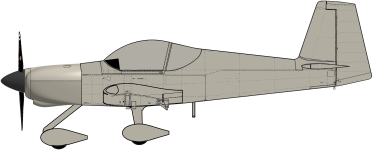
Just for kicks, I mocked up an RV-14A with the DHK200 on the nose (using drawings Craig posted earlier for the taildragger). It'll look a bit sleeker once they revise the cowl for the smaller spinner taking advantage of the reduced diameter starter ring gear on the production engine. They were looking at moving the engine/prop back a couple inches as well...

1724108615195.png
 
Based on DH's cutaway animation of the engine it sure looks like the fuel pump cam is firmly bolted to the end of the crankshaft, which implies that the fuel is injected at a fixed timing throughout all RPMs and power settings. I assume modern diesel cars & trucks take advantage of computers to control the timing of the fuel injection depending on RPM and other factors to optimize efficiency...at least that's how conventional gas engines operate. Perhaps DH chose to keep it simple with fixed injection timing and given the limited RPM range that this engine operates in, it provides acceptable performance. Or maybe they have a means of mechanically adjusting the fuel injection timing that I can't tell by looking at the cutaway animation...
First off, let me reaffirm that I'm not a piston engine guy. That said, the DH PP does utilize injectors so that timing is ultimately determined by those. I can't tell from the diagrams if there's a fuel return line -> don't know if the upstream injection pressure is relatively constant but guessing no. In keeping with their philosophy of engine operation/electrical independence, I'd assume mechanical injectors. Would be great to get more direct exposure here.
 
First off, let me reaffirm that I'm not a piston engine guy. That said, the DH PP does utilize injectors so that timing is ultimately determined by those. I can't tell from the diagrams if there's a fuel return line -> don't know if the upstream injection pressure is relatively constant but guessing no. In keeping with their philosophy of engine operation/electrical independence, I'd assume mechanical injectors. Would be great to get more direct exposure here.
Most mechanically injected diesels are "timed" by the injector pump. The "injector" is just a check valve. The pump works much like a gas engine distributor, rotating it slightly one way or another changes the timing. Looking at the video this system is very similar. But the injector pumps are driven straight off cam lobes. So the timing is set by the cam and not adjustable. It's a simple, solid system, and with the narrow rpm range adjustable "tuning" probably isn't worth the trouble.
 
Most mechanically injected diesels are "timed" by the injector pump. The "injector" is just a check valve. The pump works much like a gas engine distributor, rotating it slightly one way or another changes the timing. Looking at the video this system is very similar. But the injector pumps are driven straight off cam lobes. So the timing is set by the cam and not adjustable. It's a simple, solid system, and with the narrow rpm range adjustable "tuning" probably isn't worth the trouble.
OK. Sorry for not getting it but trying to learn. Each FI pump is a PD pump so ~ same amount of fuel per stroke/crank rev. Still trying to conceptualize how fuel flow/speed/power are controlled in this PP.
 
OK. Sorry for not getting it but trying to learn. Each FI pump is a PD pump so ~ same amount of fuel per stroke/crank rev. Still trying to conceptualize how fuel flow/speed/power are controlled in this PP.
A diesel mechanical injection pump is a variable volume (and somewhat fixed pressure) pump. The volume of diesel fuel injected into the combustion chamber for each stroke controlls the power output (and speed) of the engine. The fuel injectors at the cylinders have a "break open" minimum pressure to provide a proper spray patern of the fuel.
 
A diesel mechanical injection pump is a variable volume (and somewhat fixed pressure) pump. The volume of diesel fuel injected into the combustion chamber for each stroke controlls the power output (and speed) of the engine. The fuel injectors at the cylinders have a "break open" minimum pressure to provide a proper spray patern of the fuel.
Cool. So the plunger pumps are technically variable displacement (VD) pumps versus PD pumps. This would solve the fuel throttling question. Next dumb question from me would be how the displacement (volume) is varied in the pumps. VD pumps in hydraulic apps are flow controlled by varying the stroke, As that is fixed here being a function of the cam profile, the displacement/volume is changed by some longitudinal variance? Wonder if the opposite pump cylinder end position is varied (can see springs in the video) by some force balance between internal pump pressure, the spring, and an opposite/external pressure; possibly hydraulic (fuel) pressure boosted from a gear type PD pump. A single control/lever would then control this pump output pressure -> that controls fuel pump chamber size -> that controls fuel flow (per engine rev) -> that controls engine speed/power. Much to learn about this seemingly wonderful design.
 
Last edited:
Cool. So the plunger pumps are technically variable displacement (VD) pumps versus PD pumps. This would solve the fuel throttling question. Next dumb question from me would be how the displacement (volume) is varied in the pumps. VD pumps in hydraulic apps are flow controlled by varying the stroke, As that is fixed here being a function of the cam profile, the displacement/volume is varied by some longitudinal variance. Wonder if the opposite pump cylinder end position is varied (can see springs in the video) by some force balance between internal pump pressure, the spring, and an opposite/external pressure; possibly hydraulic (fuel) pressure boosted from a gear type PD pump. A single control/lever would then control this pump output pressure -> that controls fuel pump chamber size -> that controls fuel flow (per engine rev) -> that controls engine speed/power. Much to learn about this seemingly wonderful design.
Yea, the throttle question isn't clear to me either. Maybe vary the length of the cylinder that the pump piston rides in? I'm picturing a brake master cylinder where the first part of the travel is outside of the cylinder?
 
It's a long time until Sun n Fun, keep those questions coming so I can ask them next year! I believe it does need a return line for the fuel, so it may be as simple as a valve that opens the return line sooner/later in the stroke.

Mark
 
Hi
There is nothing simple about these mechanical injector pumps, I found this youtube that explains how a helix pump work. Also found some diagrams of these pumps they also use spinning weights and springs to vary the timing. The mechanical engineers at DH deserve much kudos , remember on their engine they had to design the pump from scratch as it's 4 individual pumps in one body. One for each cylinder / injector.

Quote "Simple is hard"

 
Hi
There is nothing simple about these mechanical injector pumps, I found this youtube that explains how a helix pump work. Also found some diagrams of these pumps they also use spinning weights and springs to vary the timing. The mechanical engineers at DH deserve much kudos , remember on their engine they had to design the pump from scratch as it's 4 individual pumps in one body. One for each cylinder / injector.

Quote "Simple is hard"

Not arguing as I truly don't know; but, looking at the DH graphics on their website and the previously attached video some (possible) distinctions jump out. The injectors are "remote" from the pumps. In itself, not a real difference. Hydraulics are hydraulics, and proximity usually isn't a consideration unless to an extreme where water hammer could occur.

I'm trying to figure out their system via the aforementioned graphics. One thing that makes the guesses more difficult is each of these engine graphics seem to be a little different in the area of interest.

I'm not saying otherwise but not sure DH utilized Helix valves as described in the associated video, which did a great job of illustrating the operation IMO. Unlike the helix valves, the return lines appear to be on the injector proper vs the pump(s). If that is true, regulation is probably at the injectors. So what is the mechanism that is effecting the individual injectors where the "pairings" are not in proximity to each other? Still guessing some type of hyd pressure control. At least on one of the diagrams, there are four (major, long) lines per side. Two are obviously for fuel delivery. I would assume the larger flexline is a common return for the cylinder pairing. The forth is a smaller hardline which implies (to me) high pressure, low flow. It also comes from the accessory area of the engine.

A force balance between spring, fuel pressure, and hyd (fuel as medium at control pressure) is still my best guess; fuel flow being controlled by directly varying the subject hyd press.

Still cool. Wish I had facts vs. guesses but haven't found any real details yet.
 
Not arguing as I truly don't know; but, looking at the DH graphics on their website and the previously attached video some (possible) distinctions jump out. The injectors are "remote" from the pumps. In itself, not a real difference. Hydraulics are hydraulics, and proximity usually isn't a consideration unless to an extreme where water hammer could occur.

I'm trying to figure out their system via the aforementioned graphics. One thing that makes the guesses more difficult is each of these engine graphics seem to be a little different in the area of interest.

I'm not saying otherwise but not sure DH utilized Helix valves as described in the associated video, which did a great job of illustrating the operation IMO. Unlike the helix valves, the return lines appear to be on the injector proper vs the pump(s). If that is true, regulation is probably at the injectors. So what is the mechanism that is effecting the individual injectors where the "pairings" are not in proximity to each other? Still guessing some type of hyd pressure control. At least on one of the diagrams, there are four (major, long) lines per side. Two are obviously for fuel delivery. I would assume the larger flexline is a common return for the cylinder pairing. The forth is a smaller hardline which implies (to me) high pressure, low flow. It also comes from the accessory area of the engine.

A force balance between spring, fuel pressure, and hyd (fuel as medium at control pressure) is still my best guess; fuel flow being controlled by directly varying the subject hyd press.

Still cool. Wish I had facts vs. guesses but haven't found any real details yet.
Have you got a link to the graphic on the DH web site? Also a lot of the novel features of the DH engine are covered by patents that are published, if you take a look at https://patents.google.com/patent/US20050235946A1/en section paragraphs 0010 & 0011 it talks about how they use the excess return fuel to cool the injectors. If you suffer from insomnia you can read through all the patents :)
 
On the topic of refueling the plane...
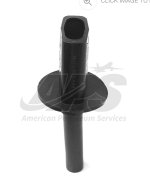
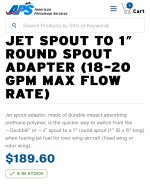
Some folks have asked about the adapter for use so they can fill their standard spec RV wing with JetA. Here is a link the the adapter DeltaHawk is currently using:

A few thoughts:
1. Its pricey ($189) - maybe someone in the VAF has a better option.
2. I am not currently considering modifying the filler assembly on the 14 wing for JetA so I havent looked to closely at what this would entail. This is because I will likely be using diesel or JetA depending on conditions.
 

Attachments

  • IMG_4698.jpeg
    IMG_4698.jpeg
    78.4 KB · Views: 15
  • IMG_4699.jpeg
    IMG_4699.jpeg
    520.7 KB · Views: 15
Craig. I will be building my wings soon and don’t have the spec for the rivet layout n the fuel tank flange ( size, spacing etc. ) I was wondering if this cap might work for the delta hawk. ( any thoughts). Thank you for the help.
 

Attachments

  • IMG_0172.jpeg
    IMG_0172.jpeg
    2.4 MB · Views: 43
@cjs

I am trying to imaging handling the flow of any liquid at over 20 GPH in such a thin wing would be an interesting endeavor. It never even occurred to me the filling flow aspect until reading the adapter above. To truly support Jet-A would likely require some careful engineering. I wonder if a system based on the Aerostar aircraft design could be a good starting point.

Tim
 
@cjs

I am trying to imaging handling the flow of any liquid at over 20 GPH in such a thin wing would be an interesting endeavor. It never even occurred to me the filling flow aspect until reading the adapter above. To truly support Jet-A would likely require some careful engineering. I wonder if a system based on the Aerostar aircraft design could be a good starting point.

Tim
Just don't squeeze the filler trigger all the way open.
 
@cjs

I am trying to imaging handling the flow of any liquid at over 20 GPH in such a thin wing would be an interesting endeavor. It never even occurred to me the filling flow aspect until reading the adapter above. To truly support Jet-A would likely require some careful engineering. I wonder if a system based on the Aerostar aircraft design could be a good starting point.

Tim
20 GPH?
 
Just don't squeeze the filler trigger all the way open.
Not going to admit how many decades ago I worked in a gas station. Back then, the flow rate on the diesel pumps was fairly flat no matter how much or how little you pulled the trigger. The gas pumps, you could more easily control since they were only 4 GPH (that is what memory says). I recall filling up the large 18 wheelers faster than the SUVs.

Tim
 
Look at the max flow rate of the adapter above.

Tim
You flubbed the units. You're infringing on my standard f_*%age.
Just don't squeeze the filler trigger all the way open.
I've filled a lot of different aircraft with both JP and xxgas, both from trucks and farms; a longtime friend had a pseudo FBO at Spruce Creek. No matter how thin the wing, nothing that angle and trigger control couldn't handle
 
Craig. I will be building my wings soon and don’t have the spec for the rivet layout n the fuel tank flange ( size, spacing etc. ) I was wondering if this cap might work for the delta hawk. ( any thoughts). Thank you for the help.
This looks a lot like the caps on an DA42 which also uses jet-A.
I am trying to imaging handling the flow of any liquid at over 20 GPH in such a thin wing would be an interesting endeavor. It never even occurred to me the filling flow aspect until reading the adapter above. To truly support Jet-A would likely require some careful engineering. I wonder if a system based on the Aerostar aircraft design could be a good starting point.

Tim
A DA42 uses jet-A and its wing is about the same thickness as an RV if not even thinner.
The 42 has an aluminum tank that is split into three segments inside the composite wing structure. That tanks is between the spars so it actually quite narrow as well.

The fuel cap on the 42 may be able to handle 20 GPS (I assume GPH was a typo, 2h to fill up?) I doubt anyone fills it up at that speed. You would fill the tank in less than 2 seconds and if you are even 100ms to slow in cutting it off you dumped 2 gal of fuel onto the wing.

There are a few threads on RV tanks, particularity in tail draggers having issues with venting the air fast enough between the bays to handle even full flow 100LL filling. Some people add additional venting holes at the top of the internal ribs to alleviate that problem.
 
Using Jet A in a piston aircraft does have some drawbacks. I've been pondering the tradeoffs of modifying my completed tanks to use a larger fuel cap vs. using the pump nozzle adaptor. All of the fuel caps I've seen for Jet A are really big and heavy. I haven't found one that has any curvature in the cap or the flange to match the upper surface of the wing, if anyone knows of one please advise...if the DH engine is successful methinks there's a market for such a product. The existing caps work fine on a large turboprop or jet aircraft but they don't look or fit very nicely on a sport plane fuel tank IMO. The easy alternative is the nozzle adaptor, but it's a bit more hassle and you'd want a tightly sealing storage device (ziploc bag?) to avoid having a strong odor of Jet A in the cockpit. Notwithstanding those of us who 'love the smell of Jet A in the morning', my wife gets airsick fairly easily and when you add the smell of fuel to a hot bumpy day, it's a perfect recipe for nausea.

Another aspect to consider is availability of Jet A. It's somewhat ironic that for most of the planet, avgas is difficult if not impossible to find and Jet A is widely available, but in the U.S. avgas is more widely available. 70% of airports with fuel have both Jet A and avgas (per Airnav). The remaining 30% have avgas only, including many of the smaller airports that are frequented by the typical sport/recreational pilot. And where Jet A is available, it's often at a full service FBO where prices/fees are more of a concern (compared to your small airport self serve avgas pump). A survey of Jet A prices within 50 mile radius of my home airport in the KC area shows the lowest Jet A price of $4.45/gal which sounds great until you read the fine print which says 300 gal minimum! If you planned for that fuel stop you'd be in for a surprise when they charge you $6.30/gal instead of the $4.45 you thought you were getting to fill the tanks on your RV.

I still think it's worth the overall fuel cost savings and greater range offered by the diesel engine, but it does come with some operational downsides compared to avgas. This might change in the years ahead if the EAGLE clown show can't come up with a replacement for 100LL, but I digress...
 
Last edited:
Another aspect to consider is availability of Jet A. It's somewhat ironic that for most of the planet, avgas is difficult if not impossible to find and Jet A is widely available, but in the U.S. avgas is more widely available. 70% of airports with fuel have both Jet A and avgas (per Airnav). The remaining 30% have avgas only, including many of the smaller airports that are frequented by the typical sport/recreational pilot.

Just curious how you came to this assertion.

Tim
 
You flubbed the units. You're infringing on my standard f_*%age.

I've filled a lot of different aircraft with both JP and xxgas, both from trucks and farms; a longtime friend had a pseudo FBO at Spruce Creek. No matter how thin the wing, nothing that angle and trigger control couldn't handle
Dam. GPM vs GPH. Went totally right by me!
Yes, even the old gas station I worked at was GPM. I filled my tanks in my old truck (two 25 gallon tanks based on memory) with gas in roughly six to seven minutes each is what I recall.

Tim
 
Just curious how you came to this assertion.

Tim
Just personal experience...many of the small untowered airports I've flown into for recreational purposes (fly-in breakfasts, YE events, cross country fuel stops, etc) have only avgas. The FBOs at bigger airports typically have both Jet A and avgas. You can poke around AirNav or any other app that tracks fuel availability and prices at different airports and see this pattern. Paul Dye talked about Jet A availability in his recent KP article about flying his Subsonex to Oshkosh...the limited range on that aircraft requires lots of fuel stops, and it's complicated by the fact that only ~2/3 of the airports have Jet A. The advantage of an aircraft equipped with a DeltaHawk engine is that it will have significantly greater range than one with a Lycoming, and a DHK-equipped RV-14 will probably have around 3x the range of the Subsonex, so we won't be dealing with the same sort of challenge finding fuel stops as Paul described. The main downside is if your intended destination happens to be an airport with avgas only, you'll have to make another stop elsewhere to get Jet A in that case.
 
Last edited:
Just personal experience...many of the small untowered airports I've flown into for recreational purposes (fly-in breakfasts, YE events, cross country fuel stops, etc) have only avgas. The FBOs at bigger airports typically have both Jet A and avgas. You can poke around AirNav or any other app that tracks fuel availability and prices at different airports and see this pattern. Paul Dye talked about Jet A availability in his recent KP article about flying his Subsonex to Oshkosh...the limited range on that aircraft requires lots of fuel stops, and it's complicated by the fact that only ~2/3 of the airports have Jet A. The advantage of an aircraft equipped with a DeltaHawk engine is that it will have significantly greater range than one with a Lycoming, and a DHK-equipped RV-14 will probably have around 3x the range of the Subsonex, so we won't be dealing with the same sort of challenge finding fuel stops as Paul described. The main downside is if your intended destination happens to be an airport with avgas only, you'll have to make another stop elsewhere to get Jet A in that case.

I think I fit in the recreational flyer category. The number of airports I have been too with only avgas is very few. And the only time I can recall it was on cross country flights (e.g. Utah to Mass). I wonder what the actual distribution curve is based on volume of fuel sold, not based on number of airports.

Tim
 
I'm a recreational, backcountry, and Baja flyer. I've been flying around in diesels since 2008. I've never had a problem getting jet fuel. I take that back. ONE time I was in Lovelock NV and not quite comfortable that the amount of fuel on board would get me home with reserve. So I caught a ride to the hardware store, bought a 5 gal container, filled it at the truck stop, and was on my way. One time in 17 years. Not bad. Remember, as mentioned already, the added range makes a huge difference. Many's the time that I've just been able to make the round trip (to wherever) without fueling, whereas with a gas engine I would have needed fuel at the destination or alternative along the way. It's really not a big deal.
Kurt
 
I'm a recreational, backcountry, and Baja flyer. I've been flying around in diesels since 2008. I've never had a problem getting jet fuel. I take that back. ONE time I was in Lovelock NV and not quite comfortable that the amount of fuel on board would get me home with reserve. So I caught a ride to the hardware store, bought a 5 gal container, filled it at the truck stop, and was on my way. One time in 17 years. Not bad. Remember, as mentioned already, the added range makes a huge difference. Many's the time that I've just been able to make the round trip (to wherever) without fueling, whereas with a gas engine I would have needed fuel at the destination or alternative along the way. It's really not a big deal.
Kurt
Hi Kurt
Off topic a little, well a lot :) but with your experience of two stroke diesels. I asked this question a while back.

On the DH engine with regard to the piston ring arrangement, as per czechsix's post 170.

"I inquired about how they avoid excessive piston ring wear around the intake/exhaust ports (keep in mind this is a 2-stroke...no intake/exhaust valves). There are three rings on each piston, the lowest one is an oil control ring that never reaches the ports at TDC. The two upper rings, which do pass thru the region where the ports are located, are pinned to ensure the rings never rotate. This keeps the split in the rings aligned with the portion of the cylinder wall between the intake and exhaust port (otherwise the ends of the rings could catch on the edges of the ports). The ports are chamfered and extensive testing has shown no significant wear on the rings around the edges of the ports."
If the oil control ring does not pass the ports, at TDC how is the upper part of the cylinder lubricated?

How is it done on the WAM ?

Thanks
K
 
Last edited:
I have been driving my VW TDI (turbo direct injection) Diesel Jetta sport wagen for 13 yrs. Love it. It is however 4 stroke compression ignition (diesel). There is no debate that diesel fuel has more energy. There is no debate diesel is more efficient than gasoline engines. However the show stopper is cost of the 2-stroke delta hawk, for me. Is the delta hawk aerobatic? I talked to them at Airventure, and recall it is not aerobatic. I could be wrong.

All the other diesels for the sky I believe are 4-stroke diesel car engines converted. The economy of scale of auto engines vs a custom low production aircraft engine is big. Is the delta hawk better than the Austro Engine E4 or Centurion 1.7 (TAE 125-01) (Both Mercedes-Benz based). Diamond seems to be one of the airplane makers to offer more diesel planes. Their flagship is the twin DA62 with Austro Engine AE 330, 180 HP Benz engine. I notice most of the aircraft diesels in use are lower HP, 125 to 180 HP.

The thread has become a fuel availability debate. In USA diesel piston engines are not a must. Africa? Papa Papua New Guinea ? Alaska? These Ops are critical not personal GA hobby flying. These critical transport missions in remote areas may only have diesel fuel/jet-A available. Cost of engine and fuel burn is less critical. Reliability and power is key. Most will run PT6 turbine if able. Gas and Diesel and Jet-A will be around for many decades or indefinitely, especially diesel and jet-a. Think of heavy equipment, farming, 18 wheelers and of course airlines and military aircraft. There are people that want us to go all electric, planes, trains, automobiles. But they are not practical and understand the 1000's of reasons this can not work with current technology and likely will never happen.

However 100LL may be a target of the climate threat devotes and activist. They keep moving the goal post. It was no ICE vehicles by 1930, then 1935 then 1940.... How about no mandates or subsidies, let the free market decide. Petroleum companies love 100LL because they still make a lot of money from it. So profit rules for now. However if the internal management goes insane politically they may commit business “Hari Kiri” to appease the mob.
 
Last edited:
@cjs Any update on the DH installation
Cheers
K
I don't have anything significant that's post-worthy at the moment. DeltaHawk is currently working on mating the engine/cowl/etc. to the fuse in preparation to return it to us at Synergy Air in Eugene (OR). From my discussions with the DH folks, all is progressing with no major issues. But, as one can imagine, there is a lot of development going on as they are basically creating a whole new firewall forward package to replace the stock Van's components. We are still targeting early October to get the package back to Eugene for final assembly. Once we have it back there, I will be able to update more frequently as we finish the build in preparation for test flights.
Craig
 
Yeah I'm a little curious about that number too :unsure:

For sure, I can see the savings in fuel costs if you're not in the US. But a quick scan of reported Jet-A vs 100LL prices here in Georgia shows less than $1/gallon difference at any given airport, and the Jet isn't necessarily cheaper (if they have it at all; some small airports don't). If you can run mogas, even that savings probably goes away.

I like the idea of Jet-A, FADEC, and all that, but the capital cost is just way too much.
That $6000/year figure was a misquote of my article, which said, "with a Lycoming engine you will probably spend between $6,000 and $8,000 for maintenance of magnetos and spark plugs alone in 3,000 hours of operation, plus labor for removal and installation."
 
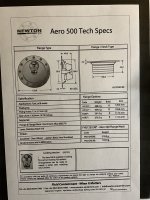
Looking for a fuel cap solution for jet A. Haven’t build RV 14 wings yet. I have been looking at Newton Aero 500 series. Will these caps work, please advise.
 
I had a nice conversation with Delta Hawk at Oshkosh. They seem very focused on certified. They have or are developing new FWF kits for kit planes, but the price is eye watering. Also they no longer provide prop and had some explanation why. With FWF and prop you are looking at close to $100K, my ball park rough est. May bee $90K.

I forgot what they said about aerobatics. They did say they are working on higher HP engines. It seems like a sweet spot in small size aircraft diesels that have come to market is about 180 HP or slightly higher. Clearly if you want a fire breathing RV you are best to go with a IO390 (210HP) or IO540 (235-360HP) thunderbolt Lyc. In cost and performance hard to beat. In fuel Econ diesel rules, but the savings may not pay for it self. Reliability? To be proven. I am never a fan of PSRU's. Which is why I like the Delta Hawk, direct drive like a Lyc.

The never ending debate of fuel availability? My opinion, In my life time ICE is not going away anytime soon (if ever in 21st century and beyond). Petrol fuel refined into 100LL aviation fuel or RUG road vehicle fuel will be around for the foreseeable future. Cost of fuel is another matter of speculation, as it involves Geo political and world market factors no one can predict. There is a lot of dinosaur juice in the ground.

As far as environment. I have a clean diesel in my vehicle, with DPF, Catalytic (three). I can't see these airborne diesels being super clean. The devote advocates who believe climate is all man made and we must save the planet by "zero" emissions, will not stop going after anything that uses fossil fuels, gas or diesel. It is debatable if it's effective in adjusting the global thermostat to any fraction of a degree. Impossible to really measure. Climate changes man or no man. The issue is political power which I have no comment. For now I am going to fly my Lyc with 100LL and be happy. I look forward to seeing these delta hawks fly. I saw a twin velocity with delta hawks taxi by. I would not really notice it if not clued into the fact it had delta hawks, which is a good thing. What I really want is DATA... cruise and max speed. and miles per gallon, FF, Takeoff and Climb performance,
 
According to vans web site the Harrell prop goes for about 18000 so more or less the price delta for the lucking and Deltahawk is about the same and the wait is over Certified engine FWF package is the development stage fingers crossedp
 
According to vans web site the Harrell prop goes for about 18000 so more or less the price delta for the lucking and Deltahawk is about the same and the wait is over Certified engine FWF package is the development stage fingers crossedp
I’d be willing to bet that the price of the DH is not going to be anywhere near equal to the Lycoming…they may want to target it but I’d be surprised if they were able to meet it.
 
About the same as a Lycoming:
390 Thunderbolt - $74,889
Prop - $11,871
FWF kit - $11,705
Total - $98,465
You are going for the GOLD and no offense, I think you misleading with apples and oranges. First the DH is 180hp and the IO390 is 210HP.

The FWF (accessory) kit from Van is $2300. Now if you are talking about the FINISHING KIT (which has FWF), that is way more than just FWF parts. Apples and Oranges. If you want to do the math, figure out what deleting parts from Van's finishing kit saves: Cowl may be? Engine mount may be? That would be fair. A Lyc powered Van's RV is going to be less money. See my below the line comments "Stop Reading" and "You don't need a Lycoming thunderbolt IO-390" if you want my build philosophy. Basically there are frugal ways to build.

Van's is designed for a Lycoming. If you change to "alternative" engines historically you add 100's of hours to your project and time to flight test. So add in cost of time. The sage wise advice I heard over the years, regarding alternative engines, seems to be true by my observation. The bolt on a Lycoming and go fly is my motto. I am boring. Alternative engines tend to fall short of promised expectations historically. Delta Hawk may be an exception, turn key set up that runs prefect out of the box exceeding all expectations. We do have bench marks from Dimond Aircraft and their diesel planes and the converted Cessna's. Cessna did offer a new diesel C182 for a short time but that went away. I assume low sales.

I am a diesel fan, But as a diesel owner It is not all a bed of roses. My VW TDI has HPFP (high pressure fuel pump) CR (common rail). Turbocharger and extensive emission control devices (DPF, 3 catalytics, 4 EGT's, 2 differential pressure sensors, 2 stepper motor controlled flappers, one on intake and one down stream exhaust, and low and high EGR). They make the CEL on dash glow on occasion. There are complications. Delta Hawk has no emission complexity, but it does have a supercharger and a turbo. Lycoming does not have either and makes more HP.

---------------------------------------------------------------------------------------------------------------------------------------------------------------------------------------------------


Stop reading if you don't want to hear my cheap skate opinion of building a kit plane. I think people go too far with wants vs need. A day/night VFR Vans' kit plane with 160 hp fixed prop is a blast to fly.

You don't need a Lycoming thunderbolt IO-390. It is like comparing a Porsche to a VW TDI diesel. No offense I love VW TDI diesels, I've owned one for 13 yrs and still have and drive, +50mpg real world, all day on freeway, full low end torque from idle, blast to drive. I'd love a Porsche as well, way more performance and cost, but the VW TDI diesel has so much low end torque and handles so well, plus gets great MPG. My VW diesel is complicated to get efficiency and clean emissions to BIN 3 standards. The delta hawk even without emissions, is more complicated with both turbo/supercharger than a Lycoming. I think delta hawk will be reliable in service, TBD, but Lyc is a known reliable engine. If I can buy a used delta hawk for $20K I'd be in. Ha ha, I'm a cheap-skate.

You do not have to buy the top of the line biggest, best, new everything and sub-out all the task: engine, panel, interior, paint. The price of a fancy RV-14 is over $250,000. **. That is insane to me. But than again $0.5M Cessna 172's is nuts. I built my first RV, a RV-4 with used O320 with Hartzell CS Prop for under $40k-45k with Pro paint and IFR (steam) panel. I saved the same way I did on my second project.

** Flight Chops did a 2 yr flying how much did it all cost break down video on his RV-14. He started his project before inflation and supply chain shortages. His RV-14 has the best of the best in my opinion. His total (spoiler alert).... + $250,000. It would be higher at todays prices. In the video the folks that maintain it talk about how complicated it is, making working on it harder. So not only keeping it simple saves weight, cost it makes maintenance easier.

Although this was a few years ago. I built an RV-4 (160HP/Hartzell/Steam Gauge IFR) for $40K and an RV-7 for $55k (180HP/Hartzell/GRT Glass/ x2 autopilot/no paint or IFR navigator yet)* with used props and engines,. It is harder to build a sub $60K RV -7 like I did today, but possible. RV-7 kit price has over doubled since I bought mine in the early 21st century. But you can still bargain hunt for used equip. However top of the line new prop and engine, well it will be expansive any way you go.


*I can do paint (DIY) and GPS175 under $10K so puts my RV-7 at $65K. That is less than the Delta Hawk FWF alone. So you can see my problem. I am a cheap skate. Ha ha.


one-million-dollars.jpg
 
Last edited:
About the same as a Lycoming:
390 Thunderbolt - $74,889
Prop - $11,871
FWF kit - $11,705
Total - $98,465
I have seen the price comparison to the Thunderbolt version of the IO-390 and agree that the difference between the Deltahawk and Lycoming option will likely not be all that great. However, that is the most expensive Lycoming option and arguably does not add performance to the non-thunderbolt version of the same engine. Further, The 200 HP IO-360 is also an engine option which lowers the cost even further, with (arguably) minimal reduction in overall performance. So, for the purposes of being thorough and for the (tiny) hope that Detlahawk sharpens their pencils a little more and tries to do a bit better than be "not too much more than the next most expensive option", below are the costs if purchasing the other engine options, prop, firewall forward etc. through Van's:

YIO-390-EXP119 - $59,778
Solid state magnetos (either type offered through Van's) - $2,778
Prop - $11,871
FWF Kit - $11,705
Total - $86,132

Full package price if using the "Standard" 390 - $82,632
Full package price if using the 200 HP 360 - $81,354.

All three options designed by Van's, built, tested and approved.

I really want Deltahawk to succeed for all of the reasons brought up so far. However, I do believe that for them to succeed, they need to have engine options that are more cost competitive with Lycoming. Or Continental. The argument about being more fuel efficient is not nothing, but a pretty solid counter-argument is that none of the maintenance costs for the DH engine have been proven, none of the performance numbers (in an RV) have been proven, and the actual longevity of the motor has not yet been proven. Putting forth an additional $25K (or more) on something that just isn't there yet is a bit of a tough ask. None of this even considers the lower cost 180 HP engines used in the other RVs.
 
I have seen the price comparison to the Thunderbolt version of the IO-390 and agree that the difference between the Deltahawk and Lycoming option will likely not be all that great. However, that is the most expensive Lycoming option and arguably does not add performance to the non-thunderbolt version of the same engine. Further, The 200 HP IO-360 is also an engine option which lowers the cost even further, with (arguably) minimal reduction in overall performance. So, for the purposes of being thorough and for the (tiny) hope that Detlahawk sharpens their pencils a little more and tries to do a bit better than be "not too much more than the next most expensive option", below are the costs if purchasing the other engine options, prop, firewall forward etc. through Van's:

YIO-390-EXP119 - $59,778
Solid state magnetos (either type offered through Van's) - $2,778
Prop - $11,871
FWF Kit - $11,705
Total - $86,132

Full package price if using the "Standard" 390 - $82,632
Full package price if using the 200 HP 360 - $81,354.

All three options designed by Van's, built, tested and approved.

I really want Deltahawk to succeed for all of the reasons brought up so far. However, I do believe that for them to succeed, they need to have engine options that are more cost competitive with Lycoming. Or Continental. The argument about being more fuel efficient is not nothing, but a pretty solid counter-argument is that none of the maintenance costs for the DH engine have been proven, none of the performance numbers (in an RV) have been proven, and the actual longevity of the motor has not yet been proven. Putting forth an additional $25K (or more) on something that just isn't there yet is a bit of a tough ask. None of this even considers the lower cost 180 HP engines used in the other RVs.
I thought the YIO series were naturally aspirated? Correct? If so, that Lycoming will have less power around 4K MSL as the DH180 maintains full power to a much higher critical altitude. I forget exactly, what the altitude was but I think 18K.
Point is, you are still comparing apples and oranges. To match the DH180 you need a turbo normalized TIO-360. Otherwise, you are not matching the performance envelope.

Tim
 
I think Deltahawk has just priced a lot of people out of buying this engine. They are looking at 110,000 for the full FWF package without the prop so roughly 125,000. That is the price of the 180 hp engine. I sure hope they can do better with the price
 
I think Deltahawk has just priced a lot of people out of buying this engine. They are looking at 110,000 for the full FWF package without the prop so roughly 125,000. That is the price of the 180 hp engine. I sure hope they can do better with the price
I will bet that they don’t even make that target; when all is said and done, I’d wager it’s going to be more.
 
If they can beat Lycoming delivery times, the price difference won't matter that much. Wait 2 years for a Lycoming, or get a Deltahawk in a couple of months, the price becomes less important. Especially when comparing an RV-10 to a Cirrus. The 235hp version will be nice for the RV-10. It may be at the low end of the recommend HP for the RV-10, but it keeps that HP up to about 17,000 feet. Much above sea level density altitude and that 25 extra horses go away pretty quick.
 
I think Deltahawk has just priced a lot of people out of buying this engine. They are looking at 110,000 for the full FWF package without the prop so roughly 125,000. That is the price of the 180 hp engine. I sure hope they can do better with the price
When I talked to them at OSH they were throwing around ~$110K for the RV-14 firewall forward package including the DHK200 (200hp), however like others I got mixed feedback on how firm that price was and whether or not it included the prop, which isn't a trivial thing when you're talking about a carbon fiber Hartzell. I doubt they will know the final number until they get the FWF package done, and they may not even know yet how much it costs to produce their engines.

There's a reason why nobody else has FAA-certified a clean-sheet piston aircraft engine in 60+ years...the development costs are enormous, and once you get it done you're faced with a low volume market and high liability. Most companies and investors do the math and rightly conclude that there are better products/markets to invest in (at best) and at worst it may not even be possible to recoup the investment cost and turn a profit. Kudos to DeltaHawk for having the perseverance and grit to get this far, but now they are walking the tightrope to make it a successful business. Price the engines too low and they lose money. Price them too high and so few people can afford it that volumes drop and they lose money that way too. They will probably have better prospects with military and certified aircraft applications...the gov't will be willing to pay for DH powered UAVs given the huge logistical advantages of being able to use the same fuel as the rest of their turbine/diesel fleet, and anyone who can drop $1 million on a new Cirrus isn't going to flinch at an extra $30-50K. I also think the additional cost might make sense for flight training fleets which rack up a lot of hours...the more hours you fly the more you save on fuel cost and also maintenance/overhaul costs (with caveat that these savings are yet to be proven by real world operation with the DeltaHawk).

For homebuilts, the additional cost puts it out of reach for many, and even those who can foot the bill will have to consider whether it's worth it...you'll never recoup that investment at the pump flying ~100 hrs a year, and even if you are able to get the money back out of it when you sell the airplane someday, the opportunity cost of tying up that much capital for that long is sobering. Then again, I'm constantly amazed at how many RV builders will pay $15K for a custom paint color and chrome rocker covers (aka Thunderbolt) with no measurable performance benefit over the boring Lycoming Gray. So maybe there will be plenty of folks who can easily afford and justify the extra expense...I dearly hope DH is successful and provides some much needed competition in the piston engine market. Fingers crossed...
 
Last edited:
When I talked to them at OSH they were throwing around ~$110K for the RV-14 firewall forward package including the DHK200 (200hp), however like others I got mixed feedback on how firm that price was and whether or not it included the prop, which isn't a trivial thing when you're talking about a carbon fiber Hartzell. I doubt they will know the final number until they get the FWF package done, and they may not even know yet how much it costs to produce their engines.
I emailed DH earlier this year. They said a target price is $110K including prop for FWF for the RV14 using the DH180. While for the Velocity V-Twin, they were suggesting a target around $120K with prop for the DH200s when they become available. Notice: I said target price.

We agree that time will tell if they hit the target, or even how close to the target they get.

In terms of budget, do not forget the fuel costs. Jet-A is often cheaper then avgas, and the unleaded avgas solutions raise the price another buck or two. Then consider the lower fuel flow by volume (by weight difference should be negligible). With a fuel flow around 1GPH lower, and at least $3 per gallon cheaper. That might have a pretty descent pay back.
Oh, I am ignoring mogas. Generally not available away from the home dome, and even then depends on the local airport giving permission (or not knowing and turning a blind eye).

In terms of investment. DH went under multiple times, the current majority owners (might be sole owners, have not seen definitive statements either way) would likely have little concern or worry about the previous invested millions. e.g. Maybe there was 200 million spent. But the current owners only care about the spending for the past decade, not the past thirty years.

Tim
 
Back
Top