sansoneservices

Well Known Member
Worn out subject and I have read the posts regarding the issue.
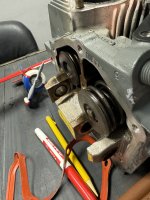
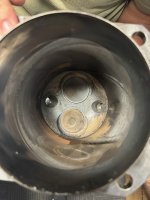
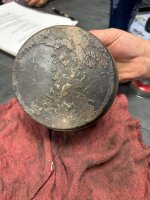
Yesterday I was in 75% cruise power, peak egt to set mixture, cylinder temps were all around 320°, rpm 2350 and I detected a slight miss with a faint rumble sound (4hr flight). Landed to uncowl/inspect. Pulled top plugs and did a "thumb" compression test. Found nothing wrong, performed high power run-up, took off. Today I used the valve wizard and went straight to the #2 jug.
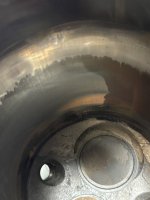
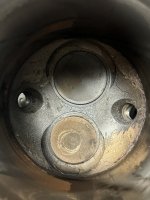
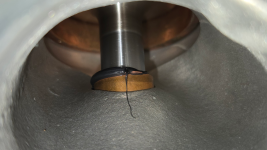
Ex valve sticking (again) 😳 last year I used a 1/2" ball hone and I'm thinking it wasn't aggressive enough. Apologies for starting another sticky valve thread
 
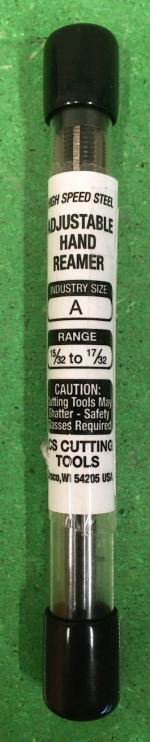
well, enough experience here with freeing valves from C90s to O-320/360s and 390s, and though all due respect to gone Bob with whom I argued several times about it, wouldn't use a ball hone for this job... so, at the risk of repeating myself, I've always used an adjustable reamer for the job, with excellent and repeatable results.
The advantage is logical and obvious, to me at least, in that if properly adjusted, only the coke deposit on the combustion chamber will be removed iso of honing the whole length of the guide which usually, again usually, doesn't need it.

Your case is a bit off though, as most of those happen with warning signs whilst starting the engine from cold, and seldom happen once in flight. Yes, also those happen as I experienced myself once following a long descent from altitude...

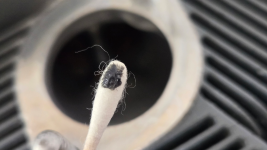
One tip if using leaded fuel, be sure to check the valve stem thru the lower spark plug hole for lead deposits, and also clean it before reinstalling the valve into the guide.

Thanks for sharing.
 
Last edited:
The ball hone could work just fine. However how it is used, and how much deposits vs guide material is removed, could end up being highly variable. Really the only way to tell would be some of pin gauge or inside micrometer.

I don't think it would hurt to repeat with a reamer and dress with a hone after that.
 
Worn out subject and I have read the posts regarding the issue.
Yesterday I was in 75% cruise power, peak egt to set mixture, cylinder temps were all around 320°, rpm 2350 and I detected a slight miss with a faint rumble sound (4hr flight). Landed to uncowl/inspect. Pulled top plugs and did a "thumb" compression test. Found nothing wrong, performed high power run-up, took off. Today I used the valve wizard and went straight to the #2 jug.
Ex valve sticking (again) 😳 last year I used a 1/2" ball hone and I'm thinking it wasn't aggressive enough. Apologies for starting another sticky valve thread
Could you post your CSV of the last 2 engine starts? I have a theory on how to detect these early on. If you post, you'll need to zip the files. Thanks
 
The ball hone does take a bit of time to do its job. Possibly you went too quick. Next time be sure that you don’t stop honing while the guide ID is still black. You should be seeing bronze or shiny metal before stopping. It is not aggressive like reaming. Going a bit too far won’t take off any material.
 
It is not aggressive like reaming

which, if the reamer is an adjustable one and is properly adjusted, less aggressive since it won't remove any of the guide's material, but only the carbon crud.
Applying grease on the reamer and minutely adjusting it whilst working should not attack the guide.

Done carefully this method will also warrant the concentric and cylindrical properties of the guide, which a honing ball will not.

I once worked on a heavily contaminated valve assy where the inner bore of the guide was contaminated in its middle, and the reamer helped clean this area only.
 
Your case is a bit off though, as most of those happen with warning signs whilst starting the engine from cold, and seldom happen once in flight.

Can you elaborate on the symptoms when starting? AFAIK mine has only shown itself to be sticky while in flight, with the same symptoms as the OP. Occasional "burp" in cruise. Reamer to clean out the deposits and back to normal...
 
Can you elaborate on the symptoms when starting? AFAIK mine has only shown itself to be sticky while in flight, with the same symptoms as the OP. Occasional "burp" in cruise. Reamer to clean out the deposits and back to normal...
search for "morning sickness", as in the engine not immediately firing on the 4 (or 6, or 8) cylinders, coughing, maybe farting (😉), and then normalise within some seconds to a couple of minute (and only in out of the ordinary circumstances would I then go flying, the more so on a 4 banger, as loosing power on one will be hazardous to say the least).
The culprit cylinder is then diagnosed either by hand feel or EMS if so equipped.
 
Can you elaborate on the symptoms when starting? AFAIK mine has only shown itself to be sticky while in flight, with the same symptoms as the OP. Occasional "burp" in cruise. Reamer to clean out the deposits and back to normal...
Startup was difficult, usually 2 blades. She would try to start/run but obvious something was wrong. Symptoms like "Morning Sickness".
 
I was using 20w50 and had sticky valves on a new 390. I switched to 100w.
Can someone create a poll (I've looked and maybe I don't have the rights to do this) that help at least give us directional input that oil might be a factor for a sticky valve? It appears the vast majority of the incidents of sticky valves has been with users of Phil 66 20W50. I have not seen an incident of a documented sticky valve with an engine using Aeroshell 15W50. The oil chemistry is very different between the two. Just "feels" to me there is a correlation but no data. I was using Phil 66 20w50 and saw for just seconds my number 2 cyl. was slow to rise. Did a borescope and could see some black build-up around my valve guides. I switched to AS 15W-50 and stopped seeing the number 2 cyl. delay. I came close to doing a wobble test but decided to wait to see if the delay came back. Never did after over 500 hrs. IO390 engine. Most of the time it's number 2 cylinder and that is most of the time the hottest cylinder of the 4. Experts like Mike Busch "feel" a cold cylinder enhances a stuck valve which goes against the data at least for a Lycoming engine. "The truth is out there"
 
Last edited:
Can someone create a poll (I've looked and maybe I don't have the rights to do this) that help at least give us directional input that oil might be a factor for a sticky valve? It appears the vast majority of the incidents of sticky valves has been with users of Phil 66 20W50. I have not seen an incident of a documented sticky valve with an engine using Aeroshell 15W50. The oil chemistry is very different between the two. Just "feels" to me there is a correlation but no data. I was using Phil 66 20w50 and saw for just seconds my number 2 cyl. was slow to rise. Did a borescope and could see some black build-up around my valve guides. I switched to AS 15W-50 and stopped seeing the number 2 cyl. delay. I came close to doing a wobble test but decided to wait to see if the delay came back. Never did after over 500 hrs. IO390 engine. Most of the time it's number 2 cylinder and that is most of the time the hottest cylinder of the 4. Experts like Mike Busch "feel" a cold cylinder enhances a stuck valve which goes against the data at least for a Lycoming engine. "The truth is out there"
I fully agree, 15w50 will be in my sump next oil change. Also Phillips now has their "Victory" 20w50 and they advertise it's the greatest thing since sliced bread
 
Unfortunately, the forum no longer has polling capability. We could possibly use one of the polling websites (Survey Monkey, for example). However, it would mean posting a link to another website, so I think we would need Doug's blessing.
 
Can someone create a poll (I've looked and maybe I don't have the rights to do this) that help at least give us directional input that oil might be a factor for a sticky valve? It appears the vast majority of the incidents of sticky valves has been with users of Phil 66 20W50. I have not seen an incident of a documented sticky valve with an engine using Aeroshell 15W50. The oil chemistry is very different between the two. Just "feels" to me there is a correlation but no data. I was using Phil 66 20w50 and saw for just seconds my number 2 cyl. was slow to rise. Did a borescope and could see some black build-up around my valve guides. I switched to AS 15W-50 and stopped seeing the number 2 cyl. delay. I came close to doing a wobble test but decided to wait to see if the delay came back. Never did after over 500 hrs. IO390 engine. Most of the time it's number 2 cylinder and that is most of the time the hottest cylinder of the 4. Experts like Mike Busch "feel" a cold cylinder enhances a stuck valve which goes against the data at least for a Lycoming engine. "The truth is out there"
I am a firm believer that the issue is oxidized oil in the guides from too much heat. The temp at which oil becomes coke would seem to be at least somewhat dependent upon the base stocks used as well as the additive package. Seems plausible that some oil blends could form coke at lower temperatures than others.

In your case, I don’t think a sticking valve could make so small of an impact on egt. More likely the change made a small difference in how the rings moved in the lands, creating a slight change in compression.
 
Worn out subject and I have read the posts regarding the issue.
Yesterday I was in 75% cruise power, peak egt to set mixture, cylinder temps were all around 320°, rpm 2350 and I detected a slight miss with a faint rumble sound (4hr flight). Landed to uncowl/inspect. Pulled top plugs and did a "thumb" compression test. Found nothing wrong, performed high power run-up, took off. Today I used the valve wizard and went straight to the #2 jug.
Ex valve sticking (again) 😳 last year I used a 1/2" ball hone and I'm thinking it wasn't aggressive enough. Apologies for starting another sticky valve thread

Samesonservice - did you make any changes after recovery from the first event? Changes could be oil type, oil pressure, cht, fuel additives, etc.
 
Maybe you should consider running some mogas?
How about an additive like Avblend (formerly Lenckite)
The first will take away the bad and ugly, namely lead.
The latter will add nothing really but act as a superior metal wetting agent.
Just another idea after you are done reaming the guides again.
 
my 2 cents, if your plugs have lead balls at annual then your exhaust valves probably have lead build up too.
Find a Robinson helicopter mechanic. They do this inspection every 300 hours on a Robinson helicopter because it is required. This is the week is part of a Lycoming engine, get her done Turbo out.
 

Attachments

  • IMG_2453.jpeg
    IMG_2453.jpeg
    1.4 MB · Views: 56
  • IMG_2452.jpeg
    IMG_2452.jpeg
    2.2 MB · Views: 48
  • IMG_2451.jpeg
    IMG_2451.jpeg
    2.5 MB · Views: 45
  • IMG_2450.jpeg
    IMG_2450.jpeg
    2.4 MB · Views: 40
  • IMG_2448.jpeg
    IMG_2448.jpeg
    3.6 MB · Views: 55
Maybe you should consider running some mogas?
How about an additive like Avblend (formerly Lenckite)
The first will take away the bad and ugly, namely lead.
The latter will add nothing really but act as a superior metal wetting agent.
Just another idea after you are done reaming the guides again.
I'm considering AVblend and quitting the Techron fuel additive. Carbon is mostly removed from 15hrs flying with the Techron carbon remover
 
my 2 cents, if your plugs have lead balls at annual then your exhaust valves probably have lead build up too.
Find a Robinson helicopter mechanic. They do this inspection every 300 hours on a Robinson helicopter because it is required. This is the week is part of a Lycoming engine, get her done Turbo out.
Lead has lubricity and basically won't stick to anything. It tends to form in spheres, so it can get trapped in the small clearance of a plug, but that is unique. If lead was forming in the valve guide, it would naturally fall out, just as it does on a plug. You can tap a plug on your bench and watch the lead balls fall out. Obviously that damages the plug, so we use a pick. But if you have ever done it, you would know it is not sticking to anything, it just grows in size until it is captured in the clearance. Valve to guide clearance is a couple thou and filled with oil, so no room for that to happen

Regardless of what Mike Busch says, it is HIGHLY improbable that lead is the culprit in sticking valves.
 
Lead has lubricity and basically won't stick to anything.
Not just Mike Bush but a lot of folks would disagree with you.
Lead from leaded fuels (like avgas) can build up on valve stems and in valve guides. This creates a crusty, stubborn deposit (often lead oxybromide) that can restrict the space between the valve stem and the guide, causing valves to stick or hang open.
My personal experience with this very well known issue was with the notorious Franklin engine. Valve sticking was so bad in Franklin 165hp engines that using mogas became the de facto recomendation of frustrated owners.
Burning mogas pretty much cured that problem.
 
I added Chevron Techron fuel additive according to directions. It's a known carbon remover. Borescope shows it's removing carbon
I've considered using this. If you've had a modern direct injection car engine, the carbon buildup on the back of the intake valves gets intense and Techron does help clear that buildup as much as a chemical can. I paused before using this in an older RV with it's various tank sealants, rubber fuel lines, and O rings. Did you have any issues?
 
Lead from leaded fuels (like avgas) can build up on valve stems and in valve guides. This creates a crusty, stubborn deposit (often lead oxybromide) that can restrict the space between the valve stem and the guide, causing valves to stick or hang open.
+1, and my observation too.
Maybe less so in the guides, but I've had to clean valve stems on older engines which were severely lead contaminated. Scotch Brite was not enough to remove the stuff, had to resort to emery cloth first.

Re oils, 🍿🍿🍿 is ready, nice and warm:
As I've stated in yet another thread about valves sticking, I won't touch the Philips brand with a 20' long pole since all the stuck I, and others (the ones I helped) have had, were using this very popular oil.
2'300h on my 1st O-360, now 350h on my 2nd one, all oiling provided by Total with a touch of Camguard as snake oil.
 
+1, and my observation too.
Maybe less so in the guides, but I've had to clean valve stems on older engines which were severely lead contaminated. Scotch Brite was not enough to remove the stuff, had to resort to emery cloth first.

Re oils, 🍿🍿🍿 is ready, nice and warm:
As I've stated in yet another thread about valves sticking, I won't touch the Philips brand with a 20' long pole since all the stuck I, and others (the ones I helped) have had, were using this very popular oil.
2'300h on my 1st O-360, now 350h on my 2nd one, all oiling provided by Total with a touch of Camguard as snake oil.
What oil are you using specifically?
 
I am not trying to steer the cart down the slippery slope of oil choices and snake oil options.
Simply telling the OP, if you want a different outcome, perhaps you should try a different approach to remedy your sticking valves.
 
What oil are you using specifically?
hate this question since I cannot tell if that or another oil is the better of, just wanted to express my experience and opinion about the Philips 66 stuff.
I'm not related in any way, private or professionally to any brand or type.

PS
Not sure it is available in the US, but my engines run on Total AERO DM 15W-50, whatever that means.
 
Just a quick thought or observation before we blame or go down the "it's always Phillips 20/50" path. I wonder what the market share is for Phillips? The reason I ask is that if we're looking for a needle in a haystack, the needle is much easier to find if it's large. In some cases above, it appears that the sample size is 1 or 2.

Painting with a broad brush, in general Phillips X/C 20/50 is about $9 per quart while Aeroshell 15-50 is roughly 12.50 per quart (source: Spruce with same approximate spread at McFarlane but cheaper for each with X/C at 6.70 and 15-50 at 9.80). Based on the law of supply and demand, could we also hypothesize that the reason we're seeing Phillips as the possible culprit because it's more common?

Note that I don't have an opinion and I'm just as interested in finding the cause as everybody else; but, it's pretty easy to find a black cow in a herd of Angus.

I just wonder if we're seeing X/C because it's more common?
 
Last edited:
A few thoughts I've never seen mentioned here. We always get into the debate of honing vs reaming, but no one ever makes a compelling case for one vs the other. Reaming makes a perfectly round hole with a smooth finish. Valve guides typically don't wear evenly; due to the rocker arm tip sliding across the stem, the wear is somewhat oblong. So, while the newly reamed bore will be round, the top and bottom of the guide may have carbon remaining at the ends.

Of the honing adherents, how many of us stroke in and out quickly enough to generate a cross-hatch finish? I do, because I'm trying to emulate a cylinder wall finish. And cylinders are honed that way to hold oil on the surface for lubrication.

After reaming, we have a shiny and smooth hole which shouldn't hold oil as well as a cross-hatched honed surface. Is that a problem? I don't really know.

Like so many things here, technique is important. And reaming may be easier to do in an effective way without training? With honing, it's critical to flood the surface with WD-40 etc, and to do it long enough to get all the carbon out. And to stroke in and out quickly to get a cross-hatch finish. And to clean out the remaining abrasive thoroughly. The ball hones also follow all of the surface, oblong ends and all.

Has anyone ever removed a valve from a NEW Lycoming head and cleaned out the assembly grease and inspected the guide bore finish? Is it smooth from a reamer or does it have cross-hatch like a cylinder? I have a new set, so looks like I need to pull a valve and inspect. Knowing that Lycoming only recommends reaming, I'd assume that's how they do it on the line. One strange thing is that they use a thick moly grease on assembly in the guides. See pics below.

So, all of this is just to point out the differences between methods and to get you to think; not to definitively say which method to use.

1781037511288.png1781037589066.png