Darren S

Well Known Member
Hello group. I needs some help from the carb experts on here.

The details: Lycoming O-360, overhauled carb purchased several months ago from ACS. Carb is a Marvel Schebler MA 4-5 (model number is 10-5193). Engine has 100 hours. The original carb had a fuel leak, hence the purchase of an overhauled one.

The problem: upon accelerating after idle warm up, there is a noticable stumble and then recovery
: on short final, idling at about 1000 RPM, when I advance the throttle relatively quickly .... stumble then recovery
: while flying, if I go to idle and the RPM is around 1000, if I advance the throttle slowly, at around 1500 RPM, a noticable stumble and then recovery.

I've adjusted the idle mixture screw many times. It makes no difference.

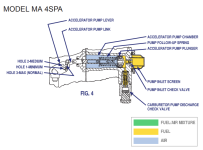
There is no external accelerator pump adjustment on this model of carb.

When advancing the throttle arm there is a "healthy" squirt of fuel .

To my uneducated mind it seem to be needing more fuel when I rapidly advance the throttle.

SUGGESTIONS PLEASE !

Thank
 
Hello group. I needs some help from the carb experts on here.

The details: Lycoming O-360, overhauled carb purchased several months ago from ACS. Carb is a Marvel Schebler MA 4-5 (model number is 10-5193). Engine has 100 hours. The original carb had a fuel leak, hence the purchase of an overhauled one.

The problem: upon accelerating after idle warm up, there is a noticable stumble and then recovery
: on short final, idling at about 1000 RPM, when I advance the throttle relatively quickly .... stumble then recovery
: while flying, if I go to idle and the RPM is around 1000, if I advance the throttle slowly, at around 1500 RPM, a noticable stumble and then recovery.

I've adjusted the idle mixture screw many times. It makes no difference.

There is no external accelerator pump adjustment on this model of carb.

When advancing the throttle arm there is a "healthy" squirt of fuel .

To my uneducated mind it seem to be needing more fuel when I rapidly advance the throttle.

SUGGESTIONS PLEASE !

Thank
An off idle stumble on acceleration can be one or several things. Always start with idle mixture first. It may or may not be part of the problem, but it is an important foundation for further work and does have an impact on off idle acceleration. I recommend the lowest MAP approach and have posted instructions before. Next you need an educated guess on whether the accel pump shot is too much or too little. Do some research here. Generally too little shot causes a "bog," referred to as a lean bog. It is noticeably different to the trained ear than too much. The bog is smooth and stable, like a fall off followed by a run up. Too much is similar but rougher, more like choking/coughing., often with a puff of black or grey smoke from the exhaust.

There are several parts in the accel pump area that could be a problem, but need to first figure out if there is too much or too little shot. While haven't worked on that carb recently, there is almost always an external linkage to a lever arm controlling the accel pump and usually adjustable via diff holes in the arm, though the extra holes could be at the throttle plate. Do more research here.

If you advance the throttle from 1000 slowly, does it still stumble? what MAP are you getting at idle?
 
Last edited:
Wow. I just replaced my Marvel Schebler carb last week and I'm in the same predicament. Mine stumbles around 1200-1400 rpm. Barely noticeable unless you're really paying attention. I thought it may be from the throttle cable resistance as the carb throttle lever moves from aft to forward. Can't wait for the experts to chime in....
 
Last edited:
Wow. I just replaced my Marvel Schebler carb last week and I'm in the same predicament. Mine stumbles around 1200-1400 rpm. Barely noticeable unless your really paying attention. I thought it may be from the throttle cable resistance as the carb throttle lever moves from aft to forward. Can't wait for the experts to chime in....
start with idle mixture. they usually come extremely fat / rich and this can create symptoms like yours.
 
The Marvel-Schebler MA-4-5 is the standard and correct carburetor series for the Lycoming O-360 engine family. However, you cannot bolt just any MA-4-5 carburetor onto your engine. The generic designation "MA-4-5" refers only to the body size and float type. To ensure safety and proper engine performance, you must match the exact Marvel-Schebler part number to your specific Lycoming O-360 engine suffix (e.g., -A1A, -A4M). Different part numbers feature unique internal jetting, venturi sizes, and economizer settings tailored to that exact engine model
 
An off idle stumble on acceleration can be one or several things. Always start with idle mixture first. It may or may not be part of the problem, but it is an important foundation for further work and does have an impact on off idle acceleration. I recommend the lowest MAP approach and have posted instructions before. Next you need an educated guess on whether the accel pump shot is too much or too little. Do some research here. Generally too little shot causes a "bog," referred to as a lean bog. It is noticeably different to the trained ear than too much. The bog is smooth and stable, like a fall off followed by a run up. Too much is similar but rougher, more like choking/coughing., often with a puff of black or grey smoke from the exhaust.

There are several parts in the accel pump area that could be a problem, but need to first figure out if there is too much or too little shot. While haven't worked on that carb recently, there is almost always an external linkage to a lever arm controlling the accel pump and usually adjustable via diff holes in the arm, though the extra holes could be at the throttle plate. Do more research here.

If you advance the throttle from 1000 slowly, does it still stumble? what MAP are you getting at idle?
I don’t have a MAP gauge so I don’t know what it is. Yes. If I advance slowly it still bogs. On the ground and in the air.
 
start with idle mixture. they usually come extremely fat / rich and this can create symptoms like yours.
I’ve messed with the idle mixture many, many times but I haven’t tried it leaner than 1.5 turns out. ChatGPT was saying to start there and back it out (go rich). I will try leaner for sure if nothing comes up from this thread.
 
The Marvel-Schebler MA-4-5 is the standard and correct carburetor series for the Lycoming O-360 engine family. However, you cannot bolt just any MA-4-5 carburetor onto your engine. The generic designation "MA-4-5" refers only to the body size and float type. To ensure safety and proper engine performance, you must match the exact Marvel-Schebler part number to your specific Lycoming O-360 engine suffix (e.g., -A1A, -A4M). Different part numbers feature unique internal jetting, venturi sizes, and economizer settings tailored to that exact engine model
I have the A4M engine. I just bought what model number I pulled off.
 
The Marvel-Schebler MA-4-5 is the standard and correct carburetor series for the Lycoming O-360 engine family. However, you cannot bolt just any MA-4-5 carburetor onto your engine. The generic designation "MA-4-5" refers only to the body size and float type. To ensure safety and proper engine performance, you must match the exact Marvel-Schebler part number to your specific Lycoming O-360 engine suffix (e.g., -A1A, -A4M). Different part numbers feature unique internal jetting, venturi sizes, and economizer settings tailored to that exact engine model
I tried calling Tempest but they are closed today. I’ll try them on Monday. Hoping to get some solid advice before then. I have the A4M engine
 
Hello group. I needs some help from the carb experts on here.

The details: Lycoming O-360, overhauled carb purchased several months ago from ACS. Carb is a Marvel Schebler MA 4-5 (model number is 10-5193). Engine has 100 hours. The original carb had a fuel leak, hence the purchase of an overhauled one.

The problem: upon accelerating after idle warm up, there is a noticable stumble and then recovery
: on short final, idling at about 1000 RPM, when I advance the throttle relatively quickly .... stumble then recovery
: while flying, if I go to idle and the RPM is around 1000, if I advance the throttle slowly, at around 1500 RPM, a noticable stumble and then recovery.

I've adjusted the idle mixture screw many times. It makes no difference.

There is no external accelerator pump adjustment on this model of carb.

When advancing the throttle arm there is a "healthy" squirt of fuel .

To my uneducated mind it seem to be needing more fuel when I rapidly advance the throttle.

SUGGESTIONS PLEASE !

Thank
Stay away from AI when it comes to things that could affect your life. It will only tell you things that it has found on the net and repeat to you a LOT of miss information and if you don't know, it could be disastrous to you.
 
The Marvel-Schebler MA-4-5 is the standard and correct carburetor series for the Lycoming O-360 engine family. However, you cannot bolt just any MA-4-5 carburetor onto your engine. The generic designation "MA-4-5" refers only to the body size and float type. To ensure safety and proper engine performance, you must match the exact Marvel-Schebler part number to your specific Lycoming O-360 engine suffix (e.g., -A1A, -A4M). Different part numbers feature unique internal jetting, venturi sizes, and economizer settings tailored to that exact engine model
Even that may not be enough to get your carb matched to the engine. We must remember you can bolt on a -A4K or A4M or what ever other engine model you have on your data plate. But the intake you have, along with the mags or EI you have, paired with the exhaust, created a "unique" engine configurations that you have to tune to get them to run right. A prime example of that is when we got a O-320 engine off a Cessna 172 and put it on a RV-4. Everything should work but when it was all ready to fire up the engine and test it, the engine did not run right and we have to get the jetting/low idle mixture configured a little bit different for it all to work. RV's tend to breath better than most spam cans.
 
Stay away from AI when it comes to things that could affect your life. It will only tell you things that it has found on the net and repeat to you a LOT of miss information and if you don't know, it could be disastrous to you.
Totally agree! Call professionals or people with experience in these items. AI can really drag you down a road......
 
Totally agree! Call professionals or people with experience in these items. AI can really drag you down a road......
just went through a confusing experience with ai. Trying to fix a wiring issue. Ai tried to have me change wires that were ok. I corrected the Ai chat and it apologized for the mistakes.
I had some engine stumbles with my last airplane that was carbureted and after finding some debris in the tiny holes that are inside the carb, I was able to get the issue solved. I did have an expert who was knowledgeable about carbs.
 
Stay away from AI when it comes to things that could affect your life. It will only tell you things that it has found on the net and repeat to you a LOT of miss information and if you don't know, it could be disastrous to you.
So this is what we’ve come to 🙄😅…. It used to be one would turn the machine over to a qualified mechanic and now it’s…Chat GP, online Forum, back to AI, another forum attempt and eventually, the problem gets solved, If, the owner hasn’t run out of patience and/or $$ by throwing both at the problem.😅 Not a dig at the OP, just a comment on our race to the bottom and why the accident rate sure as hell seems to me to be running an upwards trajectory.
 
I had a similar experience with an O360 in my 4. It would only happen when the density altitude was high and this would catch your attention in the circuit.

My solution during the summer was to lean it out in the circuit and that solved my problem.
 
Had a similar issue caused by too high fuel level in the carb which was diagnosed on a bench check where fuel would overflow at the correct fuel psi. Was a bit of a head scratcher as the float was OK and properly adjusted and the needle valve needle looked good. Replaced the needle valve seat and all good.
 
So this is what we’ve come to 🙄😅…. It used to be one would turn the machine over to a qualified mechanic and now it’s…Chat GP, online Forum, back to AI, another forum attempt and eventually, the problem gets solved, If, the owner hasn’t run out of patience and/or $$ by throwing both at the problem.😅 Not a dig at the OP, just a comment on our race to the bottom and why the accident rate sure as hell seems to me to be running an upwards trajectory.
Responding to my own post bc this information came to me since I made the post….

I heard a jaw dropping statistic today from the Aircraft Mechanic's Union Rep. Prior to covid there were 800 Designated Aircraft Mechanic Examiners (DMEs). These are the most experienced, respected and senior guys in the field who have become FAA Designees to evaluate, test and certify new aircraft mechanic candidates. At one point between covid and now, that number dropped to 64!! How does an industry loose 92% of it's expertise without that having a huge, profound, and long-term negative effect on aircraft safety and mobility? Wow.
 
So this is what we’ve come to 🙄😅…. It used to be one would turn the machine over to a qualified mechanic and now it’s…Chat GP, online Forum, back to AI, another forum attempt and eventually, the problem gets solved, If, the owner hasn’t run out of patience and/or $$ by throwing both at the problem.😅 Not a dig at the OP, just a comment on our race to the bottom and why the accident rate sure as hell seems to me to be running an upwards trajectory.
No offense taken. Yes the chatbots can be misleading and I knew I would generate some well deserved cheeky comments by titling my question the way I did. Thanks to all for the warnings. Advice is well received
 
I had a similar experience with an O360 in my 4. It would only happen when the density altitude was high and this would catch your attention in the circuit.

My solution during the summer was to lean it out in the circuit and that solved my problem.
Tell me more about your technique. When you're on downwind for final you would lean the mixture out to avoid the off idle stumble ? Is that correct ?
 
So far what I've gleaned from the thread is this:
- go leaner on the idle mixture screw
- clean the air filter
- possible debris inside the carb
- float level too high
- possible replacement of the needle valve seat

And the obvious ... use AI chatbots with caution.

I will be calling Tempest Aerogroup on Monday and speak to an expert. The carb is off and on the bench. The time to make adjustments is now before the Summer trip.
I will solve this and then I'll report back because I hate when I'm following a thread and there is no conclusion posted. Thanks to all for the help thus far.
 
what MAP are you getting at idle?
I’ve messed with the idle mixture many, many times but I haven’t tried it leaner than 1.5 turns out. ChatGPT was saying to start there and back it out (go rich). I will try leaner for sure if nothing comes up from this thread.
skip ai and research how to set idle mixture correctly. I have posted a process here several times. You don’t just turn the knob a bit and see if it gets better. You follow a process to set it where it belongs. Shouldn’t need to go in further than 1- 1.5 turns out, so probably idle mixture isn’t your issue, but you should still make the effort to set it correctly, as incorrect settings will magnify the issue.
 
Last edited:
So far what I've gleaned from the thread is this:
- go leaner on the idle mixture screw
- clean the air filter
- possible debris inside the carb
- float level too high
- possible replacement of the needle valve seat

And the obvious ... use AI chatbots with caution.

I will be calling Tempest Aerogroup on Monday and speak to an expert. The carb is off and on the bench. The time to make adjustments is now before the Summer trip.
I will solve this and then I'll report back because I hate when I'm following a thread and there is no conclusion posted. Thanks to all for the help thus far.
I suggested you make efforts to determine if the problem is being too lean on the accelerator shot or too rich. Research the difference in symptoms and figure out which one is your problem. Gave samples in my post. That will help determine Where you go next.

If your issue is isolated to ONLY the transition from low rpm to high power, unlikely any of the above are your problem. Your issue is limited to the transition from low, so don’t waste time on issues that would effect the entire performance envelope, assuming you have confirmed that.

Are you running excessively rich at high power with the red knob all the way in? How have you determined that? Fuel height issues will cause excessive richness in all phases and even make it impossible to get the idle mixture lean enough. Yes, this will give a rich stumble on acceleration, but will also create excessive richness in ALL phases. Full power will run like crap and drink fuel like crazy. Need to narrow down your symptoms. Is this a global issue or limited only to acceleration? If your don’t know how to do that, you need a helper.
 
Last edited:
I suggested you make efforts to determine if the problem is being too lean on the accelerator shot or too rich. Research the difference in symptoms and figure out which one is your problem. Gave samples in my post. That will help determine Where you go next.

If your issue is isolated to ONLY the transition from low rpm to high power, unlikely any of the above are your problem. Your issue is limited to the transition from low, so don’t waste time on issues that would effect the entire performance envelope, assuming you have confirmed that.

Are you running excessively rich at high power with the red knob all the way in? How have you determined that? Fuel height issues will cause excessive richness in all phases and even make it impossible to get the idle mixture lean enough. Yes, this will give a rich stumble on acceleration, but will also create excessive richness in ALL phases. Full power will run like crap and drink fuel like crazy. Need to narrow down your symptoms. Is this a global issue or limited only to acceleration? If your don’t know how to do that, you need a helper.
Ok Larry. I'll answer some of the above. I too don't think it's an idle mixture issue but yes, I'll verify that it is set correctly.

Determining whether it's a "lean bog" or a "rich bog" requires a trained ear as you said in your earlier post. I don't have that trained ear but from what you described it sounds like a "lean bog".

Of note is this:

The carb is on the bench at the moment. When I move the throttle arm from the idle position to say a quarter throttle, the accelerator pump squirts a stream of fuel that hits the underside of the butterfly and the fuel doesn't appear to enter the engine ! Just a splash that gets by the butterfly. Conversely, when I move the throttle arm from half to full, the butterfly is more open and a strong stream shoots out vertically. I find this weird but maybe this is how it's supposed to be ?? Please comment on this.

The problem as stated in the original post is a stumble from idle to say quarter throttle. I'm not running excessively rich. The plugs look great and I'm actually getting 7.2 gallons per hour fuel burn. This has been verified over many tank fulls. I find this low. I lean until slightly rough and then enrichen till smooth. This gives me EGT's in the low 1400. CHTs are 355'ish and oil temp is 200 on a 24 degree C day.

The engine sounds happy, smooth and I have NO complaints about it's performance other than this off idle issue, which sucks because when you need a shot of power on short final, the engine hiccups and that resumes normal operation.

Thanks for your help
 
Ok Larry. I'll answer some of the above. I too don't think it's an idle mixture issue but yes, I'll verify that it is set correctly.

Determining whether it's a "lean bog" or a "rich bog" requires a trained ear as you said in your earlier post. I don't have that trained ear but from what you described it sounds like a "lean bog".

Of note is this:

The carb is on the bench at the moment. When I move the throttle arm from the idle position to say a quarter throttle, the accelerator pump squirts a stream of fuel that hits the underside of the butterfly and the fuel doesn't appear to enter the engine ! Just a splash that gets by the butterfly. Conversely, when I move the throttle arm from half to full, the butterfly is more open and a strong stream shoots out vertically. I find this weird but maybe this is how it's supposed to be ?? Please comment on this.

The problem as stated in the original post is a stumble from idle to say quarter throttle. I'm not running excessively rich. The plugs look great and I'm actually getting 7.2 gallons per hour fuel burn. This has been verified over many tank fulls. I find this low. I lean until slightly rough and then enrichen till smooth. This gives me EGT's in the low 1400. CHTs are 355'ish and oil temp is 200 on a 24 degree C day.

The engine sounds happy, smooth and I have NO complaints about it's performance other than this off idle issue, which sucks because when you need a shot of power on short final, the engine hiccups and that resumes normal operation.

Thanks for your help
So…what you are describing, is perfectly normal, as the accelerator pump squirts fuel…if you imagine that happening as air is flowing into the carb and on into the intake tubes, carrying with it the distributed squirt of fuel on its way to get combusted.

I don’t use a primer line on my O-360, instead I just stroke the throttle 2-3 pumps, which sends those squirts of fuel right into the cylinders on startup where they ignite.

Now when running you are at first on the idle circuit…and in flight, when you transition onto the main jet, or accelerate the engine…it also squirt extra fuel into the carb mouth to help enrich the engine.

Someone above mentioned that there are multiple notches or slots in the accelerator pump arm, which you can provide more, or less “squirt” of fuel…so without being overly presumptuous…if you’re engine stumbles…and then catches…or offers a small backfire then continues…90+ percent of the time, you need to follow the instructions to INCREASE the accelerator pump volume by adjusting the arm for increase. This helps to dump in some extra fuel, say if you decided to go around….as you advance the throttle…you’ll get a stumble, then off it goes…..MORE FUEL…bigger accelerator squirt.

Backfires, are nearly always lean events….so more fuel stops that. Not always, but almost always.

Now if you get more of a cough….where as you advance the throttle…the engine sounds like it quits for a second, then continues…you can be too rich and the cough is waiting for the air to catch up…it’s pretty unusually to see that on standard, sea level-ish days, and Lycoming flat engines aren’t as bad as radials…

If you live in Pinedale Wyoming…versus Long Beach, CA…you do have to tweak a bit, to get good performance, but by patiently adjusting the carb and verifying each step as you go…you should be able to get good solid fuel distribution and a nice happy running engine.
 
So…what you are describing, is perfectly normal, as the accelerator pump squirts fuel…if you imagine that happening as air is flowing into the carb and on into the intake tubes, carrying with it the distributed squirt of fuel on its way to get combusted.

I don’t use a primer line on my O-360, instead I just stroke the throttle 2-3 pumps, which sends those squirts of fuel right into the cylinders on startup where they ignite.

Now when running you are at first on the idle circuit…and in flight, when you transition onto the main jet, or accelerate the engine…it also squirt extra fuel into the carb mouth to help enrich the engine.

Someone above mentioned that there are multiple notches or slots in the accelerator pump arm, which you can provide more, or less “squirt” of fuel…so without being overly presumptuous…if you’re engine stumbles…and then catches…or offers a small backfire then continues…90+ percent of the time, you need to follow the instructions to INCREASE the accelerator pump volume by adjusting the arm for increase. This helps to dump in some extra fuel, say if you decided to go around….as you advance the throttle…you’ll get a stumble, then off it goes…..MORE FUEL…bigger accelerator squirt.

Backfires, are nearly always lean events….so more fuel stops that. Not always, but almost always.

Now if you get more of a cough….where as you advance the throttle…the engine sounds like it quits for a second, then continues…you can be too rich and the cough is waiting for the air to catch up…it’s pretty unusually to see that on standard, sea level-ish days, and Lycoming flat engines aren’t as bad as radials…

If you live in Pinedale Wyoming…versus Long Beach, CA…you do have to tweak a bit, to get good performance, but by patiently adjusting the carb and verifying each step as you go…you should be able to get good solid fuel distribution and a nice happy running engine.
I appreciate that, and I understand what the accelerator pump does. There is NO external adjustment on this particular carb (MA 4-5) for the accelerator pump.

I’ve been reading and looking at exploded view diagrams for 2 days now and I don’t see any way to adjust it.

That was going to be the first question to the Tempest customer service guy on Monday.

I fly out of a field at 3400 msl. Cruise at 5500 to 6500 usually.

If anyone reads this and knows how to adjust the accelerator pump on this carb … please let me know ! Thanks.
 
Ask about whether your model carb is one of their altitude compensating models…I am not familiar with the dash number you mention…that may be the only issue and you may need to have that dialed in for your elevation,
 
Ok Larry. I'll answer some of the above. I too don't think it's an idle mixture issue but yes, I'll verify that it is set correctly.

Determining whether it's a "lean bog" or a "rich bog" requires a trained ear as you said in your earlier post. I don't have that trained ear but from what you described it sounds like a "lean bog".

Of note is this:

The carb is on the bench at the moment. When I move the throttle arm from the idle position to say a quarter throttle, the accelerator pump squirts a stream of fuel that hits the underside of the butterfly and the fuel doesn't appear to enter the engine ! Just a splash that gets by the butterfly. Conversely, when I move the throttle arm from half to full, the butterfly is more open and a strong stream shoots out vertically. I find this weird but maybe this is how it's supposed to be ?? Please comment on this.

The problem as stated in the original post is a stumble from idle to say quarter throttle. I'm not running excessively rich. The plugs look great and I'm actually getting 7.2 gallons per hour fuel burn. This has been verified over many tank fulls. I find this low. I lean until slightly rough and then enrichen till smooth. This gives me EGT's in the low 1400. CHTs are 355'ish and oil temp is 200 on a 24 degree C day.

The engine sounds happy, smooth and I have NO complaints about it's performance other than this off idle issue, which sucks because when you need a shot of power on short final, the engine hiccups and that resumes normal operation.

Thanks for your help
Sounds like all is where it should be except the transition enrichment, so we know where to focus.

Where the fuel squirts doesn't matter as long as it is in the throat. The pump linkage geometry is usually such that it tapers some, so less fuel per * of throt rotation off idle and greater amounts further. Does it appear that the fuel release from idle to qtr thr has some restriction in the stream that is causing it to shoot in a different place?

What is your fuel flow at WOT just after TO once stable at Vy and producing max power? Wondering if maybe you could be a bit lean globally. Do you find yourself moving the red knob less than before when leaning in cruise? If the jetting is too lean, it will require more shot. Some pics of the carb on the bench would be good so we can see what the acc pump linkage looks like. Sounds like an issue with the linkage where you are not getting enough of the acc pump shot in the early throt movement but more later if you can go from 1/4 thr to full with no stumble. Also possible you are getting too much. The tapering of the acc shot is sometimes influenced by the bend in the linkage arm and possible the rebuild guys didn't catch one where the previous carb had been mod'ed. Pics will help. Pics will also help us give ideas on how to experiment with chages to possibly address this.

So, you stumble going from idle to 1/4 throt. Are you nice and stable once at 1/4 thr? I would try to very slowly nurse the thr from idle to 1/4. If you can do this such that it runs well at every step along the way, we know the issue is acc shot. If not, could be jetting / bleeds.
 
Last edited:
Sounds like all is where it should be except the transition enrichment, so we know where to focus.

Where the fuel squirts doesn't matter as long as it is in the throat. The pump linkage geometry is usually such that it tapers some, so less fuel per * of throt rotation off idle and greater amounts further. Does it appear that the fuel release from idle to qtr thr has some restriction in the stream that is causing it to shoot in a different place?

What is your fuel flow at WOT just after TO once stable at Vy and producing max power? Wondering if maybe you could be a bit lean globally. Do you find yourself moving the red knob less than before when leaning in cruise? If the jetting is too lean, it will require more shot. Some pics of the carb on the bench would be good so we can see what the acc pump linkage looks like. Sounds like an issue with the linkage where you are not getting enough of the acc pump shot in the early throt movement but more later if you can go from 1/4 thr to full with no stumble. Also possible you are getting too much. The tapering of the acc shot is sometimes influenced by the bend in the linkage arm and possible the rebuild guys didn't catch one where the previous carb had been mod'ed. Pics will help. Pics will also help us give ideas on how to experiment with chages to possibly address this.

So, you stumble going from idle to 1/4 throt. Are you nice and stable once at 1/4 thr? I would try to very slowly nurse the thr from idle to 1/4. If you can do this such that it runs well at every step along the way, we know the issue is acc shot. If not, could be jetting / bleeds.
Given you have no MAP indication for us to look at, I would spend a bit of time insuring that you don't have an intake leak somewhere, causing excessive leanness that would be most prevelant from idle to 1500. This would loosely fit your symptoms. Leaks make a huge impact at idle at almost no impact at WOT.
 
I give the OP credit for being a smart, concerned and conscientious owner who is trying hard to solve an operating issue. I will also say this online approach is not the way to handle something like this. When I was a reasonably smart and experienced backyard mechanic working on my first airplane (an RV-3) back in the early 2000s my brother-in-law (who is an A&P) gave me the best advice possible. He said, “Just don’t mess with carburetors or magnetos”. Any failure or mistake here falls into that risk category of low probability but really high consequences. Good luck
 
By all means…per above….build an entire airplane, yet don’t choose to educate yourself on the decades old technologies of ignition and fuel distribution. Leave it as black magic for “professionals”…very sage.

Sorry to quip, but I can’t disagree more. Larry knows more than most about both…he offers solid advice and troubleshooting methodology and the whole point of the forum is to be able to share questions and knowledge, feel free to ask something and expect to get an answer.

It may or may not solve your problem, but you will develop a sense of direction. Take our aircraft to a “professional”, other than an RV guy, like Scott, Walt or several others…and good luck paying for their education. WAY better to ask questions here, in my opinion.

Your carburetors operation is not complicated and the more you understand about it, the less likely it will leave you stranded waiting for a professional to come help you when you get stuck. Same with your magnetos.

It sounds like the OP understand carburetors and the one he has doesn’t sound typical and there are quite a few different specific part numbers and I only really know a lot about mine…but for my two cents worth…just ask questions and you will likely get it sorted out in short order.
 
Tell me more about your technique. When you're on downwind for final you would lean the mixture out to avoid the off idle stumble ? Is that correct ?
I have the same stumble on 0-320 when at full rich. I was told this is due to mixture becoming excessively rich during transition from idle to main jet. The way I "fixed" it is by changing the landing and go around procedure. The M in GUMPS now means setting the mixture slightly lean which eliminates the stumble. Full rich before the WOT for a go around. This may be an idiotic way to address the problem, but it works for me. No more startle effect if I need to add a little power on short final.
 
I have the same stumble on 0-320 when at full rich. I was told this is due to mixture becoming excessively rich during transition from idle to main jet. The way I "fixed" it is by changing the landing and go around procedure. The M in GUMPS now means setting the mixture slightly lean which eliminates the stumble. Full rich before the WOT for a go around. This may be an idiotic way to address the problem, but it works for me. No more startle effect if I need to add a little power on short final.
If you post a picture of your carburetor, we can probably direct you to the linkage you adjust to change the ratio of fuel the accelerator pump squirts, having mixture out for taxi, to keep from plug fouling is sorta normal, but having mixture leaned out on final may not be the best idea and makes one more thing to remember, if you can simply adjust the problem away…
 
Given you have no MAP indication for us to look at, I would spend a bit of time insuring that you don't have an intake leak somewhere, causing excessive leanness that would be most prevelant from idle to 1500. This would loosely fit your symptoms. Leaks make a huge impact at idle at almost no impact at WOT.
I appreciate the comments on leaving certain issues to the experts but we build airplanes and learn along the way and hopefully this thread will help someone down the way. It's a community and everyone has their own comfort levels. Like flying. We share and we learn and do our best to be safe along the way.

Larry, I don't know what your background is but you seem very knowledgable on this issue and I thank you for your time. I'll answer the questions you asked above.

1. there doesn't appear to be any restriction in fuel release from idle to 1/4 throttle.

2. I don't have a fuel flow sender so I don't know WOT fuel flow but I will add this to the mix. If the red knob is full in the engine is "blubbering" rich at WOT and take off. All I do is pull the red knob out about 1/2". This has worked well for me and the engine is smooth and strong at this setting. Furthmore, in cruise, I lean about another 1/2" pull on red know and that gets me pretty close to the EGT, CHT and OT numbers listed above. I tweak it a bit after that but that is pretty much the amount I mess with the mixture knob for the flight.

3. I will try to upload some pics when I get home but as stated above, there are no external arms, on this carb to adjust for accelerator pump action.

4. *** this may have been missed but I think it's important *** When I advance the throttle quickly, stumble off idle, this is well documented at this point. BUT when I advance the throttle slowly, from idle there is the same stumble but it occurs right at around1500 RPM. It's definitely noticable but more SUBTLE because I'm moving the throttle slowly.

5. As for intake leaks ? I don't know where to check for this. I will have to do some more research on this but I have not checked for this.

Thanks again to all for the help. I will get this solved and as stated before ... post the findings

- Darren
 
I appreciate the comments on leaving certain issues to the experts but we build airplanes and learn along the way and hopefully this thread will help someone down the way. It's a community and everyone has their own comfort levels. Like flying. We share and we learn and do our best to be safe along the way.

Larry, I don't know what your background is but you seem very knowledgable on this issue and I thank you for your time. I'll answer the questions you asked above.

1. there doesn't appear to be any restriction in fuel release from idle to 1/4 throttle.

2. I don't have a fuel flow sender so I don't know WOT fuel flow but I will add this to the mix. If the red knob is full in the engine is "blubbering" rich at WOT and take off. All I do is pull the red knob out about 1/2". This has worked well for me and the engine is smooth and strong at this setting. Furthmore, in cruise, I lean about another 1/2" pull on red know and that gets me pretty close to the EGT, CHT and OT numbers listed above. I tweak it a bit after that but that is pretty much the amount I mess with the mixture knob for the flight.

3. I will try to upload some pics when I get home but as stated above, there are no external arms, on this carb to adjust for accelerator pump action.

4. *** this may have been missed but I think it's important *** When I advance the throttle quickly, stumble off idle, this is well documented at this point. BUT when I advance the throttle slowly, from idle there is the same stumble but it occurs right at around1500 RPM. It's definitely noticable but more SUBTLE because I'm moving the throttle slowly.

5. As for intake leaks ? I don't know where to check for this. I will have to do some more research on this but I have not checked for this.

Thanks again to all for the help. I will get this solved and as stated before ... post the findings

- Darren
given this is a new to you carb, some experimentation is probably in order. Many ways to change fuel volume relative to airflow in a carb and many folks drill jets and and bleed ports and play with other things. All stuff that may not have been caught in the refurb process. So, blubbering rich at WOT is a potential clue. So, based upon your comments, it seems 1500 RPM is the problem area. Suggest the following:

do the advancing from idle to 1/4 throttle numerous times: first with mixture all the way in, then 1/4", then 3/8", then 1/2" out and keep on going. We are looking to see if it gets better or worse and how they relate to one another, looking for a pattern, so keep your ear tuned for changes. Beginning to suspect that accel shot is not the core issue, but a more general leanness or richness and you are are getting symptoms in the transition that aren't noticed at steady state which is not uncommon.

Then advance the throttle to 1500 and start playing with the mixture, starting at full in then going leaner, while observing EGT behavior. We want to see if you are rich or lean there. if you get a rise, you are rich and getting leaner; keep going all the way to peak; how far out is that? if you are falling, you are already LOP and this is a major issue, especially at 3800' post your results. based on your comments, suspecting you are rich.
 
Last edited:
given this is a new to you carb, some experimentation is probably in order. Many ways to change fuel volume relative to airflow in a carb and many folks drill jets and and bleed ports and play with other things. All stuff that may not have been caught in the refurb process. So, blubbering rich at WOT is a potential clue. So, based upon your comments, it seems 1500 RPM is the problem area. Suggest the following:

do the advancing from idle to 1/4 throttle numerous times: first with mixture all the way in, then 1/4", then 3/8", then 1/2" out and keep on going. We are looking to see if it gets better or worse and how they relate to one another, looking for a pattern, so keep your ear tuned for changes. Beginning to suspect that accel shot is not the core issue, but a more general leanness or richness and you are are getting symptoms in the transition that aren't noticed at steady state which is not uncommon.

Then advance the throttle to 1500 and play with the mixture, starting at full in then going leaner, while observing EGT behavior. We want to see if you are rich or lean there. if you get a rise, you are rich and getting lean; keep going all the way to peak; how far out is that? if you are falling, you are already LOP and this is a major issue, especially at 3800' post your results. based on your comments, suspecting you are rich.
would also be helpfull to have an observer watch your exhaust. give a quick stab from idle to mid throttle. did you see a puff of smoke? that means too rich - either the overall or the accel shot.
 
given this is a new to you carb, some experimentation is probably in order. Many ways to change fuel volume relative to airflow in a carb and many folks drill jets and and bleed ports and play with other things. All stuff that may not have been caught in the refurb process. So, blubbering rich at WOT is a potential clue. So, based upon your comments, it seems 1500 RPM is the problem area. Suggest the following:

do the advancing from idle to 1/4 throttle numerous times: first with mixture all the way in, then 1/4", then 3/8", then 1/2" out and keep on going. We are looking to see if it gets better or worse and how they relate to one another, looking for a pattern, so keep your ear tuned for changes. Beginning to suspect that accel shot is not the core issue, but a more general leanness or richness and you are are getting symptoms in the transition that aren't noticed at steady state which is not uncommon.

Then advance the throttle to 1500 and start playing with the mixture, starting at full in then going leaner, while observing EGT behavior. We want to see if you are rich or lean there. if you get a rise, you are rich and getting leaner; keep going all the way to peak; how far out is that? if you are falling, you are already LOP and this is a major issue, especially at 3800' post your results. based on your comments, suspecting you are rich.
one other thing. you said you tried down to 1-1/2 turns, there is no effect on idle. in a perfect world, you would run the engine and turn the mixture knob in and see where you start to get a rise in rpm, but some are not so daring. you could also turn it in to 1 turn out, then start the engine. does it idle well? if so, go a 1/2 turn further and try again. go all the way to fully closed, as it could be sucking fuel out of the main jet at idle even though it shouldn't be. we need to know if the idle is excessively rich. 1200 or so is where the carb transitions from idle jet to the main jet. both excessively rich could be a reason why 1500 is the trouble spot.
 
one other thing. you said you tried down to 1-1/2 turns, there is no effect on idle. in a perfect world, you would run the engine and turn the mixture knob in and see where you start to get a rise in rpm, but some are not so daring. you could also turn it in to 1 turn out, then start the engine. does it idle well? if so, go a 1/2 turn further and try again. go all the way to fully closed, as it could be sucking fuel out of the main jet at idle even though it shouldn't be. we need to know if the idle is excessively rich. 1200 or so is where the carb transitions from idle jet to the main jet. both excessively rich could be a reason why 1500 is the trouble spot.
Ok Larry thanks. I have written down everything you have said. I will do the inflight testing at the recommended RPMs and observe the engine parameters. I will also try leaning out the idle mixture screw an see what happens there. I'll do it all safely. A proper warm up etc... before flight.

I'll call Tempest on Monday. Based on this discussion I now have some more information to relay to whomever.

I will take some detailed notes and report back. The smoking gun is out there and I'm determined to find it. Thanks again
 
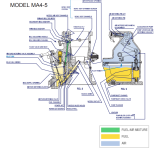
I was curious so I looked at the service manual, several service bulletins, and some drawings of the MA 4-5 that are clearer than those in the service manual.

I found no adjustment for the accelerator pump.

I think this is the same carb as used in the PA-28-180 that I sold recently. It would hesitate with rapid advance from idle. I quickly learned to advance the throttle more slowly. There was no hesitation at 1,500 rpm, at least none that I remember.

ref - https://www.insightavionics.com/pdf files/MA-4 Carb Manual.pdf

MA4-5.PNG
 
Ok Larry thanks. I have written down everything you have said. I will do the inflight testing at the recommended RPMs and observe the engine parameters. I will also try leaning out the idle mixture screw an see what happens there. I'll do it all safely. A proper warm up etc... before flight.

I'll call Tempest on Monday. Based on this discussion I now have some more information to relay to whomever.

I will take some detailed notes and report back. The smoking gun is out there and I'm determined to find it. Thanks again
You can do the tests that I recommend on the ground. Fairly low rpm, so easier than a run up.
 
I was curious so I looked at the service manual, several service bulletins, and some drawings of the MA 4-5 that are clearer than those in the service manual.

I found no adjustment for the accelerator pump.

I think this is the same carb as used in the PA-28-180 that I sold recently. It would hesitate with rapid advance from idle. I quickly learned to advance the throttle more slowly. There was no hesitation at 1,500 rpm, at least none that I remember.

ref - https://www.insightavionics.com/pdf files/MA-4 Carb Manual.pdf

View attachment 123655
Difficult to tell from the drawing, but appears there is a grub screw on the cam sitting on the throttle shaft. It appears there is a flat on the cam to index it, but wonder if it is adjustable. Not that the op should do it, only that it is possible there was an error on rebuild. Probably not likely given the op sees fuel streams when testing.